
The Illusion of Simple Scoring
The initial mental model for building scenario packs for AI agent regression testing was deceptively simple: define expected behavior in clean YAML, run the agents, compare scores, catch regressions, and ship with confidence. This approach, focused on the "judge" or scoring mechanism, lasted about one afternoon of real-world agent field testing. The core assumption was that the difficulty would lie in designing a nuanced rubric or an accurate scoring algorithm. This proved to be a fundamental miscalculation.
The real challenge emerged not from the evaluation logic itself, but from the chaotic reality of integrating with third-party AI agents. These agents, often developed by different teams or external entities, come with their own unique dependencies and environmental assumptions. A scenario pack is only as honest as the path between the testing harness and the actual agent it's evaluating. If that path is riddled with integration issues, the entire evaluation framework crumbles, regardless of how sophisticated the judging criteria are.
The Unseen Complexity of Agent Integration
The realization that integration, not scoring, was the true hurdle was a stark departure from the initial plan. Agents frequently exhibit unpredictable behavior due to their dependencies. For instance, an agent might import ffmpeg at the module scope, meaning it’s loaded and initialized even if not directly used in a specific test. This can lead to unexpected resource consumption or conflicts. Similarly, hardcoding specific model versions, like gpt-3.5-turbo, within the agent’s code creates a brittle system that is difficult to test against a range of models or future updates. Agents might also make assumptions about the execution environment, such as expecting to write directly to /root, which is a common security anti-pattern and a source of significant operational headaches in a controlled testing environment.
These issues are not theoretical. They represent the messy, real-world conditions under which AI agents operate. When building a regression testing suite, the goal is to ensure that an agent’s behavior remains consistent and predictable across different versions or configurations. However, if the agent itself is deeply intertwined with external libraries that have their own update cycles, or if it relies on specific, unchangeable configurations, then the testing harness must account for this instability. This means the harness needs to be robust enough to handle environmental variations, dependency conflicts, and hardcoded assumptions, effectively becoming a complex adapter layer rather than a simple test runner.
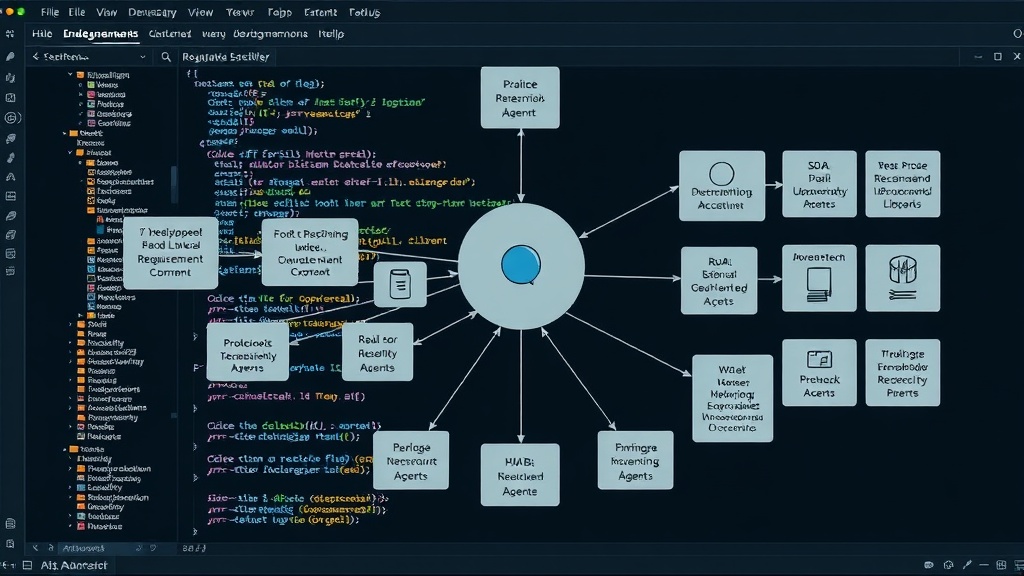
EvalForge: A Harness for Real-World Agent Testing
This is the second article in a series introducing EvalForge, an open-source evaluation harness designed for tool-using AI agents. The first article in the series, "Why Agent Evaluation is Harder Than Model Evaluation," laid the groundwork for understanding the unique challenges of testing agents, which differ significantly from evaluating standalone language models. While model evaluation often focuses on output quality, perplexity, or task completion rates based on static prompts, agent evaluation must contend with dynamic interactions, tool usage, state management, and, critically, the agent’s environment and dependencies.
EvalForge aims to address these integration challenges head-on. Instead of assuming a clean, predictable agent environment, the harness is built to accommodate the inherent messiness. This involves providing mechanisms to manage dependencies, isolate agent execution, and abstract away environmental differences. For developers building and testing agents, this means the harness can act as a buffer, normalizing the agent’s behavior to a degree that allows for meaningful regression testing. The goal is to create a testing framework that is less about the perfect scoring rubric and more about establishing a stable, repeatable testing ground, even when dealing with imperfect, real-world agents.
The Path Forward: Robust Integration Strategies
The experience of building these scenario packs highlights a critical shift in perspective for AI agent development and testing. The focus must move beyond solely refining the agent’s internal logic or the evaluation metrics. A significant portion of development effort needs to be dedicated to building robust integration layers and testing harnesses that can manage the complexities of external dependencies and environmental variables. This involves techniques such as dependency injection, containerization for isolated environments, and sophisticated mocking strategies for third-party tools.
For developers using or building agents, this means acknowledging that the "glue code"—the code that connects the agent to its tools, its environment, and the testing harness—is as crucial as the agent’s core intelligence. It is this integration layer that often dictates the reliability and testability of the agent. Prioritizing the development of these integration strategies and using tools like EvalForge can help mitigate the risks associated with brittle agent deployments and ensure that regression testing provides genuine confidence in the system's stability. The judge may be important, but without a reliable path to the courtroom, its verdict is irrelevant.