
The Client-Side Focus of Agent Protocols
The AI agent landscape is awash with announcements: prompt bundles, client-side toolkits, and SDK-level orchestration patterns. While these developments are genuinely interesting, they highlight a critical imbalance. The industry's approach to giving developers agency within the agent stack has almost entirely concentrated on the client side. This is peculiar, considering that the core logic, data access, and governance for any agent must ultimately reside and execute server-side.
The widely adopted protocols like OpenAI Responses and Anthropic Messages are designed with impressive client-side specifications. They detail conversation shape, tool declarations, reasoning knobs, structured events, and streaming semantics. A client SDK that implements these protocols can communicate with any service adhering to them. However, this leaves a significant gap: the server half of the equation.
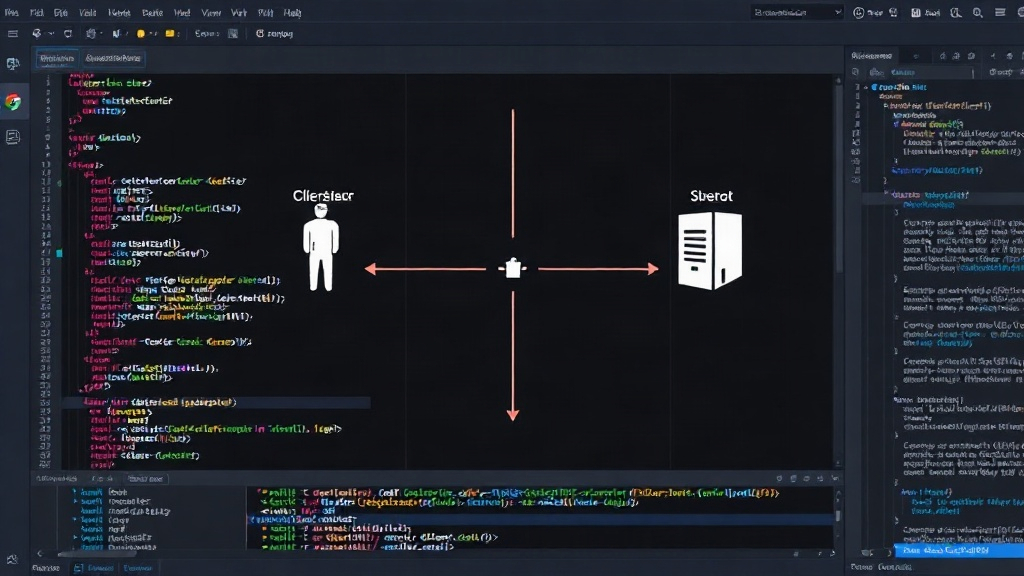
Defining the Server-Side Problem
The current protocols define a rich client interface, but they stop at the border of the client's environment. They don't specify how the server should receive, process, and respond to complex agent requests that involve private data, external integrations, or long-running computations. This leaves developers in a lurch, needing to build custom server-side infrastructure to bridge this gap. Imagine trying to build a sophisticated AI assistant that needs to access your company's internal knowledge base, execute complex data analysis, and adhere to strict compliance rules. The client-side protocols can tell the agent what tools are available, but they don't dictate how the server should securely manage data access, orchestrate multi-step processes, or ensure deterministic execution of tasks against sensitive resources.
The missing piece is a robust server-side protocol that complements the client-side specifications. This protocol should define:
- Execution Context Management: How the server manages the environment for agent tasks, including sandboxing, resource allocation, and state persistence.
- Data Access and Governance: Secure and auditable mechanisms for agents to access and manipulate data, enforcing permissions and compliance policies.
- Task Orchestration: The ability for the server to coordinate complex, multi-step agent operations, manage dependencies, and handle retries or failures gracefully.
- Integration Points: Standardized ways for agents to interact with external services, databases, and legacy systems.
- Observability and Monitoring: Tools for tracking agent activity, performance, and potential issues on the server.
Introducing `agent-protocol-java`
To address this deficit, I've developed and shipped an open-source Java library, `agent-protocol-java`, to Maven Central. This library provides a foundational server-side component for building AI agent backends that can interoperate with existing client-side protocols. It's designed to be a flexible, extensible framework for managing the execution of agent tasks within a controlled server environment.
The library offers:
- Core Agent Executor: A framework for defining and executing agent tasks on the server.
- Tool Integration: Mechanisms to register and invoke server-side tools, which can be anything from database queries to API calls or custom business logic.
- State Management: Utilities for managing the state of agent conversations and ongoing tasks.
- Event Handling: Support for emitting structured events that can be communicated back to the client.
- Extensibility: Designed to be a base for custom implementations, allowing developers to integrate their specific data sources, security models, and execution environments.
Think of it less like a plug-and-play solution and more like a robust toolkit for building the engine that powers your AI agents. It provides the necessary scaffolding to run agent logic securely and efficiently on the server, handling the complexities that client-side protocols simply don't address.
Why Server-Side Matters More Than Ever
The current focus on client-side agent capabilities risks creating a fragmented ecosystem where powerful AI models are tethered to limited client environments. This is particularly problematic for enterprise applications where data privacy, security, and integration with existing systems are paramount. Agents that operate solely on the client side cannot securely access proprietary data, execute sensitive business logic, or enforce organizational policies. They are effectively blind to the rich, complex environments where real-world business processes occur.
A well-defined server-side protocol is not just a technical convenience; it's a necessity for building trustworthy, scalable, and capable AI agents. It ensures that sensitive operations happen in a controlled, auditable environment. It allows for the decoupling of AI models from specific execution hardware, enabling agents to leverage powerful server resources. Furthermore, it provides a clear path for integrating AI capabilities into existing enterprise workflows and data pipelines without compromising security or compliance.
The Road Ahead
The development of comprehensive agent protocols requires attention to both client and server sides. While client-side SDKs and prompt engineering techniques are vital for user interaction and model control, the server-side infrastructure is where the real work of execution, data handling, and governance takes place. Open-source efforts like `agent-protocol-java` aim to provide the building blocks for this crucial server-side component.
The surprising detail here is not the existence of the gap, but how universally it has been overlooked by major players focusing on the user-facing aspects. What nobody has addressed yet is what happens when these sophisticated client-side agent definitions meet the reality of enterprise data and security requirements. If you run a team building AI agents, you need to consider how your server infrastructure will handle the actual execution, data access, and governance. The client protocols are a map, but they don't tell you how to build the roads or manage the traffic on the server side.