The Frontend Paradigm Shift: From Humans to Agents
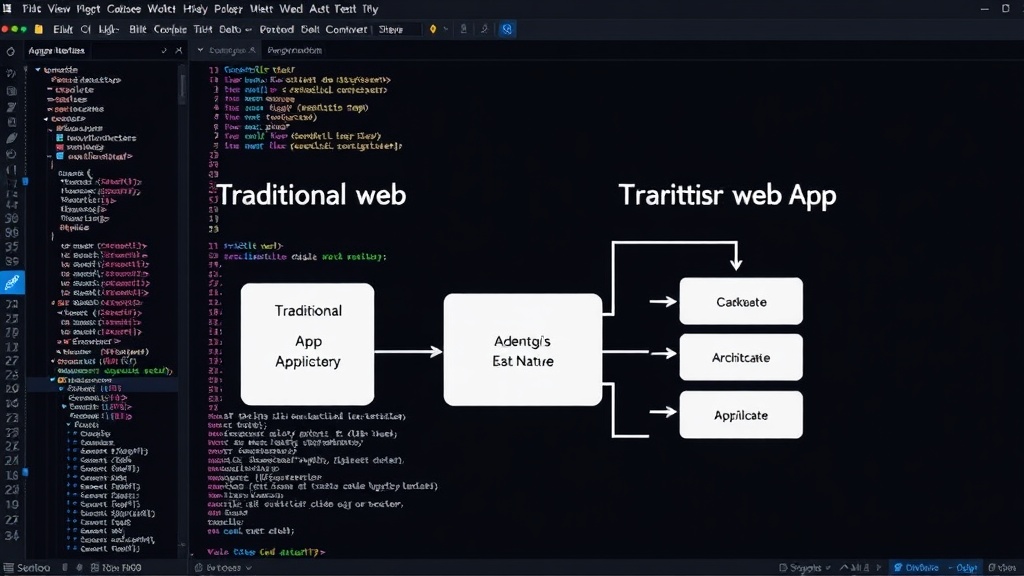
For two decades, software development has adhered to a familiar pattern: create a database, expose an API, and then build a complex frontend web application. Frameworks like React, Vue, and Next.js have dominated this space, enabling human users to interact with data through dashboards, sortable tables, and intricate state management. The typical workflow involves months of design and development to allow a human to, for instance, click a button to change an order status from "Pending" to "Shipped." This approach is deeply human-centric, optimized for visual interfaces and direct manipulation.
However, this paradigm faces a fundamental challenge with the rise of autonomous AI agents. These agents operate in background loops, executing tasks without direct human oversight or the need for a graphical user interface. They do not care about custom CSS components or sophisticated pagination hooks. Forcing an AI agent to navigate a web UI or parse bloated, unstructured REST endpoints is inefficient. It leads to slow processing, high token consumption for large language models (LLMs), and unpredictable outcomes.
The core idea behind the agent-native stack is to bypass the human-centric frontend entirely. Instead, systems should be built to directly serve the needs of AI agents. This means prioritizing interfaces that allow agents to efficiently access data, understand context, and execute actions programmatically. The goal is to move towards a "Zero-UI" or "Agent-UI" approach, where the primary user is an AI, not a person staring at a screen.
Designing for the Agent User
Consider an Order Management System (OMS). A human-centric OMS requires a rich UI for order tracking, status updates, inventory checks, and customer communication. An agent-native OMS, conversely, would expose direct endpoints for these functions. An agent needing to ship an order wouldn't scrape a web page; it would call a specific API endpoint like /orders/{order_id}/ship, potentially passing necessary parameters like tracking information and carrier details. Similarly, querying order status would involve a direct data retrieval API, not rendering a complex table that the agent then has to parse.
This shift necessitates a re-evaluation of how we structure our applications. Instead of building a UI layer as the primary interface, we need to build an agent interface layer. This layer is not about presentation; it's about exposing functionalities and data in a format that AI agents can consume with maximum efficiency and minimum friction. Think of it less like a website and more like a highly specialized, programmatic toolkit.
The benefits are substantial. Agents can interact with systems much faster and more reliably when dealing with structured, direct interfaces. Token costs for LLM-powered agents are reduced because they don't need to process extraneous UI elements or interpret visual layouts. Development effort can be redirected from building and maintaining complex UIs to creating robust agent capabilities and optimizing the underlying backend services for programmatic access.
Key Principles of Agent-Native Architecture
Building an agent-native stack involves several core principles:
- Direct Action Endpoints: Replace generic CRUD APIs with specific, intent-driven functions. Instead of
PUT /orders/{id}with a JSON payload, considerPOST /orders/{id}/fulfillorPOST /orders/{id}/cancel. These are explicit commands an agent can understand and execute. - Structured Data Access: Provide data in formats that are easily machine-readable and require minimal parsing. This might mean returning JSON with clear schemas, offering queryable datasets, or even providing direct access to databases or data warehouses for agents that need to perform complex analysis. Avoid HTML or unstructured text where possible.
- State Management for Agents: Traditional state management is often UI-bound. For agents, state management involves tracking the agent's progress, its current task, its permissions, and the context of its operations. This state needs to be accessible and modifiable by the agent itself, often through dedicated APIs.
- Tooling and Observability: Agents need robust tools to function. This includes mechanisms for agents to discover available actions, understand their parameters, and receive feedback on execution. Observability is crucial – logs, metrics, and tracing need to be designed to track agent behavior, not just user interactions.
- Security and Permissions: Agent security is paramount. Access control must be granular, defining precisely what actions an agent can perform and on what data. This is more complex than traditional user authentication, as agents may have elevated privileges or operate autonomously across multiple systems.
The Agent-Native Stack Components
While the specific technologies will evolve, the agent-native stack will likely comprise:
- Agent Orchestration Platform: A system to manage, deploy, and monitor AI agents. This is analogous to Kubernetes for containers but tailored for autonomous agents.
- Agent Interface Layer: A set of APIs and services designed for agent interaction, providing direct access to data and functionalities. This replaces the traditional web server and frontend framework as the primary interface.
- Data Stores: Optimized for programmatic access, potentially including traditional databases, vector databases for semantic search, and data lakes for large-scale analytics.
- Action Execution Engines: Services that translate agent commands into concrete operations within the system or external services.
- Observability and Monitoring Tools: Tailored for agent behavior, performance, and error tracking.
What About Zero-UI?
The concept of "Zero-UI" implies a future where user interfaces, as we know them, become less relevant for many tasks. Instead of users interacting with applications through graphical screens, they will increasingly delegate tasks to AI agents. These agents will interact with systems built for them – the agent-native stack. This doesn't mean UIs disappear entirely; they will likely remain crucial for human oversight, complex decision-making, and tasks that are inherently visual or require human empathy. However, for the vast majority of routine, data-intensive, or process-driven tasks, the agent-native approach will become the dominant architecture.
The transition to an agent-native stack is not merely an architectural change; it's a fundamental rethinking of software design. It shifts the focus from human-computer interaction to agent-system interaction, demanding new tools, patterns, and a deep understanding of how AI agents operate and what they need to succeed. As we move further into an era of AI-driven automation, understanding and adopting this new stack will be critical for building efficient, scalable, and future-proof applications.