The 'Agent Deployed, Now What?' Dilemma
You've built an agent. It performs beautifully in your development environment. The demo is slick. Then the inevitable question arises: "How do we ensure it continues to perform reliably in production?" Your go-to answer is likely "evaluations" (evals). But when you reach for your evaluation toolkit, you hit a wall: no labeled dataset, no historical performance benchmarks, no "golden" outputs to compare against. This is the cold-start problem in agent evaluation.
The common, yet misguided, response is to defer evals until data is collected. "We'll add evals once we have some output to grade." This delay is perilous. The agent runs in production, ungated, and the first silent failure, the first subtle drift in performance, goes unnoticed until it causes a significant issue. The impulse to immediately deploy a "model-as-judge" solution, assigning arbitrary scores from 1 to 10, is a well-intentioned but fundamentally flawed instinct. True evaluation at the outset doesn't require perfect labels; it demands an understanding of which evidence to trust from the very beginning, and which evidence will never be reliable.
Independence: The True Metric, Not Cost
Discussions around agent evaluation often focus on cost. String matching is cheap, model-based evaluation is expensive. This hierarchy implies that higher cost equates to higher accuracy or truth. This perspective is inverted. The critical axis for initial evaluation is not cost, but independence. An evaluation method's independence from the agent itself is the key determinant of its trustworthiness when you have no ground truth.
Consider an agent designed to summarize legal documents. If you evaluate its summary quality by asking the same agent to then rate its own summary, you're essentially asking it to grade its own homework. The output is inherently biased and lacks independence. This is analogous to asking a student to self-report their exam scores without any proctoring or independent verification. The score might be what the student *thinks* they deserve, but it's not an objective measure of their knowledge.
To overcome the cold-start problem, we must shift our focus from expensive, potentially biased, model-as-judge approaches to methods that leverage independent signals. These signals, even if imperfect, provide a baseline for gating and monitoring agent behavior from day one.
Leveraging Trustworthy Evidence Without Labels
Even without labeled data, several forms of evidence can serve as reliable indicators of agent performance. These fall into categories based on their independence from the agent's core generative process.
1. Input Validation and Sanitization
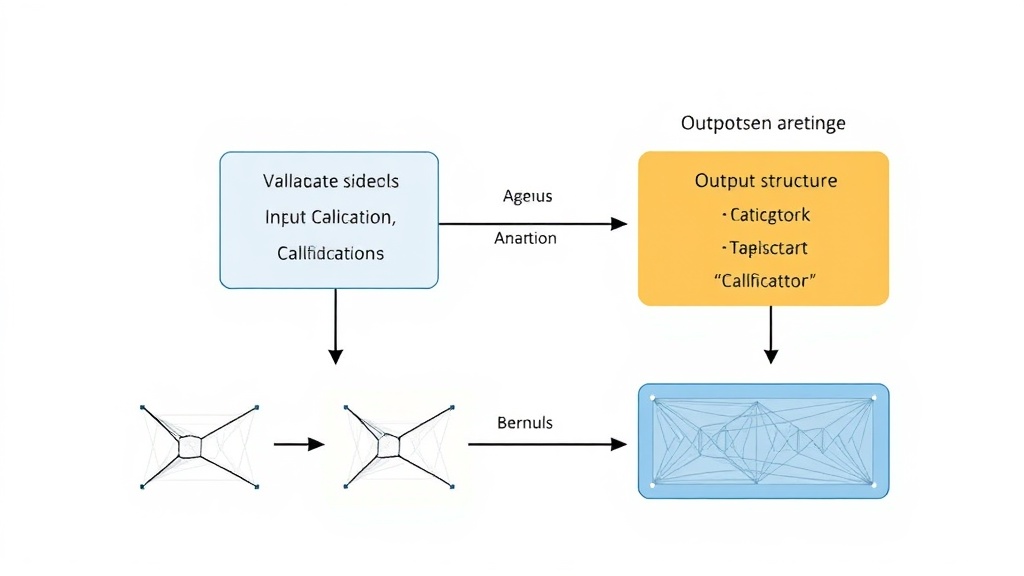
The simplest and most independent form of evaluation is validating the inputs the agent receives. Is the input format correct? Does it conform to expected schemas? Are there obvious signs of malicious injection or malformed data? While this doesn't evaluate the agent's output quality, it gates against fundamentally broken or compromised inputs that would inevitably lead to poor or unsafe outputs. Think of this as a bouncer at a club checking IDs – it doesn't guarantee a good party, but it prevents clearly unsuitable individuals from entering.
2. Output Structure and Format Checks
If your agent is expected to produce output in a specific format (e.g., JSON, XML, a specific markdown structure), you can enforce these structural constraints. Does the output parse correctly? Does it adhere to the predefined schema? Tools like JSON schema validators or custom parsers can automatically verify this. This is a crucial first gate: an agent that cannot even produce structurally sound output is fundamentally broken, regardless of content accuracy.
3. Rule-Based and Heuristic Checks
For specific domains, you can implement rule-based checks that don't require labeled examples but rely on domain knowledge. For a legal agent, rules might include checking for the presence of essential legal clauses, forbidden terms, or adherence to specific citation formats. For a customer service agent, rules might flag responses that contain offensive language, personal identifiable information (PII) that shouldn't be revealed, or offer solutions outside of approved product lists. These heuristics act as early warning systems for common failure modes.
4. Consistency Checks Across Multiple Calls
If an agent is designed to be deterministic or at least highly consistent for identical or semantically similar inputs, you can evaluate its stability. Run the same prompt multiple times. If the outputs vary wildly without a clear reason (e.g., intentional temperature settings), it indicates instability. If semantically similar prompts yield vastly different, contradictory answers, it signals a lack of robustness. This can be implemented with relatively simple diffing tools or semantic similarity measures.
5. External Tool/API Call Validation
Many agents rely on external tools or APIs. You can evaluate the agent's ability to correctly invoke these tools. Did it call the right tool with the right parameters? Did the tool call succeed or fail? Monitoring these external interactions provides a strong signal about the agent's reasoning and planning capabilities, independent of the final generated text.
The Path Forward: Iterative Improvement
The goal on day one is not perfect evaluation, but sufficient gating. These independence-based checks provide a vital safety net. As the agent operates in production, you naturally begin to collect data. This data, initially unlabeled, can then be used to refine and augment your evaluation strategy.
For instance, outputs flagged by your rule-based checks that are *actually* correct according to human review can be used to train a more nuanced model-as-judge or to build a small, high-quality labeled dataset for fine-tuning. Outputs that consistently pass structural and rule-based checks but are deemed poor by users can highlight the limitations of your current heuristic rules and guide the development of more sophisticated, data-driven evaluations.
This iterative process—starting with independence, collecting data, and then layering on more sophisticated, data-dependent evaluations—allows you to build confidence in your agent's performance over time without being paralyzed by the initial lack of labeled data. It’s about building trust in the evidence you have, rather than waiting for the perfect evidence that may never arrive.