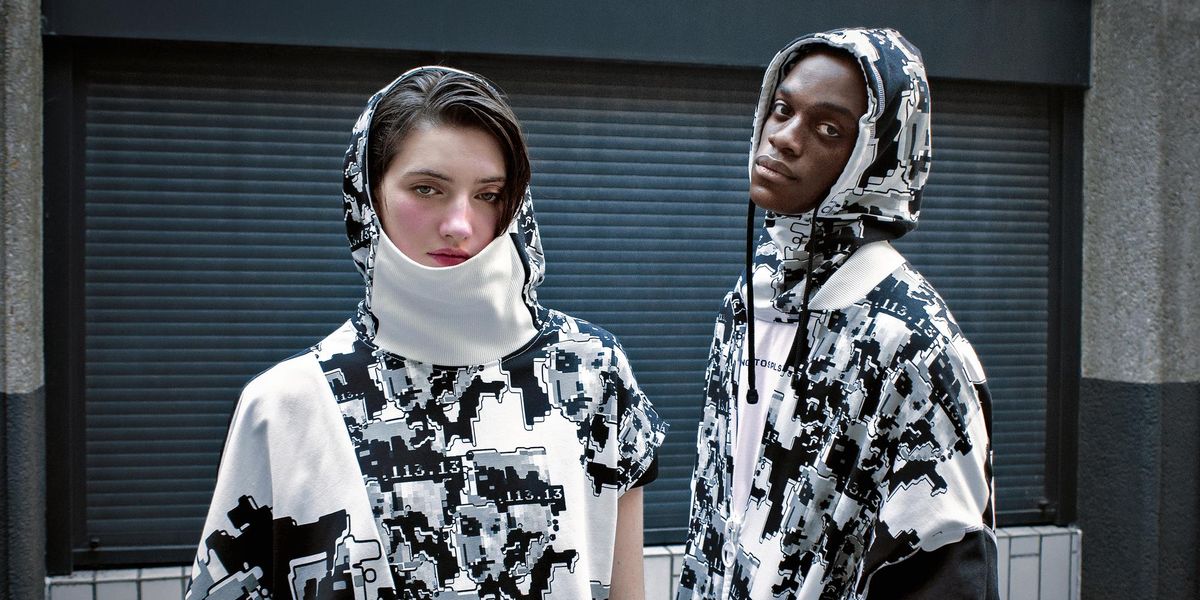
The Rise of the AI Panopticon
Our world is increasingly monitored by artificial intelligence. From public spaces equipped with an ever-growing network of surveillance cameras to the digital realm where our online activities are meticulously tracked, AI-powered recognition systems are becoming ubiquitous. Facial recognition technology, in particular, is a cornerstone of this burgeoning AI panopticon. It promises enhanced security, efficient identification, and personalized experiences. However, it also fuels concerns about privacy invasion, mass surveillance, and the potential for algorithmic bias and error.
As AI systems become more sophisticated at identifying individuals, a counter-movement is emerging from the realm of art and fashion. Designers are now creating what can be termed 'adversarial fashion' – clothing and accessories specifically engineered to disrupt and deceive AI image recognition systems. This isn't just about aesthetic rebellion; it's a deliberate act of resistance against the pervasive gaze of AI surveillance.
The concept draws directly from adversarial machine learning, a field where researchers deliberately craft inputs (like slightly altered images) to trick AI models. In the context of fashion, these 'adversarial attacks' are woven into the fabric of garments, printed onto accessories, or incorporated into makeup. The goal is simple: to make the wearer invisible or appear as something else entirely to an AI camera.
How Adversarial Fashion Works
Facial recognition algorithms work by identifying key facial features – the distance between eyes, the shape of the nose, the jawline, etc. – and converting them into a unique numerical representation, a biometric template. Adversarial fashion aims to subtly alter these features in a way that is imperceptible to the human eye but significant enough to confuse the algorithm. This can be achieved through several methods:
- Pattern Disruption: Garments printed with specific, often chaotic or repetitive, patterns can interfere with the algorithms' ability to detect and map facial landmarks. These patterns are not random; they are mathematically generated to exploit known vulnerabilities in common AI models. Think of it like wearing a visual static that scrambles the AI's perception of your face.
- Feature Masking or Alteration: Accessories like glasses with specific tinted lenses, hats designed with unusual shapes, or even makeup patterns can be employed to obscure or distort critical facial features. Some approaches involve creating visual noise directly on the face or clothing that is optimized to confuse neural networks.
- Semantic Ambiguity: In some more abstract approaches, designs might aim to make the AI misclassify the wearer as an object or an animal, effectively rendering them anonymous within the data stream.
The surprising detail here is not the ingenuity of the designs themselves, but the underlying science. These are not just artistic statements; they are practical applications of complex machine learning research, translated into wearable art. The effectiveness relies on understanding how AI models process visual data and then introducing calculated 'noise' into that process.
The Statement: Privacy and Control in the Digital Age
Beyond the technical cleverness, adversarial fashion makes a profound statement about our relationship with technology. It highlights the growing unease surrounding unchecked AI surveillance and the erosion of personal privacy. In a world where our movements and identities can be tracked and logged with unprecedented ease, these designs offer a form of digital camouflage, a way to reclaim a degree of anonymity.
This movement challenges the passive acceptance of constant monitoring. It asks: Who controls the data? Who decides how it's used? And what recourse do individuals have when their likeness is constantly being captured and analyzed?
The creators of adversarial fashion are not necessarily advocating for a world without security. Instead, they are raising critical questions about the balance between security and liberty, about the ethics of pervasive AI surveillance, and about the potential for technology to disempower individuals. They are using the very tools of AI disruption to provoke thought and discussion, forcing us to confront the implications of living in an AI-monitored society.
If you've ever felt the unsettling sensation of being watched by a security camera, or wondered how your online data is being used, adversarial fashion speaks directly to that feeling. It’s a tangible, wearable form of dissent, designed for a world where the invisible eyes of AI are everywhere.
The Future of Digital Camouflage
As AI surveillance technologies continue to evolve, so too will the methods of evading them. Adversarial fashion is likely to become more sophisticated, incorporating dynamic elements or even personalized algorithms to adapt to different AI detection systems. We might see a future where digital camouflage is as common as physical camouflage is today.
This trend also points to a broader cultural shift. As AI becomes more integrated into our lives, the lines between technology, art, and activism will continue to blur. Adversarial fashion is a powerful example of how creativity can be harnessed to critique technology and advocate for human rights in the digital age. It’s a reminder that even in the face of increasingly powerful AI, human ingenuity and the desire for privacy remain potent forces.
What nobody has addressed yet is what happens when AI detection systems become sophisticated enough to identify and flag adversarial patterns themselves. Will this lead to an arms race between surveillance AI and evasion tactics, with fashion as the frontline?