
The Ubiquity of Field Updates
In the world of connected products, the ability to update software remotely in the field is no longer a luxury; it's a fundamental requirement. Whether it's a smart home device, an industrial sensor, or an automotive system, ensuring devices receive the latest security patches, feature enhancements, and bug fixes is paramount. The primary challenge with field updates is mitigating the risk of a failed update leaving a device bricked or in an unrecoverable state. This is where the concept of redundant update layouts, commonly known as A/B updates, comes into play. The goal is simple: maintain a known-good software version so that even if an update goes awry, the device can seamlessly revert to its previous stable state.
However, the term "A/B update" is often oversimplified. It doesn't represent a single, monolithic solution. Instead, it describes a family of strategies, each tailored to address specific product constraints. Choosing the correct A/B update layout is not merely a technical decision; it has direct implications for storage requirements, boot times, development complexity, and overall device availability. A misaligned choice can lead to unforeseen costs in hardware, longer development cycles, and a less robust user experience.
Understanding the Core A/B Model: Symmetric
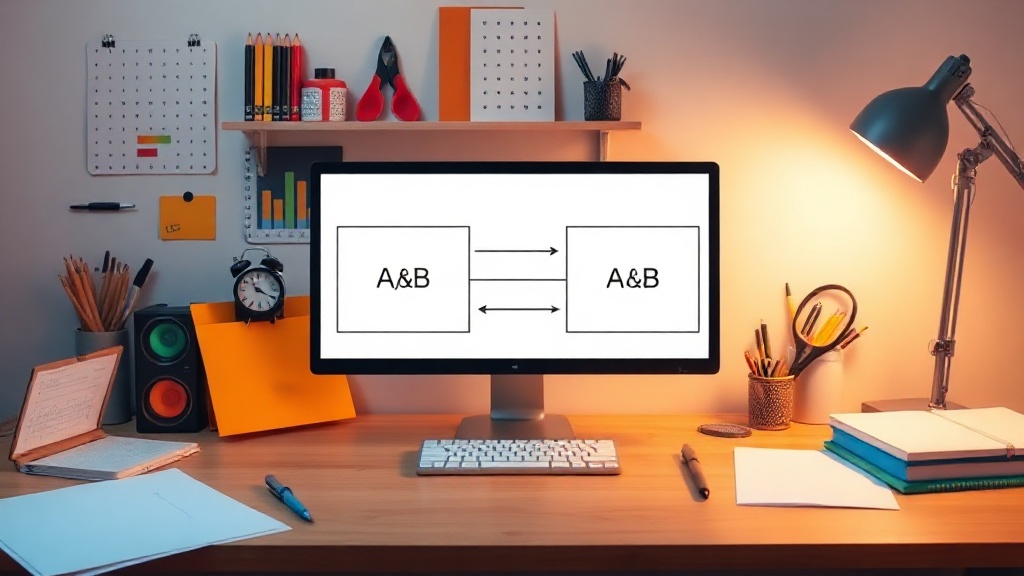
The most common and often default A/B update layout is the symmetric A/B model. In this setup, the device's root filesystem is divided into two identical, independent slots, typically labeled 'A' and 'B'. Each slot contains a complete, bootable operating system and application set. The process is straightforward: when an update is initiated, the new software is installed onto the currently inactive slot (e.g., if the device is running on slot A, the update installs to slot B). Once the installation is complete, the device is rebooted. The bootloader is configured to switch to the newly updated slot.
The critical advantage of this symmetric approach lies in its robustness and simplicity for the user. During the write operation, the device continues to run on the active slot, ensuring no downtime. If the new software in the target slot fails its post-boot health check – perhaps due to a corruption during download or an unexpected bug – the bootloader can automatically detect this failure and revert the boot process to the previously known-good slot. This fallback mechanism provides a high degree of reliability, making it the ideal choice for a vast majority of connected products where continuous operation is desired and storage is not a severe limitation.
When Symmetric Isn't Enough: Asymmetric and Split Layouts
While symmetric A/B offers excellent redundancy, it comes with a significant cost: storage. Maintaining two full copies of the operating system and application suite effectively doubles the storage footprint required for the root filesystem. For products with tight storage constraints, or where storage is particularly expensive, this overhead can be prohibitive. This is where alternative A/B layouts become necessary.
Asymmetric A/B layouts are designed to reduce this storage duplication. Instead of two full root filesystems, one slot might contain a minimal, read-only operating system, while the other holds the full, updatable root filesystem. Updates would target the full filesystem slot. While this saves space, it often complicates the update process and can increase boot times if the minimal OS needs to perform significant setup before the main system can load. The fallback mechanism might also be less seamless, potentially requiring more complex recovery procedures.
Split A/B layouts further refine this by dividing the filesystem into multiple partitions. Some partitions might be shared between slots, while others are slot-specific and updatable. For instance, the kernel and bootloader might be in a shared partition, while the root filesystem and user data reside in slot-specific partitions. This offers a middle ground, balancing storage savings with update complexity. The key is that critical partitions can be duplicated for safety, while less critical or larger application data might be shared or managed differently.
Augmenting with Rescue Systems
Another common constraint that pushes teams away from pure symmetric A/B is a slow boot process or applications that have very specific, non-standard update schedules. In such cases, a rescue-augmented layout can be beneficial. This approach typically involves a dedicated, minimal rescue partition or slot. This rescue system is small, fast to boot, and contains the logic to perform updates and recovery. If the primary A/B slots fail to boot, the device can fall back to the rescue system, which can then attempt to repair the primary slots or guide the user through a manual recovery process.
Think of the rescue system as a very small, specialized mechanic that lives in a separate garage. If your main car (the primary A/B slots) breaks down, the mechanic can be quickly accessed to diagnose and fix the issue, or at least tow the car to a proper repair shop. This adds an extra layer of resilience, especially for devices that might experience more complex software failures or require more involved recovery steps than a simple reboot can handle.

The Decision Matrix: Constraints Drive Design
Ultimately, the choice of A/B update layout is dictated by a product's specific constraints. The decision is not *whether* to implement A/B updates, but *which* A/B layout best fits the existing limitations:
- Storage Capacity: Symmetric A/B requires the most storage. Asymmetric and Split A/B layouts reduce this requirement at the cost of complexity.
- Boot Time: A symmetric layout typically offers the fastest boot into a known-good state. Asymmetric or complex split layouts may increase boot times. Rescue systems can offer fast initial boot into a recovery environment.
- Update Complexity: Symmetric A/B is generally the simplest to implement and manage. More complex layouts require more sophisticated update agents and bootloader logic.
- Device Availability Requirements: For products requiring near-constant uptime, the seamless rollback of symmetric A/B is invaluable. If some downtime during an update is acceptable, other layouts might suffice.
- Application Update Schedule: If applications update independently or have lengthy installation processes, this can influence the partition strategy and the choice between symmetric, split, or augmented layouts.
Embedded Linux developers must carefully evaluate these factors against the product's hardware specifications and business requirements. The trade-offs between storage, boot speed, development effort, and update reliability are significant. A thorough understanding of each A/B layout variant allows teams to select the most appropriate strategy, ensuring that field updates are a source of continuous improvement rather than a potential point of failure.
What's Next for A/B Updates?
As the complexity of embedded systems continues to grow, so too will the need for more sophisticated and efficient update mechanisms. While symmetric A/B remains the default for many, the drive for smaller, more power-efficient, and cost-effective devices will push innovation in asymmetric and split layouts. We might see more intelligent partitioning schemes that dynamically allocate space or even hardware-assisted update verification becoming more common. The challenge for developers will be to implement these advanced strategies without sacrificing the core reliability that A/B updates are designed to provide. The question that remains is how to best standardize these more complex A/B variants across different hardware architectures and operating system distributions to foster wider adoption and reduce fragmentation.