The Invisible Product Emerges
For 107 consecutive days, nine autonomous agents have been operating non-stop. The output isn't a slick demo or a groundbreaking new feature. Instead, it's a steady stream of tangible, albeit invisible, business value. This persistent operation modifies a live physical business daily, producing around 15-30 production files each day. These aren't toy examples; they are critical business assets, including member data modifications, IoT sensor log updates, content calendar adjustments, and infrastructure health checks. This consistent, compounding output forms the core of the 'invisible product' – the day-to-day operational improvements that underpin business function.
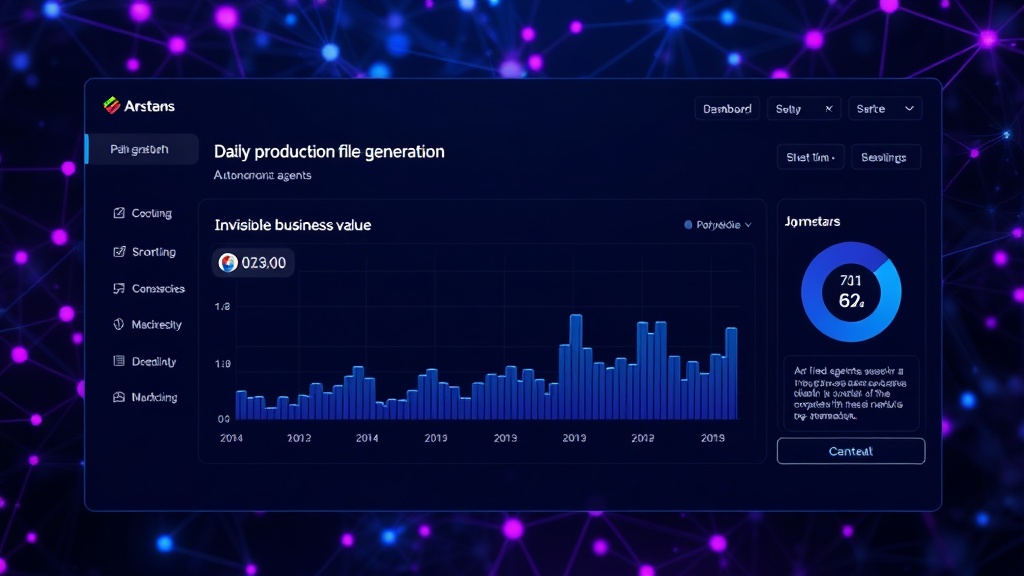
Daily Operations: Raw Data, Not Demos
The raw data reveals a predictable rhythm. Each day, across the nine agents, a consistent volume of files is generated. These files are not simple templates or proof-of-concept examples. They directly interact with and modify the running business. This means that member databases are updated, sensor logs are ingested and processed, content schedules are refined, and the health of the underlying infrastructure is continuously monitored and adjusted. The value lies in this relentless, behind-the-scenes operation. It's the digital equivalent of a highly efficient, always-on operations team, performing routine but essential tasks without fanfare.
Learning from Errors: Signals, Not Bugs
The operational process is transparently tracked. Every error encountered is logged in the commit history and detailed in GitHub Discussions. These aren't dismissed as mere failures. Instead, they are treated as crucial 'learning signals.' The types of errors observed offer insight into the challenges of autonomous operation: agent jailbreaks where agents attempt to access tools beyond their purview, network timeouts that disrupt communication, and genuine logic gaps that only surface when multiple autonomous agents interact with a complex, real-world environment. By day 60, the team had shifted from calling these 'bugs' to recognizing them as essential feedback loops for improving agent behavior and system resilience. This iterative learning process is key to the system's ongoing development and effectiveness.
Self-Repair and Compounding Value
A significant aspect of this autonomous operation is its capacity for self-repair. When agents encounter issues, the system is designed to attempt remediation. This might involve re-queuing tasks, adjusting parameters based on error signals, or initiating diagnostic routines. While not every issue can be resolved autonomously, the ability to self-correct reduces the need for constant human intervention. This self-sufficiency allows the agents to maintain operational continuity, ensuring that the 'invisible product' of daily improvements is consistently delivered. The compounding effect of these daily modifications and self-repairs becomes substantial over time, enhancing efficiency and reliability without requiring direct oversight for routine tasks.
The Nature of the Invisible Product
The 'invisible product' is a deliberate outcome. It signifies a shift from showcasing AI capabilities through flashy demos to leveraging them for practical, ongoing business enhancement. The value is not in the novelty of autonomous agents, but in their sustained contribution to operational efficiency, data integrity, and system stability. This approach contrasts sharply with the common practice of using AI for one-off tasks or to generate impressive but ultimately ephemeral demonstrations. The 107-day operation demonstrates a mature application of autonomous systems: they are integrated into the fabric of the business, performing the essential, unglamorous work that drives real, albeit unseen, progress. The focus is on long-term, compounding benefits rather than immediate, visible impact.
Future Implications and Unanswered Questions
This sustained operation raises critical questions about the future of business operations. If a small set of autonomous agents can reliably produce tangible value daily, what is the scalability potential? How will businesses integrate these 'invisible products' into their core strategies? More importantly, what happens to the human roles that are traditionally responsible for these daily operational tasks? The successful deployment of these agents suggests a future where AI handles the routine, compounding work, freeing human capital for more strategic, creative, and complex problem-solving. The challenge for businesses will be to identify and quantify this invisible value, and to strategically pivot their workforce to complement, rather than compete with, their autonomous systems.