The Weekend Hack: Simplifying Bureaucracy, Exposing Data
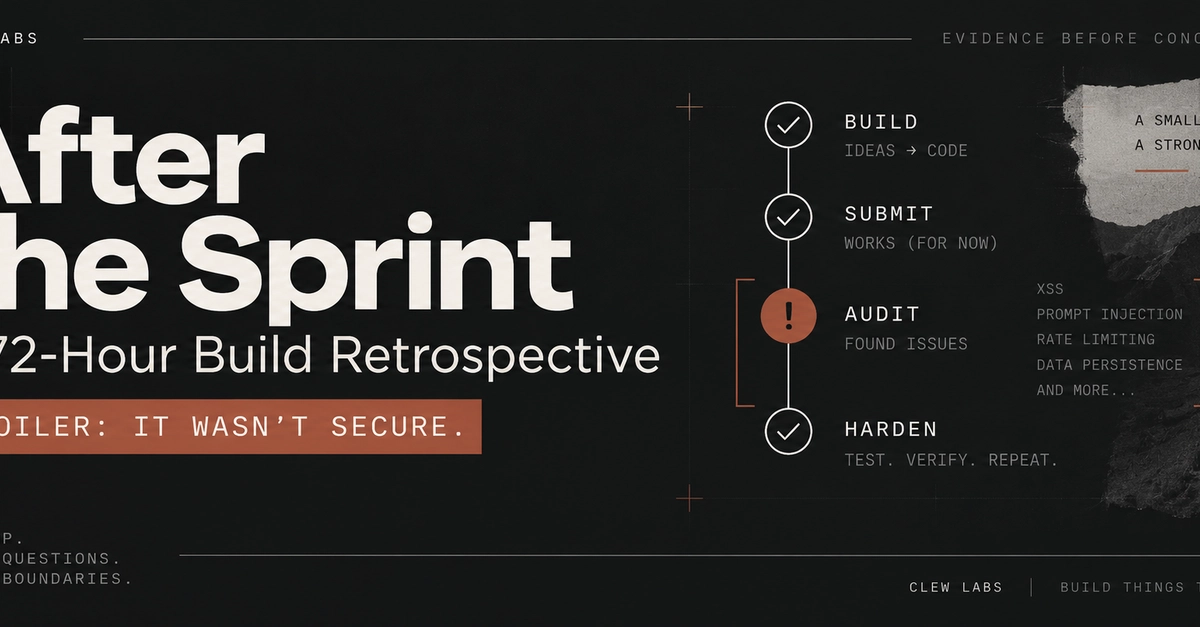
Building for a 72-hour challenge means speed and functionality often trumped security. The project, named Charitas Clew, aimed to tackle bureaucratic notices—benefits letters, utility bills, court documents—by using Google's Gemini AI to translate dense legalese into plain language, identify key dates, outline next steps, and even generate scripts for necessary phone calls. The initial build successfully met these functional requirements, passing muster for submission within the tight deadline.
The developer, working under the handle "earlgreyhot1701d," intentionally kept the application live post-challenge. This allowed for a retrospective examination, revealing a critical security flaw that had gone unnoticed during the frantic development sprint. The convenience of a working prototype overshadowed the fundamental need for robust security measures, a common trade-off in time-constrained development environments. The application’s core value proposition—making complex information accessible—was ironically undermined by its own inaccessibility to secure data handling.
The Uncomfortable Discovery: A Simple Oversight
The revelation came not from external penetration testing, but from the developer’s own post-submission curiosity. After the pressure of the deadline subsided, the developer began to probe the application, a process described as "slightly inconvenient" but necessary for a true retrospective. This self-inflicted scrutiny unearthed a significant vulnerability: sensitive user data was being exposed. The specific nature of the exposure wasn't detailed, but the implication was clear: information intended for private use was accessible to unauthorized parties.
The surprising detail here is not the existence of a vulnerability, but its simplicity and the context of its discovery. It wasn't a sophisticated zero-day exploit or a complex chain of attacks. Instead, it stemmed from a fundamental oversight, likely related to data handling, access controls, or logging, that is all too common when developers prioritize rapid feature deployment over security best practices. The application, designed to bring clarity to complex documents, inadvertently created a new layer of complexity and risk for its users.
What Was Left Unaddressed?
The retrospective highlights a broader, often unaddressed question in rapid development cycles: what is the baseline security posture required for even a short-lived, proof-of-concept application? While the 72-hour challenge format necessitates a focus on core functionality, the subsequent exposure of user data by Charitas Clew suggests that even minimal security considerations can be overlooked. The developer’s own admission of keeping the application live implies an intent for continued use or demonstration, which should have triggered a more rigorous security review, however brief.
What nobody has addressed yet is the ethical and practical implication of deploying AI-powered tools that process sensitive personal information, even in a hackathon context. The potential for misuse or accidental exposure is significant. The ease with which Gemini could process and summarize sensitive documents means that any breach could have far-reaching consequences for individuals whose data is compromised. This incident serves as a stark reminder that the allure of rapid innovation must not overshadow the responsibility of safeguarding user privacy.
Retrospective Lessons: Security as a Feature, Not an Afterthought
The core lesson from this retrospective is that security cannot be an afterthought, especially when dealing with personal data. The developer successfully built a functional application, demonstrating a clear understanding of the problem domain and the capabilities of AI tools like Gemini. However, the rush to complete the project within the 72-hour window meant that fundamental security protocols were likely deferred. This is a common pitfall in hackathons and rapid prototyping, where the focus is on proving a concept rather than building a production-ready, secure system.
For developers participating in similar challenges, the Charitas Clew incident is a cautionary tale. It underscores the importance of integrating security considerations from the outset. Even a simple project can have significant implications if it handles sensitive data. This means thinking about data encryption, secure authentication, input validation, and proper output encoding, even if just at a basic level. The inconvenience of implementing these measures early on is far less than the inconvenience, or potential disaster, of dealing with a data breach later.
The developer’s willingness to share this vulnerability openly is commendable. It provides a valuable case study for the wider developer community. The incident prompts a re-evaluation of development methodologies, particularly in fast-paced, time-bound environments. Building a working prototype is only half the battle; ensuring it is secure, even in its nascent stages, is equally critical. The challenge now is to foster a culture where security is viewed not as an optional add-on, but as an intrinsic component of any software development process, regardless of the timeline.