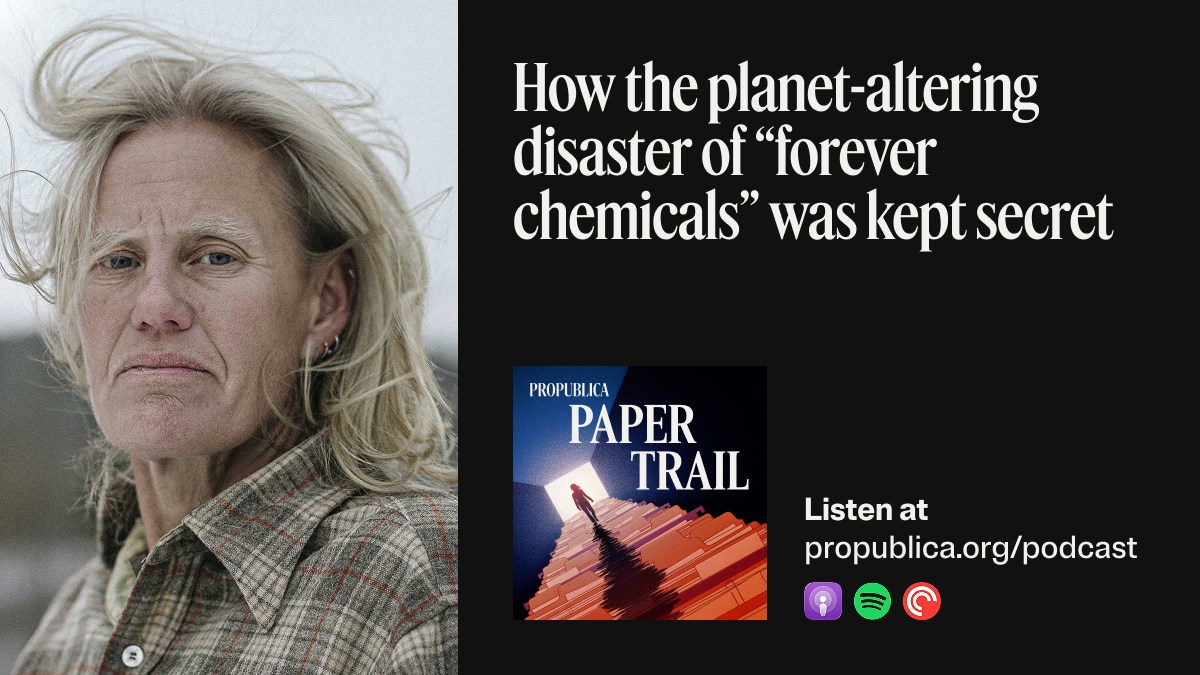
The Unseen Threat: A Legacy of PFAS Contamination
For decades, a class of chemicals known as per- and polyfluoroalkyl substances (PFAS) has been silently infiltrating our environment and our bodies. These synthetic compounds, often dubbed "forever chemicals" due to their extreme persistence, have been used in countless consumer and industrial products since the mid-20th century, from non-stick cookware and stain-resistant fabrics to firefighting foams and food packaging. Their ubiquity has led to widespread contamination, with studies detecting PFAS in the blood of nearly all Americans, as well as in water, soil, and wildlife across the globe. The health consequences are only now beginning to be fully understood, with links to various cancers, immune system dysfunction, thyroid disease, and developmental issues.
What has been less understood until recently is the extent to which the primary manufacturer, 3M, was aware of the profound risks associated with these chemicals and actively worked to conceal them. A recent investigation by ProPublica, drawing on internal documents and scientific studies, has illuminated a disturbing pattern of deception that spans nearly fifty years, prioritizing profit over public health and environmental safety.
Early Warnings Ignored: 3M's Internal Science
The story of 3M's knowledge and suppression of PFAS dangers dates back to the 1970s. Internal research conducted by the company's own scientists began to flag serious concerns. As early as 1975, a study by 3M scientist 3M scientist Dr. Evelyn W. K. Lee found that perfluorooctanoic acid (PFOA), a prominent member of the PFAS family, was present in the blood of factory workers and had a long biological half-life. Further internal studies in the late 1970s and early 1980s revealed that PFOA and its related compound, perfluorooctanesulfonic acid (PFOS), were accumulating in the liver and blood of laboratory animals, and that these chemicals were toxic. These findings were not anomalies; they represented a consistent, albeit internal, scientific consensus within 3M about the harmful nature of the chemicals they were producing in massive quantities.
Despite these internal red flags, 3M did not publicly disclose the full extent of these risks. Instead, the company continued to market and expand the use of PFAS, reaping significant financial rewards. The sheer volume of production meant that these chemicals were not just confined to factory workers; they were entering the broader environment through product use and waste disposal, laying the groundwork for the global contamination crisis we face today.
The Suppression Strategy: Secrecy and Misdirection
The ProPublica report details how 3M employed a multi-pronged strategy to keep the dangers of PFAS under wraps. One key tactic involved selectively releasing data or framing research in a way that downplayed the risks. Internal documents show scientists advocating for more robust safety testing and hazard assessments, only to have their concerns sidelined by management focused on market share and profitability. The company also engaged in lobbying efforts and funded research that sought to cast doubt on the severity of PFAS contamination and its health effects, a common tactic employed by industries facing potential liability.
Perhaps most damning is the evidence of 3M deliberately withholding crucial information from regulatory bodies and the public. For instance, when the U.S. Environmental Protection Agency (EPA) began its investigations into PFAS in the late 1990s, 3M provided data that did not fully reflect the extent of environmental contamination or the known health risks. This delayed regulatory action and allowed the company to continue production for several more years before eventually phasing out PFOS and PFOA in the early 2000s, largely under external pressure and the threat of litigation.
The Unanswered Question: Beyond 3M's Liability
While 3M has since faced significant legal challenges and has agreed to substantial settlements for its role in PFAS contamination, the ProPublica investigation raises a critical, unresolved question: What is the true, long-term global cost of decades of suppressed information? We are now dealing with a pervasive environmental hazard that will require trillions of dollars and generations to remediate. The legal settlements, while substantial, may only scratch the surface of the cleanup and healthcare costs associated with PFAS. The corporate decision to prioritize short-term financial gains over transparency has created a planetary health crisis whose full impact is still unfolding.
A Global Health Reckoning
The legacy of 3M's decades-long secrecy surrounding PFAS is a stark reminder of the ethical responsibilities that accompany scientific and industrial innovation. The