%22%20%2F%3E%0A%20%20%3C%2Fsvg%3E)
The Road to 5G-Advanced and Beyond
3GPP Release 19, the successor to Release 18, is poised to define the next generation of mobile communication standards, building upon the foundation of 5G-Advanced. This release focuses on refining and expanding the capabilities of mobile networks to meet the ever-growing demands of diverse applications, from enhanced mobile broadband to sophisticated industrial IoT and immersive extended reality (XR) experiences. The work on Release 19 began in earnest in late 2023, with the target for final specifications set for mid-2027. This timeline underscores the iterative and collaborative nature of 3GPP standards development, involving hundreds of companies and thousands of engineers worldwide.
Release 19 is not just about incremental improvements; it's about strategically integrating emerging technologies and addressing new use cases. Key areas of focus include artificial intelligence and machine learning (AI/ML) natively within the network, advanced support for XR, and further optimization for massive IoT deployments. The specifications aim to make networks smarter, more efficient, and more capable of supporting a wider array of services than ever before.
AI and ML Integration in the Network
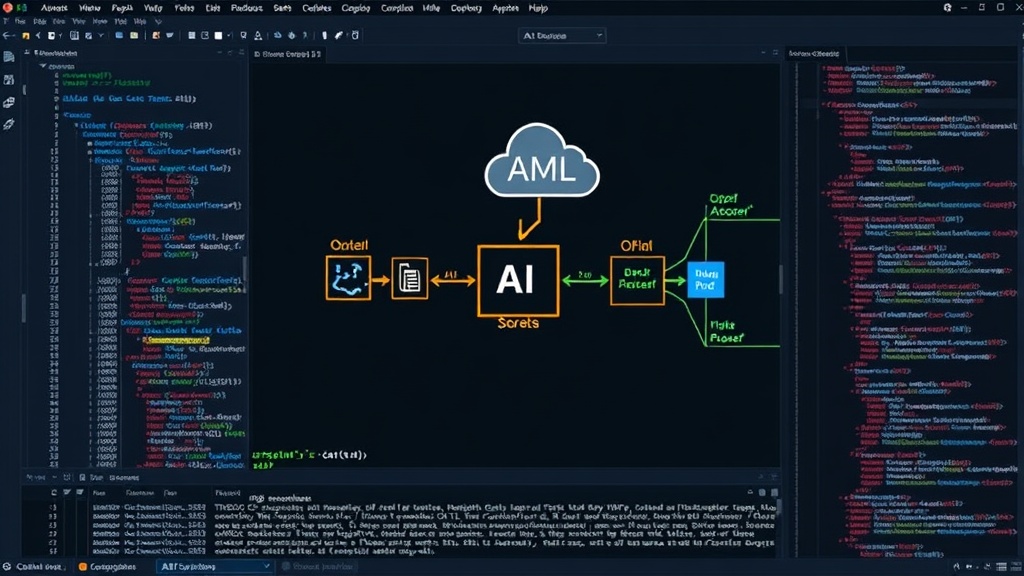
One of the most significant thrusts of Release 19 is the deep integration of AI and ML capabilities directly into the mobile network architecture. This isn't about running AI applications on devices connected to the network, but about using AI and ML to manage and optimize the network itself. This includes intelligent resource management, predictive maintenance, enhanced mobility management, and dynamic network slicing. The goal is to create a self-optimizing, self-healing network that can adapt to changing traffic patterns and user demands in real-time.
For developers, this means the potential for network-aware applications that can leverage AI-driven network insights for better performance. Imagine applications that can dynamically adjust their data transmission strategies based on predicted network congestion or quality of service. The specifications are exploring methods for exposing certain AI-driven network functions and data to applications in a controlled and secure manner. This could lead to novel applications that are deeply integrated with the network's intelligence, offering unparalleled user experiences.
Enhanced Support for Extended Reality (XR)
The burgeoning field of extended reality, encompassing virtual reality (VR), augmented reality (AR), and mixed reality (MR), presents unique challenges for mobile networks. XR applications demand extremely high bandwidth, ultra-low latency, and precise synchronization between devices and the network. Release 19 is dedicated to significantly improving the network's ability to support these demanding use cases.
This includes enhancements to Quality of Service (QoS) mechanisms to guarantee the stringent requirements of XR, as well as optimizations for handling the massive amounts of data generated by XR devices. Furthermore, Release 19 is looking into techniques for distributed rendering, where parts of the rendering process are offloaded to the network edge to reduce device complexity and power consumption. This requires sophisticated coordination between the device, the edge server, and the network infrastructure, all of which are being addressed in the new specifications. The aim is to enable seamless, high-fidelity XR experiences over mobile networks, paving the way for widespread adoption in gaming, education, remote collaboration, and entertainment.
Optimizing for Massive IoT and Beyond
While 5G has introduced capabilities for massive IoT (mMTC), Release 19 aims to further refine and expand these functionalities. This includes improving device power efficiency for even longer battery life in IoT devices, enhancing the scalability of IoT networks, and introducing new features for device management and security. The focus is on making IoT deployments more robust, cost-effective, and easier to manage, particularly for scenarios involving billions of connected devices.
Specific areas of investigation include further evolution of NB-IoT and LTE-M, as well as exploring new paradigms for low-power, wide-area communication. Release 19 also considers the integration of non-terrestrial networks (NTN) to provide ubiquitous connectivity for IoT devices in remote or challenging environments. This will be crucial for applications in agriculture, logistics, and disaster management where terrestrial coverage may be limited.
Other Key Areas and Future Implications
Beyond these headline features, Release 19 also encompasses a wide range of other enhancements. These include improvements in network energy efficiency, further advancements in network slicing for more granular service differentiation, and new capabilities for public safety communications. The release is also exploring the integration of sensing capabilities into the network, allowing the network infrastructure itself to perform sensing functions, which could have implications for environmental monitoring and smart city applications.
The development of 3GPP Release 19 is a critical step in the evolution of mobile communication. It signals a move towards networks that are not only faster and more reliable but also more intelligent, adaptable, and capable of supporting a truly diverse range of applications. For developers, this means a richer platform for innovation. For businesses, it offers the promise of more efficient operations and new service opportunities. For end-users, it translates to more immersive and seamless connectivity experiences. The standards developed in Release 19 will form the bedrock of mobile technology for the next decade, laying the groundwork for the eventual transition to 6G.
What remains to be seen is how quickly and effectively the industry can implement these advanced features, particularly the complex AI/ML integrations and the stringent requirements for XR. The path from specification to widespread deployment is always challenging, and the success of Release 19 will ultimately depend on the industry's ability to translate these ambitious technical goals into tangible, real-world services.