
The Demand for Local VRAM
The burgeoning field of local AI development, particularly for large language models (LLMs) and image generation, is creating an insatiable appetite for VRAM. As models grow in size and complexity, the need for significant on-card memory becomes paramount. Cloud-based solutions, while scalable, introduce latency, cost concerns, and data privacy issues for many users. This has driven a surge in demand for powerful, consumer-grade hardware capable of handling these demanding workloads directly on a user's machine. The NVIDIA RTX 2080 Ti, though several generations old, remains a potent GPU. Its original 11GB of GDDR6 VRAM, however, is increasingly a bottleneck for cutting-edge AI tasks. This limitation has spurred a niche but growing market for hardware modifications that push the boundaries of what these older cards can achieve.
Memory Modding Services Emerge
Recognizing this gap, independent hardware services have begun offering VRAM upgrades for popular GPUs. The most notable development is the ability to effectively double the VRAM on an RTX 2080 Ti from its stock 11GB to a more substantial 22GB. This is achieved through intricate hardware modifications, often involving the replacement or addition of memory chips and potentially adjustments to the card's BIOS or firmware to ensure compatibility and stability. These services cater to users who already own an RTX 2080 Ti and are looking for a cost-effective way to significantly boost its AI performance without investing in entirely new, high-end hardware. The process is not trivial and requires specialized knowledge and tools, making it inaccessible for the average consumer.
Pre-Modded Cards Hit the Market
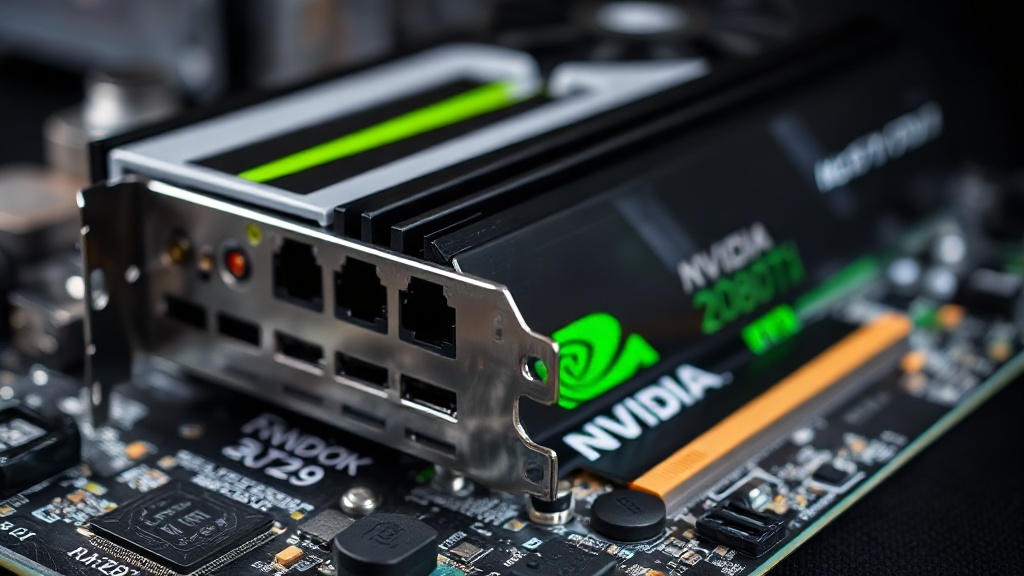
Now, a Hong Kong-based seller on eBay is taking this a step further by offering pre-modded RTX 2080 Ti cards directly for sale. For $499 USD, buyers can acquire a unit that has already undergone the 22GB VRAM modification. This bypasses the need for users to send in their own cards, wait for the mod to be completed, and risk damage during transit or the modification process itself. The availability of these pre-modded cards democratizes access to higher VRAM for local AI enthusiasts and professionals who might not have the technical expertise or the willingness to undertake such a modification themselves. The price point is particularly attractive when compared to the cost of newer GPUs that offer comparable or slightly better VRAM capacities, which often come with a much higher price tag.
Why the 2080 Ti Still Matters for AI
The RTX 2080 Ti, released in 2018, was NVIDIA's flagship consumer GPU of its generation. It features 4352 CUDA cores and a 352-bit memory bus, delivering substantial raw computational power. While newer architectures offer greater efficiency and specialized AI cores (like Tensor Cores), the sheer number of general-purpose CUDA cores and the now-expanded VRAM make the 2080 Ti a viable option for many AI tasks. For running models locally, especially LLMs, the VRAM capacity is often the primary limiting factor, more so than the architectural generation of the GPU. A 22GB card can accommodate larger models, larger batch sizes during training or inference, and more complex datasets. This allows users to experiment with models that would otherwise be too large to fit into the 11GB of a standard 2080 Ti, or even many current-generation cards without higher-tier VRAM configurations.
The Economics of Local AI Hardware
The emergence of these modified cards highlights a fascinating economic trend in the AI hardware market. Users are actively seeking the most FLOPs (floating-point operations per second) per dollar, and VRAM capacity is a critical component of that equation for AI workloads. While a new RTX 4090 offers significantly more performance, its price can easily exceed $1600, and its 24GB of VRAM might be overkill or simply too expensive for many. The $500 price for a 22GB RTX 2080 Ti represents a compelling value proposition for those prioritizing VRAM density over the absolute latest architecture or features. This strategy of extending the life and utility of older hardware through modification is a testament to the rapid evolution of AI and the high cost of entry for cutting-edge compute resources. It’s akin to tuning up an older, reliable car engine for a specific racing circuit rather than buying a brand-new supercar.
Implications for the AI Community
The availability of these affordable, high-VRAM cards could have a tangible impact on the accessibility of local AI development. It lowers the barrier to entry for researchers, hobbyists, and developers who want to run complex AI models without relying on expensive cloud services or investing thousands in new hardware. This could foster greater innovation and experimentation within the AI community. However, it also raises questions about the long-term support and driver compatibility for these modified cards, as well as the reliability and lifespan of hardware pushed beyond its original specifications. The seller's willingness to offer these pre-modded units suggests a calculated risk, betting on the sustained demand for VRAM-rich GPUs in the local AI ecosystem.
What's Next for VRAM-Hungry AI Users?
As AI models continue to grow, the demand for VRAM will only intensify. While this RTX 2080 Ti mod is a clever solution for many, it points to a broader industry need for more accessible, high-capacity memory solutions in consumer GPUs. Whether NVIDIA and AMD will offer more VRAM-rich options at lower price points, or if such third-party modifications will become more commonplace and sophisticated, remains to be seen. For now, these $500, 22GB cards represent a significant opportunity for anyone looking to maximize their local AI compute budget.