In 2006, engineers at the North American Network Oversight Center faced a stark reality. The high-speed packet analyzers in their secure telemetry labs pulsed with a rhythm that masked systemic instability. They weren't just monitoring network traffic; they were confronting the technical debt accrued from the 1983 transition from NCP to TCP/IP. This pivot, decades earlier, had sown the seeds for what would become known as the "Eternal Legacy" – a period between 2006 and 2008 that fundamentally reshaped the internet from an open platform into a pervasive surveillance infrastructure.
The Unforeseen Consequences of TCP/IP's Design
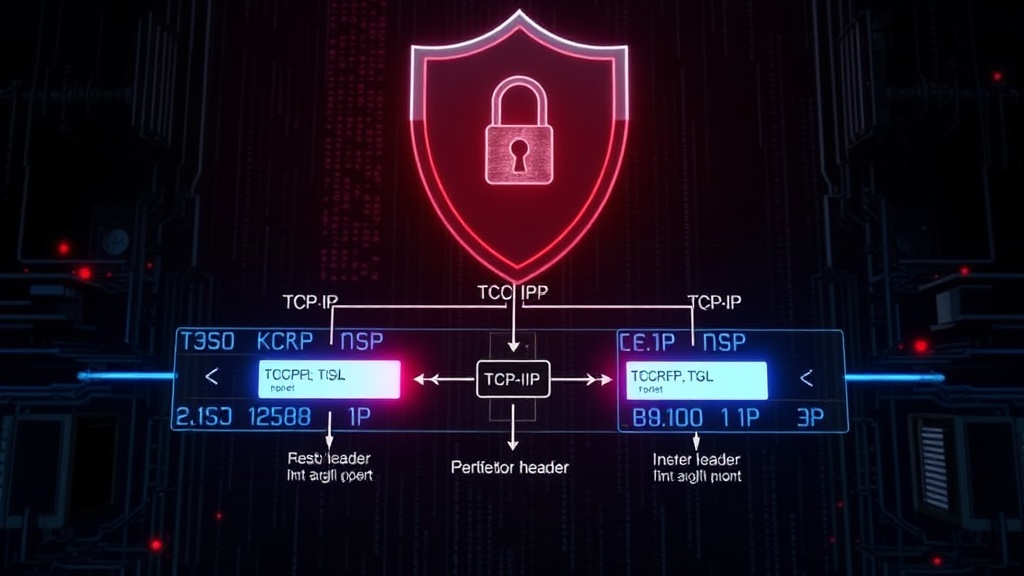
The transition to TCP/IP in 1983 was hailed as a triumph of networking. It enabled greater interconnectivity and scalability, laying the groundwork for the modern internet. However, this architectural shift, driven by the need for a more robust and adaptable protocol suite, carried with it unforeseen consequences. The inherent design of TCP/IP, particularly its connection-oriented nature and header structure, created vulnerabilities that were not apparent in the nascent stages of the internet. These vulnerabilities were not bugs in the traditional sense, but rather exploitable characteristics baked into the protocol itself.
By 2006, the internet had evolved from a research network into a global commercial and social backbone. The sheer volume and diversity of traffic, coupled with the increasing sophistication of network analysis tools, brought these latent flaws to the forefront. Engineers discovered that the very mechanisms designed for reliable data transmission could be manipulated for deep packet inspection and traffic analysis at an unprecedented scale. The diagnostic readouts that once signaled mere network health now painted a picture of pervasive data interception, a digital heartbeat that had become a surveillance pulse.
The Metamorphosis: From Open Internet to Surveillance State
The period between 2006 and 2008 was not marked by a single, dramatic event, but by a gradual, systemic metamorphosis. The 'open' internet, a concept that had defined its early years, began to erode. The protocols, originally conceived for academic and military communication, were proving to be remarkably susceptible to exploitation by state and commercial entities alike. The ability to analyze TCP/IP traffic provided a detailed map of user behavior, communication patterns, and even sensitive information, all without explicit user consent or knowledge.
This wasn't a case of malicious actors breaking into systems; it was the inherent structure of the internet's foundational protocols being leveraged for mass data collection. The engineers in the telemetry labs weren't just observing data; they were observing the architecture itself being weaponized. The technical debt of the 1983 transition had matured into a fully functional, albeit unintended, surveillance apparatus. The protocols designed to connect the world were now facilitating its scrutiny.
The implications were profound. Every connection, every data packet, could be a breadcrumb leading to a detailed profile of an individual or an organization. The initial promise of TCP/IP – a decentralized, resilient network – was being subverted. The very features that made it scalable and adaptable also made it an ideal candidate for large-scale monitoring. The engineers' findings suggested that the internet was not merely vulnerable to surveillance; it was, by its very nature, predisposed to it, a legacy that would continue to shape the digital landscape for years to come.
The "Eternal Legacy" and its Modern Aftermath
The "Eternal Legacy" refers to this period and the enduring impact of the discovered vulnerabilities. It highlights how decisions made in the early days of networking, particularly the adoption of TCP/IP, created a foundational structure that, while enabling the internet's growth, also embedded surveillance capabilities. The revelations of 2006-2008 were not about discovering new exploits, but about understanding the fundamental nature of the existing infrastructure and its potential for misuse.
What followed was a quiet re-architecting of network security and data handling practices. While the core TCP/IP protocols remained, the layers built upon them began to incorporate more robust encryption and anonymization techniques. However, the underlying susceptibility remained. The internet, as it existed after 2008, was a testament to this legacy: a network capable of unprecedented connection and communication, but also of unprecedented observation. The digital heartbeat observed in 2006 had indeed become the rhythm of modern surveillance, a system built on protocols that were never truly designed for privacy in the age of mass data analysis.
The surprising detail here is not the existence of surveillance capabilities, but their inherent design within the internet's core protocols, a consequence of a decades-old technical decision that only became critically apparent with scale and time. The engineers were not battling external threats as much as they were dissecting the unintended, yet potent, surveillance potential of the internet's very architecture. This realization fundamentally shifted the understanding of digital privacy and security, setting the stage for ongoing debates and technological advancements aimed at mitigating these legacy vulnerabilities.
The legacy of 2006-2008 is the internet we inhabit today: a marvel of connectivity, but one where the potential for surveillance is a constant, underlying current. The challenge for developers and security professionals moving forward is to build on this foundation while actively working to contain and neutralize the risks inherent in its original design. The digital heartbeat continues, but the understanding of its implications has irrevocably changed.