
A Retro Horror Experience for the Sega 32X
In a move that blurs the lines between modern internet folklore and vintage gaming, developer PaisleyBoxers has released Backrooms 32X. The game, marketed with the tagline 'welcome to the cutting edge of 1994,' transports players into the unsettling, procedurally generated liminal spaces popularized by the 'Backrooms' creepypasta. What makes this release particularly noteworthy is its target platform: the Sega 32X, a notoriously underpowered add-on for the Sega Genesis released in 1994. Achieving a first-person, raycasted experience on this hardware is a significant technical feat, pushing the console to its absolute limits.
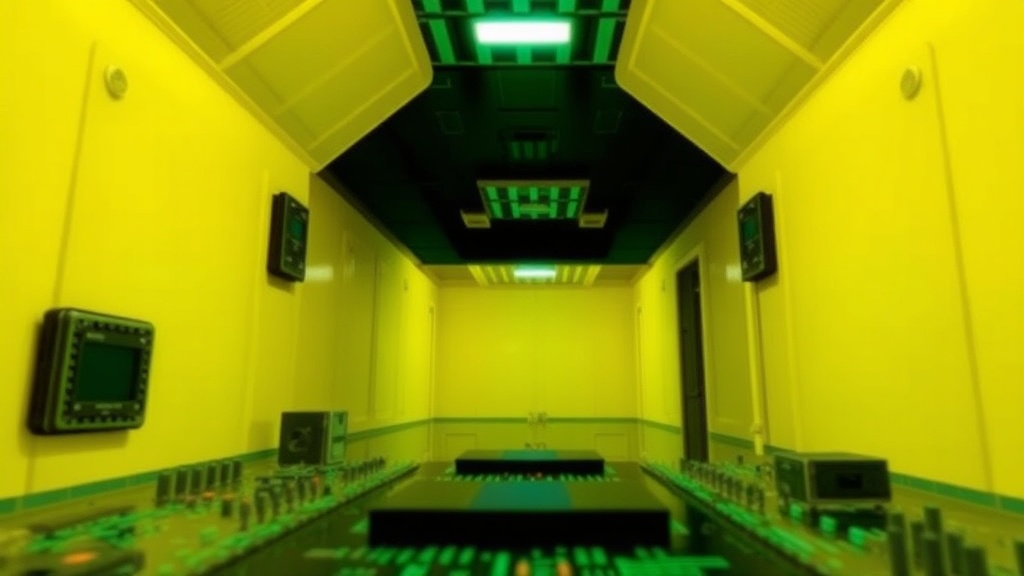
The Backrooms concept, which gained significant traction online and was further amplified by a recent psychological horror indie film, thrives on its minimalist aesthetic and pervasive sense of dread. Typically, Backrooms experiences feature endless, maze-like environments composed of monotonous yellow wallpaper, damp carpets, and the incessant hum of fluorescent lights. The horror stems from the isolation, the disorienting repetition, and the implication of unseen entities lurking just beyond the player's perception. Bringing this to the Sega 32X, a console known for its struggles to even render basic 3D graphics competently, presents a fascinating challenge.
Technical Prowess on 1994 Hardware
PaisleyBoxers' achievement lies in the implementation of a raycasting engine. Raycasting, a technique popularized by games like Wolfenstein 3D and Doom, allows for the rendering of pseudo-3D environments from 2D maps. It involves casting rays from the player's viewpoint into the game world to determine what surfaces are visible. While standard on PCs of the era, achieving this on the Sega 32X, which primarily relied on 2D sprite manipulation and had limited 3D capabilities, is an impressive demonstration of retro-development skill. The developer has managed to recreate the iconic yellow rooms, the unsettling fluorescent lighting, and the vast, procedurally generated levels that define the Backrooms experience.
The procedural generation is key to the game's replayability and its adherence to the Backrooms lore. Unlike pre-designed levels, procedural generation ensures that each playthrough offers a unique, albeit consistently unnerving, layout. This technique, while common in modern game development, was exceptionally rare and complex to implement on 16-bit and 32-bit era hardware. The fact that Backrooms 32X can generate these endless, labyrinthine spaces on the 32X suggests a deep understanding of the hardware's architecture and clever optimization techniques. The visual fidelity, while necessarily basic due to the hardware constraints, aims to capture the oppressive atmosphere of the source material. Players can expect the characteristic low-resolution textures and blocky geometry that are hallmarks of early 3D rendering, paradoxically enhancing the retro charm and the psychological horror.
The Backrooms Phenomenon Meets Retro Gaming
The Backrooms phenomenon began as an anonymous post on the /x/ (paranormal) board of 4chan in 2019, describing a surreal and terrifying liminal space. It has since evolved into a vast collaborative fiction project, spawning countless stories, videos, and now, games. The recent surge in popularity, partly due to an acclaimed indie film, has brought the concept to a wider audience. Its appeal lies in its ambiguity and its ability to tap into a primal fear of being lost and alone in an uncaring, nonsensical environment.
Marrying this modern internet horror trope with the Sega 32X creates an interesting juxtaposition. The 32X itself is a piece of gaming history often remembered for its commercial underperformance and its ambitious, yet ultimately flawed, attempt to extend the life of the Genesis. It promised more powerful 3D graphics and processing capabilities, but its library was limited, and many of its titles failed to live up to the hype. To see it now used to power a game that channels the specific anxieties of contemporary internet culture is a testament to the enduring power of creative development, even on aging hardware. It’s less about bleeding-edge graphics and more about atmosphere and clever design, proving that effective horror doesn't require photorealism.
The developer, PaisleyBoxers, seems to fully embrace the retro-tour-de-force aspect of the project. By explicitly referencing 'the cutting edge of 1994,' they are not only setting expectations but also highlighting the technical challenge they've overcome. This isn't a game designed to compete with modern titles; it's a deliberate artistic statement and a technical showcase for a piece of hardware many consider obsolete. It appeals to a niche audience: retro gaming enthusiasts, fans of the Backrooms lore, and those who appreciate the ingenuity required to push vintage consoles beyond their perceived limits.
Implications for Retro Development
Backrooms 32X serves as a compelling case study in modern retro game development. It demonstrates that with enough dedication and technical expertise, developers can achieve surprisingly sophisticated experiences on legacy hardware. The use of raycasting, procedural generation, and atmospheric design on the 32X suggests that there may be untapped potential in other vintage systems for similar projects. It encourages a re-evaluation of what was considered possible on these consoles, moving beyond the limitations imposed by the original developers and publishers.
What remains to be seen is how widely this approach will be adopted. The market for new games on obsolete hardware is inherently small, but it is passionate. Developers like PaisleyBoxers are not just creating games; they are preserving and extending the life of these platforms, offering new ways for enthusiasts to engage with them. The success of Backrooms 32X could inspire other developers to explore similar ambitious projects, potentially leading to a renaissance of homebrew development for consoles that have long been out of production. It raises the question of what other modern game concepts could be translated into the unique constraints and aesthetics of 1990s hardware, offering a distinct alternative to the polished, high-fidelity experiences prevalent today.