%22%20%2F%3E%0A%20%20%3C%2Fsvg%3E)
What is Torinoa Tools?
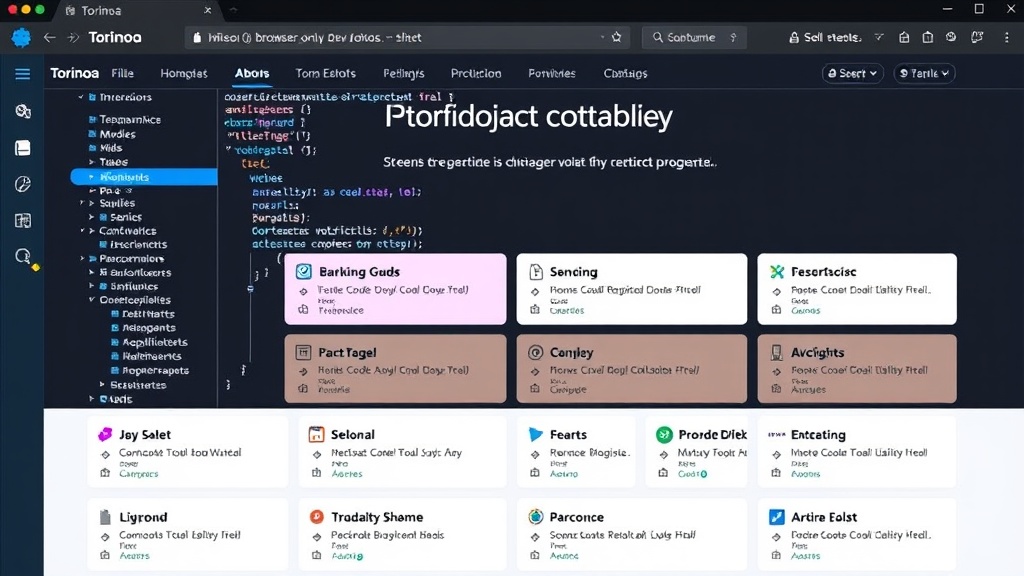
Torinoa Tools is a solo-developed project that aggregates 152 developer utilities, including Base64 conversion, JSON formatting, regex testing, subnet calculators, and AES encryption. Crucially, all these tools operate entirely client-side, meaning no input data ever leaves the user's browser. This privacy-focused approach is paired with bilingual support (Japanese/English) managed through Astro's Content Collections. The site is built using Astro with Vue 3 and TypeScript, and is also distributed as a Docker image.
Instead of a typical feature showcase, this article delves into specific implementation details. These include an architecture fix implemented at build time, a custom encryption tool leveraging only the Web Crypto API, and a compact VLSM subnetting algorithm.
Addressing the 755KB CSS Chunk Problem
Early in development, all 143 tools were funneled through a single dynamic route, pages/tools/[slug].astro. This approach, while simple, led to a significant problem: a massive CSS chunk of 755KB. This bloated stylesheet impacted initial load times and overall performance. The root cause was the aggregation of styles from all tools into one monolithic file.
To resolve this, a build-time architecture fix was implemented. Instead of dynamically importing all tool components and their associated styles into the main route, the build process was refactored. Each tool's JavaScript and CSS are now bundled and loaded independently. This ensures that only the necessary assets for the specific tool being viewed are downloaded by the user. This modularization drastically reduced the initial load size and improved the user experience, especially for users on slower connections or with limited bandwidth.
Web Crypto API for Encryption
A key component of Torinoa Tools is its encryption utility. The developer opted to build this using only the Web Crypto API, avoiding external libraries. This decision offers several benefits, including reduced bundle size and enhanced security assurance by relying on a standardized browser API. The Web Crypto API provides cryptographic primitives such as hashing, key generation, encryption, and decryption, all accessible directly from the browser.
Implementing AES encryption and decryption required careful handling of key management and data transformation. The process typically involves generating a secret key, encrypting the plaintext data using this key and a chosen mode (like GCM for authenticated encryption), and then encoding the resulting ciphertext. For decryption, the process is reversed, using the same key and parameters. The developer's implementation focuses on providing a straightforward interface for users to encrypt and decrypt sensitive information without needing to install any software or rely on server-side processing, reinforcing the project's client-side ethos.
A Compact VLSM Subnetting Algorithm
Network administration tools are a staple in developer utility suites, and Torinoa Tools includes a subnet calculator. Building a Variable Length Subnet Masking (VLSM) algorithm from scratch presented an interesting challenge. VLSM allows for more efficient use of IP address space by enabling subnets of different sizes within a larger network. The implementation needed to be both accurate and performant, especially given the client-side constraint.
The algorithm likely involves parsing the user-provided IP address and subnet mask, determining the network address, and then calculating the possible subnet ranges based on a given number of hosts or desired subnet mask. This requires bitwise operations to manipulate IP addresses and masks. The developer focused on creating a compact and efficient algorithm, ensuring it could run quickly in the browser and provide accurate results for network engineers and system administrators. This algorithmic implementation showcases the depth of functionality achievable within a browser-only environment.
Astro's Role in Static Site Generation
Astro served as the foundational framework for Torinoa Tools. Its ability to build content-focused, static sites with Islands Architecture is crucial here. Islands Architecture allows developers to ship zero JavaScript by default, only hydrating interactive components (the Vue 3 tools in this case) on demand. This is a significant advantage for a site with over 150 tools, as it prevents the entire application's JavaScript from being downloaded and parsed upfront.
The use of Astro Content Collections simplified the management of bilingual content and the organization of the numerous tool pages. Each tool can be treated as a content piece, allowing for structured metadata and easy rendering. The build process leverages Astro's capabilities to pre-render all pages, ensuring fast load times and excellent SEO. The choice of Astro aligns perfectly with the goal of creating a performant, client-side-heavy application that remains lightweight.
Vue 3 and TypeScript Integration
Vue 3 was chosen to power the interactive elements of each developer tool. Its Composition API and performance improvements make it well-suited for building complex, component-based UIs. TypeScript adds a layer of static typing, catching potential errors during development and improving code maintainability, which is vital for a project with over 150 individual tools. Each tool is likely implemented as a separate Vue component, dynamically loaded by Astro when a user navigates to a specific tool's page.
This combination ensures that the individual tools are not only functional but also maintainable and scalable. The developer can manage the complexity of numerous interactive features without sacrificing performance, thanks to Astro's Islands Architecture. The TypeScript integration also means that as the project grows, it remains robust and easier to debug.
Docker Distribution
Providing a Docker image for Torinoa Tools offers an alternative deployment method for users who prefer or require self-hosting. This is particularly useful for organizations that need to ensure data privacy or require offline access to these utilities. The Docker image encapsulates the entire application, including its dependencies, ensuring a consistent environment regardless of where it's deployed. This approach broadens the accessibility and usability of the toolset, catering to a wider range of developer needs and security postures.