The Unlikely Candidates for AI Compute
In the relentless churn of the tech industry, hardware is often declared obsolete long before its true potential is exhausted. This is particularly true for GPUs, where each generation promises exponential leaps in performance. However, a recent deep dive into 15 older NVIDIA Tesla data center GPUs, many considered "e-waste," reveals a surprising resilience when tasked with modern artificial intelligence workloads. The study, conducted by a team including ESoLogic's founder, benchmarks these retired cards against contemporary AI training and inference tasks, challenging the conventional wisdom that only the latest hardware is capable of handling cutting-edge AI development.
The premise is simple yet compelling: can hardware that is no longer considered top-tier, or even actively being decommissioned, still offer value? For organizations with limited budgets, or for individuals experimenting with AI without access to expensive cloud compute or the latest GPUs, this question is critical. The findings suggest that for certain types of AI tasks, the answer might be a resounding yes. The GPUs tested span several generations of NVIDIA's data center offerings, from the venerable M2070 and K80 to the more recent P100 and V100, all of which have largely been superseded by Ampere and Hopper architectures.
The motivation behind such a benchmark is rooted in the economics of AI. Training large language models and complex neural networks demands immense computational power, typically met with fleets of the newest, most powerful GPUs. This creates a significant barrier to entry for smaller companies, research labs, and individual developers. By evaluating older hardware, the study aims to uncover a more accessible path to AI compute, repurposing hardware that would otherwise contribute to electronic waste. This approach not only offers a cost-saving advantage but also aligns with growing environmental concerns surrounding the energy consumption and lifecycle of high-performance computing hardware.
Methodology: Testing the Limits of Legacy Hardware
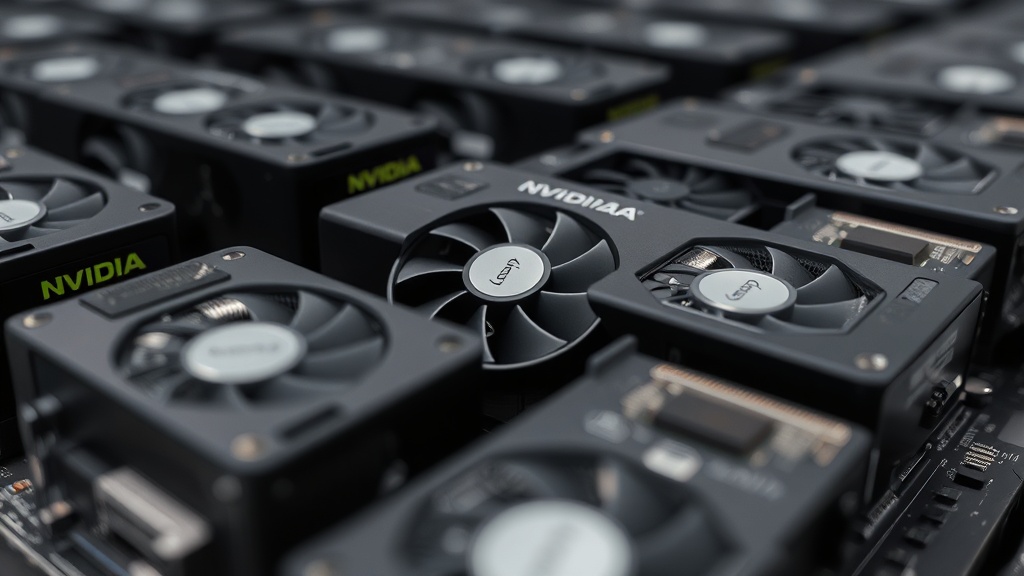
The benchmarking process involved a curated selection of 15 distinct NVIDIA Tesla GPU models. These were not just any old cards; they represented a spectrum of architectures and performance tiers that have passed through data centers over the last decade. The workloads were specifically chosen to reflect contemporary AI development needs, including training deep learning models and running inference for tasks like image recognition and natural language processing. Key metrics tracked included training time, inference latency, and power consumption. The setup likely involved custom server configurations to accommodate the variety of PCIe interfaces and power requirements of these older cards, a non-trivial engineering feat in itself.
Crucially, the study acknowledges that these older GPUs are not direct competitors to the latest generations. Instead, the goal is to establish a performance baseline and identify specific use cases where their capabilities remain relevant. For instance, while a K80 might struggle with training a massive LLM from scratch in a reasonable timeframe, it could still be perfectly adequate for fine-tuning smaller models or for deploying inference on less computationally intensive tasks. The comparison is not about finding a new king of the hill, but about identifying viable, budget-friendly workhorses.
Performance Insights: Where the Old Guard Shines (and Stumbles)
The results offer a nuanced picture. Some of the older cards, particularly those based on the Kepler and Maxwell architectures (like the K80 and M40), showed predictable limitations. They were significantly slower than newer GPUs in raw compute power and lacked support for advanced features like Tensor Cores, which accelerate matrix multiplication – a cornerstone of deep learning. Training times for complex models on these cards could extend to days or even weeks, making them impractical for rapid iteration or large-scale training.
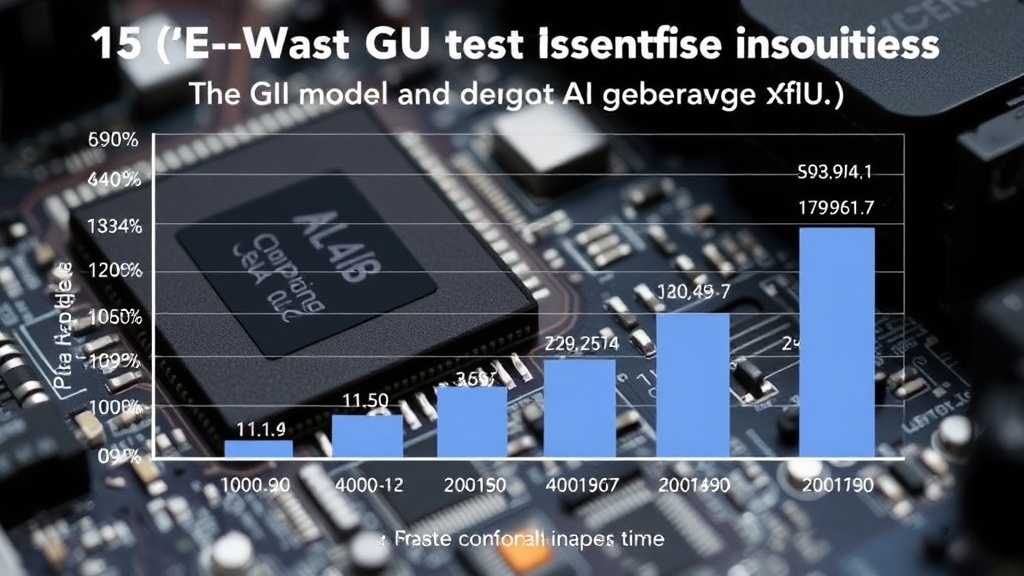
However, the P100 and V100, while also older by current standards, demonstrated surprising utility. These cards, based on the Pascal and Volta architectures respectively, offer more robust FP16 (half-precision floating-point) performance and higher memory bandwidth. For inference tasks, or for training models that are not excessively large or computationally demanding, they can still provide a respectable level of performance at a fraction of the cost of current-generation hardware. The data suggests that if an organization can acquire these GPUs cheaply, the total cost of ownership, even with potentially higher power draw, could be significantly lower than renting cloud instances or purchasing new hardware for specific, less demanding AI applications.
One of the most striking findings is the performance gap between different generations within the "e-waste" category. The jump from Kepler (K80) to Pascal (P100) and Volta (V100) represents a substantial increase in efficiency and capability, proving that not all older GPUs are created equal. The P100, for example, with its HBM2 memory, offers a significant advantage over older GDDR5-based cards for memory-bound AI workloads.
The Economic and Environmental Equation
The economic argument for repurposing these GPUs is compelling. Data centers frequently upgrade their hardware, leading to a surplus of decommissioned but still functional GPUs. These cards can often be acquired for pennies on the dollar through surplus auctions or specialized resellers. For startups or academic institutions with tight capital expenditure budgets, this offers a tangible way to build out compute resources without significant upfront investment. The cost savings can be directed towards other critical areas, such as talent acquisition or data acquisition.
Environmentally, extending the life of electronic components is a crucial step in mitigating the growing problem of e-waste. The manufacturing of GPUs is resource-intensive, requiring rare earth minerals and significant energy. By finding new life for these cards, the industry can reduce the demand for new manufacturing and divert hardware from landfills. This study, therefore, presents a dual benefit: economic accessibility and environmental responsibility. It's less about maximizing raw performance and more about achieving a cost-effective, sustainable approach to AI compute.
What This Means for AI Development
The implications of this research are far-reaching, particularly for the democratization of AI. It suggests that a significant segment of the AI community, previously priced out of powerful hardware, now has a viable path to engage in more sophisticated AI development. This could lead to increased innovation from a broader range of actors, fostering a more diverse and competitive AI ecosystem. Developers and researchers can experiment with more complex architectures or larger datasets than previously possible on their existing budget-constrained hardware.
However, it's not a universal solution. The limitations of these older GPUs in terms of raw speed, power efficiency, and support for the latest AI acceleration technologies mean they won't replace cutting-edge hardware for demanding, time-sensitive tasks. Organizations must carefully assess their specific workload requirements. For rapid prototyping, training massive foundational models, or deploying at hyperscale, the latest architectures remain indispensable. But for fine-tuning, inference on established models, or educational purposes, these "e-waste" GPUs offer a compelling value proposition. The surprise is not that they *can* run modern workloads, but that they can do so with enough efficacy to warrant serious consideration for specific, budget-conscious applications.
This study serves as a powerful reminder that hardware obsolescence is often a market-driven phenomenon rather than a strict technical one. By understanding the specific capabilities and limitations of older hardware, developers and organizations can make more informed decisions, potentially unlocking significant value from what might otherwise be discarded.