The Flaws in Traditional Security Auditing
Static analysis tools (SAST) and manual penetration testing, the cornerstones of software security auditing, fall short in modern development environments. SAST tools often drown developers in a sea of alerts, with high false-positive rates and a severe lack of contextual understanding. On the other hand, human penetration testers, while thorough, are prohibitively expensive and too slow to keep pace with rapid CI/CD pipelines. This gap leaves open-source software, the backbone of much of the digital world, vulnerable to persistent threats.
Enter NEXUS: An AI Agent Civilization
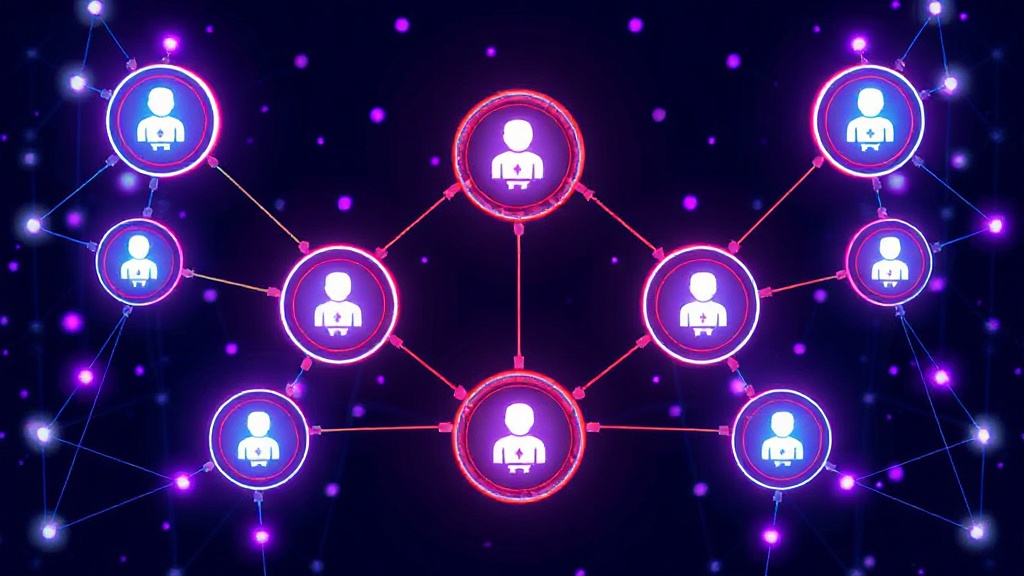
Addressing these limitations, a team participating in the Qwen Cloud Global AI Hackathon developed NEXUS, an innovative system that rethinks security auditing from the ground up. Instead of relying on a single, monolithic AI to find and fix bugs, NEXUS orchestrates a specialized civilization of 10 distinct AI agents. This multi-agent approach aims to mimic the collaborative and specialized nature of human security teams, automating the entire vulnerability lifecycle. The goal is to move beyond simple bug detection to a more comprehensive, scalable, and context-aware security assurance process for open-source projects.
The Agent Specializations
The NEXUS system divides the complex task of security auditing into 10 specialized roles, each handled by a dedicated AI agent. This modular design prevents the common issue of large language models (LLMs) hallucinating solutions or providing generic, unhelpful advice when asked to perform complex tasks like finding and fixing bugs. Each agent is trained and optimized for its specific function within the vulnerability lifecycle:
- Discovery Agents: These agents are tasked with initial reconnaissance and identifying potential areas of weakness within the codebase. They use various techniques to scan for known patterns of vulnerabilities.
- Triage Agents: Once potential issues are flagged, triage agents analyze the alerts, filter out false positives, and prioritize genuine vulnerabilities based on severity and exploitability.
- Exploitation Agents: These agents simulate real-world attack scenarios. They attempt to actively exploit identified vulnerabilities to confirm their existence and assess their impact. This step is crucial for moving beyond theoretical risks to demonstrable security flaws.
- Patching Agents: Upon successful exploitation and confirmation, patching agents are responsible for generating code fixes. They analyze the vulnerability and propose specific code modifications to eliminate the security risk.
- Reporting Agents: Finally, reporting agents compile all findings into clear, actionable reports. These reports detail the discovered vulnerabilities, their impact, the exploitation methods, and the applied patches, providing comprehensive documentation for developers and maintainers.
- (Additional Agents - Specifics not detailed in source but implied by '10 distinct agents'): The remaining agents likely cover crucial supporting roles such as code analysis, context gathering, threat modeling, verification of fixes, and integration with development workflows.
Leveraging Qwen and Alibaba Cloud
The NEXUS system is built upon Alibaba Cloud's Qwen large language models, known for their strong performance in code understanding and generation. This foundational LLM capability is augmented by Alibaba Cloud's robust infrastructure, providing the necessary computational resources and services to train, deploy, and manage a multi-agent system of this complexity. The cloud platform enables seamless communication and coordination between the agents, facilitating the automated workflow from vulnerability discovery to remediation.
Implications for Open-Source Security
The NEXUS project represents a significant step towards automating and scaling software security assurance. By breaking down the security auditing process into specialized AI roles, it addresses the core shortcomings of existing methods. For open-source projects, which often operate with limited resources, this approach offers a path to more rigorous and continuous security evaluation without incurring prohibitive costs. The ability to automatically discover, triage, exploit, and even patch vulnerabilities could dramatically reduce the attack surface and improve the overall security posture of the open-source ecosystem. The success of NEXUS in a hackathon setting suggests a viable future for AI-driven, multi-agent security auditing systems.
The Unanswered Question of Agent Collaboration
While NEXUS demonstrates an impressive division of labor among AI agents, the precise mechanisms and effectiveness of their collaboration remain a key area for future exploration. How do these agents dynamically share context, learn from each other's outputs, and resolve conflicting information or strategies? Understanding these inter-agent communication protocols is critical for scaling such systems and ensuring their robustness in real-world, complex software environments. The success of this civilization hinges not just on individual agent intelligence but on their collective wisdom and seamless interaction.