The Problem with Standard OpenCV Video Capture
OpenCV-Python is a cornerstone for developers working with real-time video streams in Python. Its capabilities for camera capture and processing are extensive. However, a significant performance bottleneck emerges from the frequent creation and destruction of NumPy arrays. Each frame captured typically results in a new NumPy array being allocated and then discarded. This constant churn dramatically increases memory consumption and CPU overhead, particularly in high-frame-rate applications. For developers building applications like real-time object detection, video analysis, or streaming services, this inefficiency can quickly become a limiting factor.
The traditional pipeline involves capturing a frame, converting it into a NumPy array, processing it, and then releasing the memory associated with that array before the next frame is captured. This cycle, while functional, is inherently wasteful. Imagine a conveyor belt where each item requires a new, custom-built box to be manufactured, used once, and then immediately scrapped. This is analogous to how memory is managed for frames in a standard OpenCV pipeline. The goal is to move from this wasteful process to one where memory is allocated upfront and reused.
Introducing the Zero-Copy Paradigm
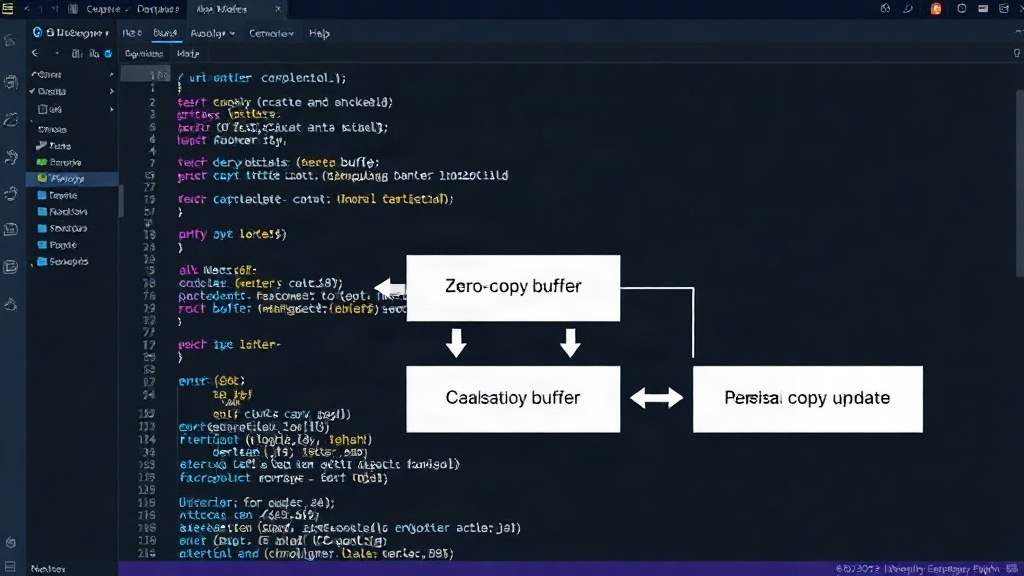
The proposed solution is a zero-copy paradigm that fundamentally alters how video frames are handled. Instead of creating new memory for each frame, this approach allocates a fixed memory buffer once. This buffer is then passed to the video backend, which directly updates its contents with the latest frame data. The Python frontend then accesses this pre-allocated, updated buffer. This eliminates the costly operations of memory allocation and deallocation for every single frame.
The architecture consists of two primary components: a Python frontend and a high-performance backend. The Python frontend provides the user-facing API, abstracting away the complexities of the underlying frame handling. The backend is responsible for interfacing directly with the camera hardware or video source. Libraries like FFmpeg or the C++ core of OpenCV can serve as potent backends. The key innovation lies in the communication between these two components. The Python frontend initializes a NumPy array (or a similar contiguous memory block) and provides a reference to its underlying memory buffer to the backend. The backend then writes the incoming frame data directly into this provided buffer. This is the essence of "zero-copy" – the data is copied only once from the hardware to the buffer, and then accessed by Python without further duplication.
Implementation Details and Benefits
Implementing this zero-copy streaming involves initializing a capture object, such as a hypothetical CapCapture class, which is designed to manage the underlying camera interaction and the shared memory buffer. When the capture object is initialized, it allocates a NumPy array of the appropriate dimensions and data type (e.g., `uint8` for typical video frames) to hold a single video frame. This array's buffer is then made available to the backend.
The backend, which could be a C++ extension or a separate process, receives the memory address of this buffer. As new frames arrive from the camera, the backend populates this buffer directly. The Python code can then access the frame data from this buffer without any new memory allocations. This drastically reduces the system's memory footprint and the associated garbage collection overhead. For applications that process thousands of frames per second, the performance gains can be substantial, enabling higher frame rates or more complex processing within the same hardware constraints.
Consider a scenario where a developer is building a real-time object detection system. In a traditional setup, each detected object might require further processing on a new frame copy. With zero-copy, the entire frame is available in memory, ready for the next stage of analysis. This not only speeds up the pipeline but also makes the application more predictable in its resource usage. The memory allocation is a one-time cost at initialization, rather than a recurring cost for every frame. This makes the system's performance more stable and less susceptible to memory fragmentation or allocation delays.
Potential Applications and Future Directions
The zero-copy video stream paradigm has broad implications across various fields. For robotics and autonomous systems, where real-time perception is critical, this technique can improve responsiveness and enable more sophisticated sensor fusion. In live streaming and video conferencing, it can reduce latency and improve the quality of service. For scientific research involving high-speed imaging, such as in microscopy or particle physics, the ability to process frames without memory bottlenecks is invaluable.
The surprising detail here is not the technical novelty of memory sharing, which exists in lower-level programming, but its elegant application and simplification within the Python ecosystem for a common task like video streaming. It bridges the gap between high-level Python usability and the performance demands of real-time computer vision. This approach could potentially be integrated into mainstream libraries or serve as a pattern for new libraries focused on efficient multimedia processing in Python. The next logical step would be to see standardized implementations or optimizations within popular frameworks, making this advanced technique accessible to a wider developer audience without requiring them to delve into low-level memory management details.
What Nobody Has Addressed Yet
While this zero-copy approach offers significant advantages, what nobody has fully addressed yet is the robustness of this shared memory model in complex, multi-threaded Python applications. Ensuring thread safety when multiple threads might attempt to access or modify the shared buffer, even if only for reading processed data, requires careful synchronization primitives. Furthermore, the handling of dropped frames or synchronization issues between the backend and frontend in scenarios of high system load remains an area for detailed exploration and robust error handling strategies. The performance gains are clear, but the full operational semantics and error recovery mechanisms in production environments still require significant development and testing.