The Problem with Data Duplication in Cloud Pipelines
Modern cloud architectures often rely on event-driven, AI-powered components. However, integrating these with legacy systems frequently introduces a familiar bottleneck: the data synchronization job. This process, often depicted as a simple box in architecture diagrams, watches old file shares and copies data into cloud storage like Amazon S3. The reality is far more complex. This synchronization creates two copies of the data, necessitating ongoing efforts to keep them consistent. This duplication is not just inefficient; it introduces latency, increases costs, and complicates data management.
The common sync job is a compromise. It allows new cloud-native systems to access data that originates from older, on-premises, or disparate systems. But it forces developers to manage two distinct data footprints and the processes that keep them aligned. This means more infrastructure to maintain, more potential points of failure, and a delay in data availability. For pipelines that need to react in near real-time, such as insurance claims intake or fraud detection, the latency introduced by scheduled syncs is unacceptable.
Consider an insurance claims process. An adjuster might upload photos and documents to an on-premises file server. A sync job then copies these files to S3. A separate application, designed to use cloud storage, then processes these claims. If the sync job runs hourly, a claim filed immediately after a sync will not be processed for up to an hour. This delay can impact customer satisfaction and operational efficiency. The core issue is that the new system isn't directly accessing the most up-to-date data; it's accessing a snapshot that might be hours old.
Introducing Zero-Copy, Multi-Protocol Storage
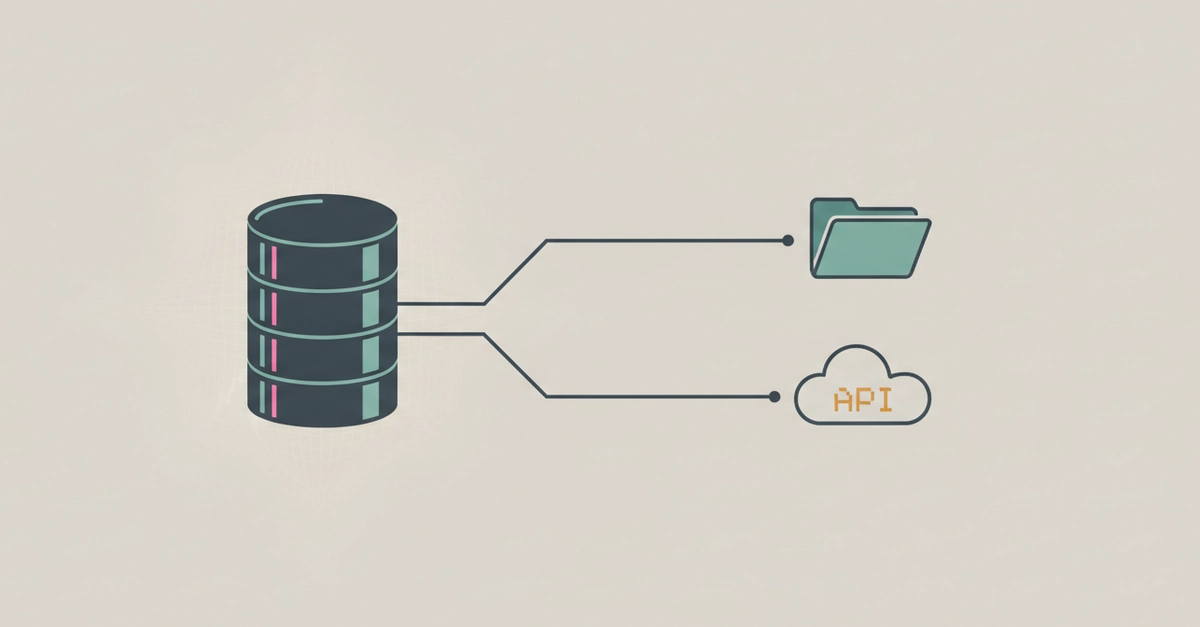
The alternative is a pattern that eliminates the need for data duplication: zero-copy, multi-protocol storage. This architectural approach allows different protocols to access the *same* underlying data residing in a single storage location. This means a legacy application can write data using its native protocol (like SMB or NFS), while a modern cloud application can read that same data using a cloud-native protocol (like S3 API) without any intermediate copying or synchronization step.
The key is a storage system that exposes multiple access protocols to the same data set. For instance, Amazon FSx for NetApp ONTAP (FSxN) supports both traditional file protocols (NFS, SMB) and the S3 API. When data is written via NFS or SMB to an FSxN volume, it is immediately available via the S3 API to other applications. Conversely, data written via the S3 API is accessible via NFS/SMB. This eliminates the need for a separate sync job because there is only ever one copy of the data.
This pattern transforms data pipelines from a series of sequential, bottlenecked steps into a more fluid, responsive system. Instead of waiting for a sync, applications can react to data as soon as it's written. This is particularly impactful for use cases requiring low latency, such as real-time analytics, financial trading platforms, or critical operational systems.
A Proof of Concept: Insurance Claims Intake
To demonstrate the viability of this pattern, a proof of concept was built using Amazon FSx for NetApp ONTAP to streamline an insurance claims intake pipeline. Traditionally, this process might involve an adjuster uploading documents to a file share. A scheduled job would then copy these files to an S3 bucket. An AI service would process the files from S3, potentially triggering further actions. Each step adds latency.
In the zero-copy architecture, the adjuster uploads documents directly to the FSxN volume using SMB. The same FSxN volume is configured to provide S3 API access. A serverless function (like AWS Lambda) is triggered by S3 object creation events, but because FSxN makes data available via S3 API concurrently with SMB/NFS, the function can immediately access and process the uploaded documents. This eliminates the hourly or even minute-level delay associated with traditional sync jobs. The result is a pipeline that can ingest and begin processing claims in seconds, rather than minutes or hours.
This approach simplifies the architecture significantly. The sync job is gone. The complexity of managing two data locations and ensuring consistency is eliminated. The data is always fresh and immediately available to any service that needs it, regardless of the protocol it uses.
Broader Implications for Data Architectures
The zero-copy, multi-protocol storage pattern addresses a fundamental challenge in modern data architectures: bridging the gap between legacy systems and cloud-native services without introducing unnecessary complexity and latency. This pattern is not merely a technical optimization; it's a shift in how we think about data access.
Instead of designing pipelines around discrete data movement steps, architects can now envision a more unified data fabric. Data written by one application using one protocol is instantly accessible by another using a different protocol. This fosters greater agility and responsiveness across the entire data ecosystem. For organizations grappling with digital transformation, this pattern offers a pragmatic way to modernize without a complete overhaul of existing infrastructure or a costly, time-consuming data migration.
The implications extend to cost savings as well. Eliminating sync jobs reduces compute, storage, and network egress costs associated with data duplication and movement. More importantly, it frees up developer time previously spent managing these complex synchronization processes, allowing them to focus on building core business value.
What remains to be fully explored is the long-term operational management of such unified storage systems. While FSxN offers a robust solution, understanding the performance characteristics, cost models, and best practices for managing multi-protocol access at massive scale will be crucial for widespread adoption. Nevertheless, the core concept of single-copy, multi-protocol data access represents a significant step forward for data pipeline architecture.