Introducing Yoggi: A Secure AI Companion for Children
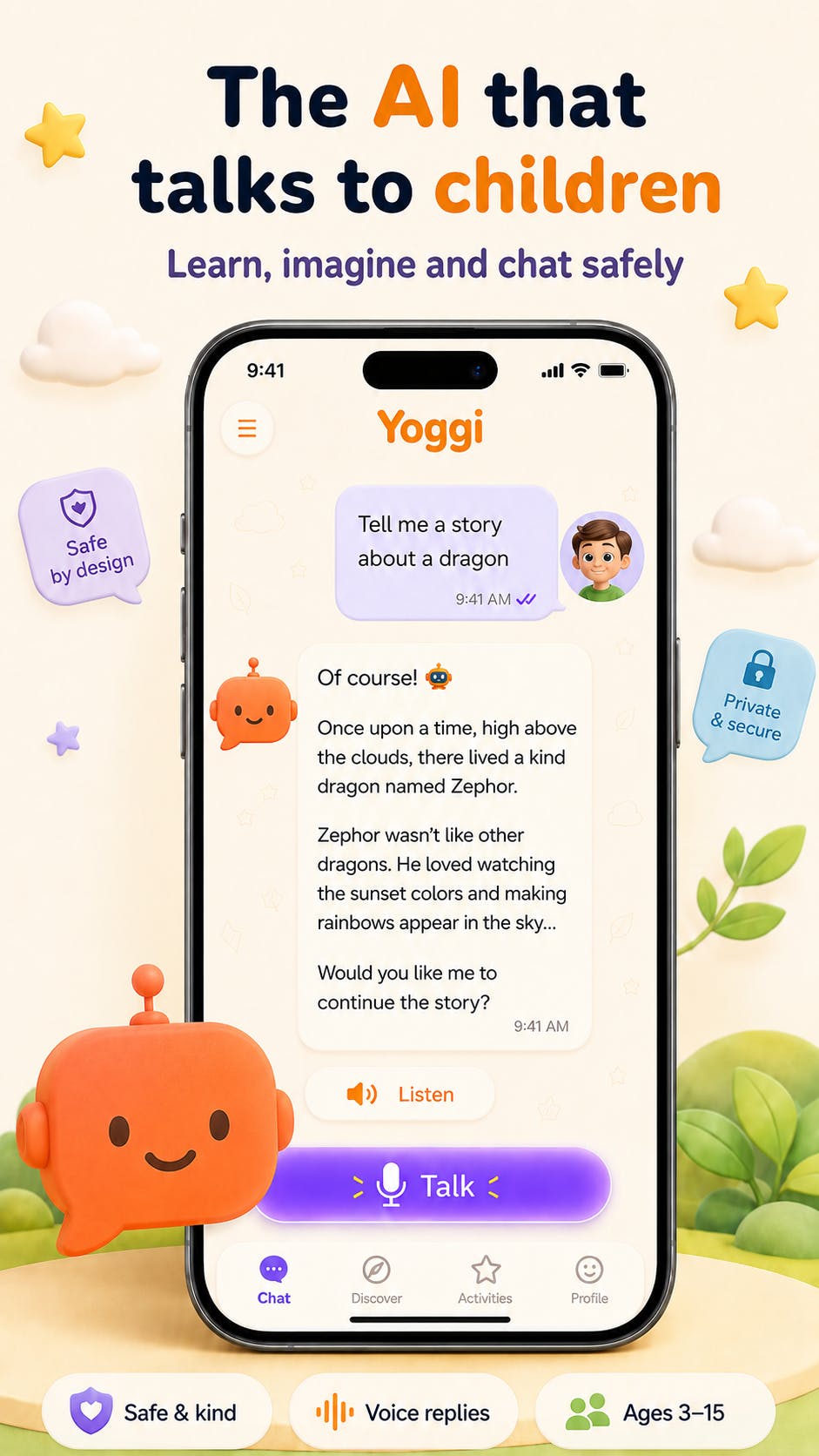
The digital landscape for children is expanding rapidly, and with it comes the perennial challenge of ensuring online safety. Enter Yoggi, a new AI-powered chat application designed specifically to offer a secure and engaging environment for kids. Launched on Product Hunt, Yoggi aims to bridge the gap between children's natural curiosity and parents' need for peace of mind.
Yoggi's core proposition is 'Safe AI chat for kids.' This isn't just a marketing tagline; it's the foundational principle guiding the product's development. In an era where AI tools are becoming ubiquitous, the need for specialized, child-friendly applications is paramount. Unlike general-purpose AI chatbots that may inadvertently expose children to inappropriate content or complex concepts, Yoggi is built with a specific, age-appropriate focus.
The Need for Child-Centric AI
Current AI chatbots, while powerful, are often trained on vast, unfiltered datasets from the internet. This means they can generate responses that are factually incorrect, biased, or simply unsuitable for young audiences. Parents are rightfully concerned about their children interacting with technology that hasn't been curated with their developmental stage in mind. The potential for accidental exposure to mature themes, misinformation, or even predatory behavior necessitates a more controlled approach.
Yoggi addresses this by implementing robust safety protocols. While the specifics of these protocols are not detailed in the initial announcement, the emphasis on 'safe' implies several key considerations: content filtering, moderation, and a design that encourages positive and educational interactions. The goal is to create a digital friend that can answer questions, tell stories, and engage in imaginative play without the risks associated with more open-ended AI systems.
Think of it less like a general-purpose encyclopedia and more like a highly knowledgeable and infinitely patient librarian who only stocks books approved for young readers. This curated experience is crucial for building trust with both children and their guardians.
Features and User Experience
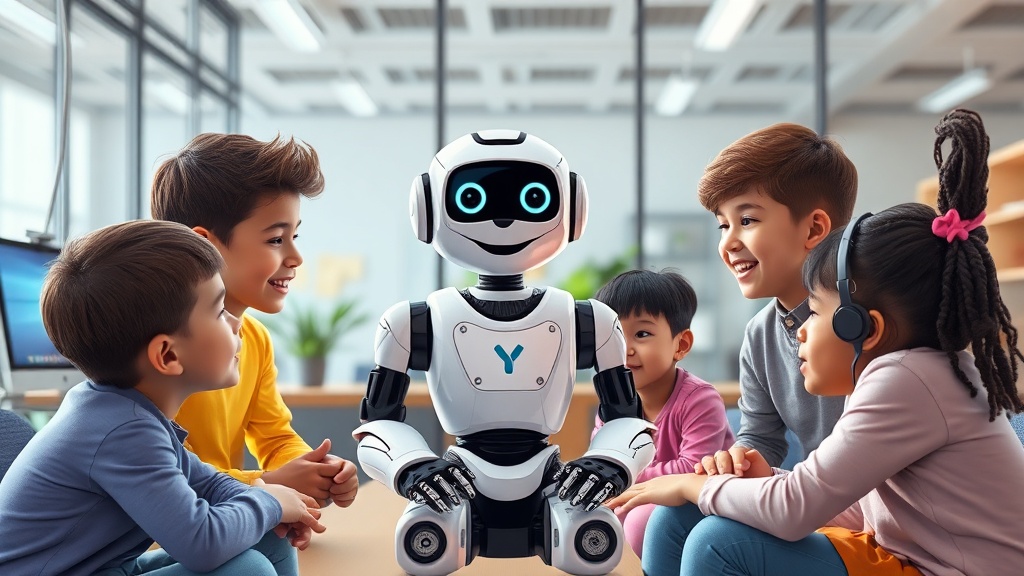
While the Product Hunt listing is concise, the core functionality revolves around conversational AI. This suggests Yoggi can engage children in dialogue, answer their questions about the world, help with homework, or even participate in creative storytelling. The platform likely employs natural language processing (NLP) tailored to understand and respond to children's queries in an age-appropriate manner.
The user interface is expected to be intuitive and visually appealing to young users, with bright colors, friendly characters, and easy navigation. For parents, the emphasis will be on the underlying safety mechanisms. This could include:
- Content Moderation: AI and potentially human oversight to ensure all interactions remain safe and appropriate.
- Privacy Protection: Strict adherence to data privacy regulations for children, such as COPPA, ensuring personal information is not collected or misused.
- Educational Focus: Integration of learning elements, encouraging curiosity and knowledge acquisition in a fun way.
- Parental Controls: Features that allow parents to monitor usage, set limits, or customize the AI's behavior.
The success of Yoggi will hinge on its ability to balance engaging interaction with uncompromising safety. If it can provide a genuinely fun and educational experience while assuring parents that their children are protected, it could carve out a significant niche in the edtech and AI space.
Market Context and Future Implications
The market for children's digital products is substantial, with parents increasingly willing to invest in tools that offer educational value and a safe online experience. The rise of AI presents both opportunities and challenges in this sector. Companies that can successfully navigate the complexities of AI safety for young users stand to gain a considerable advantage.
Competitors in this space might include educational apps that incorporate AI elements, or general AI platforms attempting to add child safety layers. However, a product built from the ground up with child safety as its primary directive, like Yoggi appears to be, could offer a more robust and trustworthy solution.
What remains to be seen is the extent of Yoggi's AI capabilities and how deeply it integrates educational content. Will it simply be a conversational agent, or will it evolve into a dynamic learning platform? The long-term vision for Yoggi, and how it plans to adapt as children grow and their needs change, will be critical for sustained growth.
For parents seeking a controlled yet engaging AI experience for their children, Yoggi represents a promising new option. Its focus on safety is not just a feature; it's the core value proposition in a digital world that desperately needs more curated and secure spaces for its youngest users.