
Introducing Yasmine Works: Your AI Colleague in Slack
The modern workplace runs on communication platforms, and Slack has become a central nervous system for countless teams. However, the constant stream of messages, requests, and information can quickly become overwhelming, leading to context switching, missed tasks, and decreased efficiency. Yasmine Works emerges as a potential solution, positioning itself as an AI coworker designed to live within Slack and shoulder some of that burden.
The core promise of Yasmine Works is to act as an intelligent assistant, capable of understanding natural language commands and executing a range of work-related tasks. This isn't just about answering simple queries; the ambition is to handle more complex actions that currently require human intervention, freeing up employees to focus on strategic thinking and higher-value activities. Think of it less like a chatbot and more like a virtual intern who understands your team's workflows and can proactively assist.
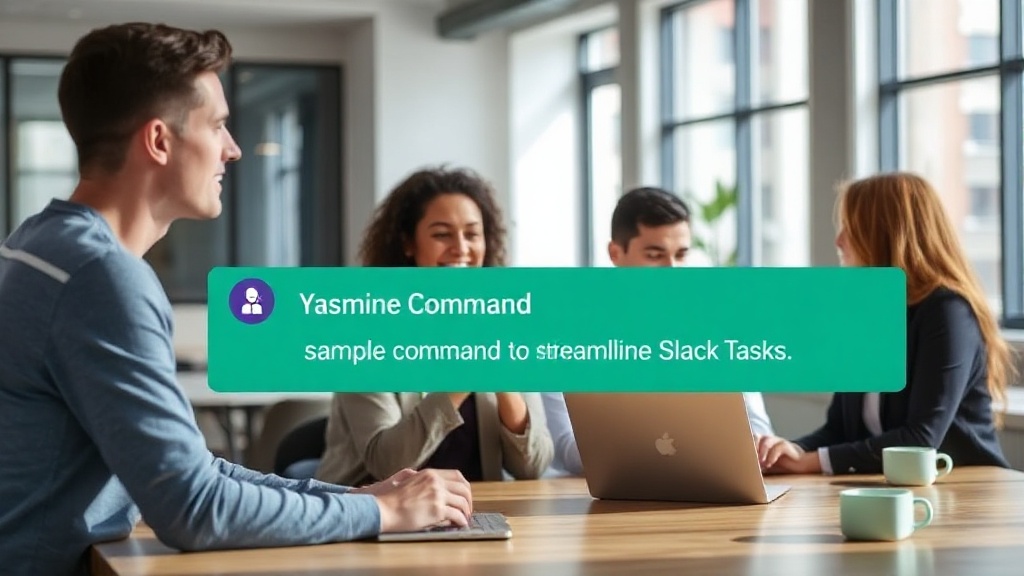
The tool integrates directly into the Slack environment, meaning users don't need to switch applications or learn entirely new interfaces. Commands and requests are made through Slack channels or direct messages, and Yasmine Works responds within the same familiar context. This seamless integration is crucial for adoption; the easier it is for a team to start using a new tool, the more likely it is to become part of their daily routine. The goal is to make Yasmine Works feel like a natural extension of the team, rather than an external add-on.
Key Capabilities and Potential Use Cases
While specific details on the full suite of Yasmine Works' capabilities are still emerging, its positioning as an AI coworker suggests a broad range of potential applications. These could include:
- Task Management Automation: Assigning tasks, setting reminders, and tracking progress on projects directly through Slack commands. For instance, a project manager could tell Yasmine Works to assign a specific sub-task to a team member and set a deadline, all without leaving their Slack window.
- Information Retrieval and Summarization: Sifting through lengthy conversation threads or documents to find specific information or provide concise summaries. This could be invaluable for new team members trying to get up to speed or for anyone needing a quick recap of a complex discussion.
- Meeting Assistance: Potentially scheduling meetings, sending out agendas, taking notes, and even generating follow-up action items. This moves beyond simple calendar integration to intelligent assistance that understands the context of discussions.
- Workflow Automation: Triggering specific pre-defined workflows based on certain keywords or events within Slack. For example, if a customer support ticket is mentioned with a specific tag, Yasmine Works could automatically create a ticket in a separate system and notify the relevant team.
- Data Querying and Reporting: For teams that use Slack to interact with internal dashboards or databases, Yasmine Works could potentially query data and present it in an easily digestible format within the chat.
The success of Yasmine Works will hinge on its ability to accurately interpret user intent and execute these tasks reliably. The complexity of workplace communication means that AI assistants need to be highly sophisticated to avoid misinterpretations that could lead to errors or frustration. The platform aims to learn team-specific jargon, project names, and common workflows to improve its accuracy over time, much like a human coworker would.
The Competitive Landscape and Future Implications
Yasmine Works enters a rapidly evolving market for AI-powered productivity tools. Numerous companies are developing AI assistants designed to integrate with popular workplace applications. These range from broad AI platforms that can be customized for various tasks to more specialized tools focusing on specific functions like coding assistance or customer support. The key differentiator for Yasmine Works appears to be its deep integration within the Slack ecosystem and its ambition to be a general-purpose AI coworker.
The immediate challenge for Yasmine Works is to prove its value proposition. Teams are already inundated with tools, and adopting a new one requires a clear demonstration of time savings and productivity gains. If Yasmine Works can effectively automate mundane tasks and provide intelligent assistance without introducing new complexities, it could become an indispensable part of many teams' Slack workflows. The surprising detail here is not just the existence of another AI tool, but its specific focus on becoming a deeply embedded, task-oriented colleague within a platform that already commands so much of our work attention.
What nobody has addressed yet is what happens to the human element of team collaboration if AI coworkers become ubiquitous. While efficiency gains are clear, there's a subtle shift in team dynamics when a significant portion of task coordination and information flow is mediated by AI. Will it foster deeper human connection by freeing up time, or create a more transactional, less personal work environment? The development of tools like Yasmine Works forces us to consider not just the technical implications of AI in the workplace, but also the human and social ones.
For founders and product managers, Yasmine Works represents a trend towards embedding AI directly into existing workflows rather than requiring users to adopt entirely new platforms. This approach lowers the barrier to entry and can accelerate adoption. For developers, it signals a continued demand for AI that can understand and interact with complex APIs and natural language commands, pushing the boundaries of conversational AI and workflow automation.