The Convergence of Compute and Memory

Xcena and Samsung have introduced a new device that pushes the boundaries of memory architecture by integrating compute capabilities directly alongside DRAM, leveraging the Compute Express Link (CXL) standard. This development marks a significant step towards overcoming the perennial memory bandwidth bottleneck that has long plagued high-performance computing. Traditional architectures face limitations where data must constantly shuttle between the CPU and memory, creating latency and consuming substantial power. By bringing processing closer to the data, this new device aims to drastically reduce data movement, thereby improving efficiency and speed for a wide range of applications. Xcena, known for its work in advanced memory technologies, and Samsung, a global leader in semiconductor manufacturing, have collaborated to bring this innovative solution to market. The device is built upon the CXL protocol, which provides a high-speed, low-latency interface for coherent memory sharing between CPUs, GPUs, and other accelerators. However, this new design goes a step further by embedding compute logic within the memory module itself, effectively creating a near-memory compute unit.
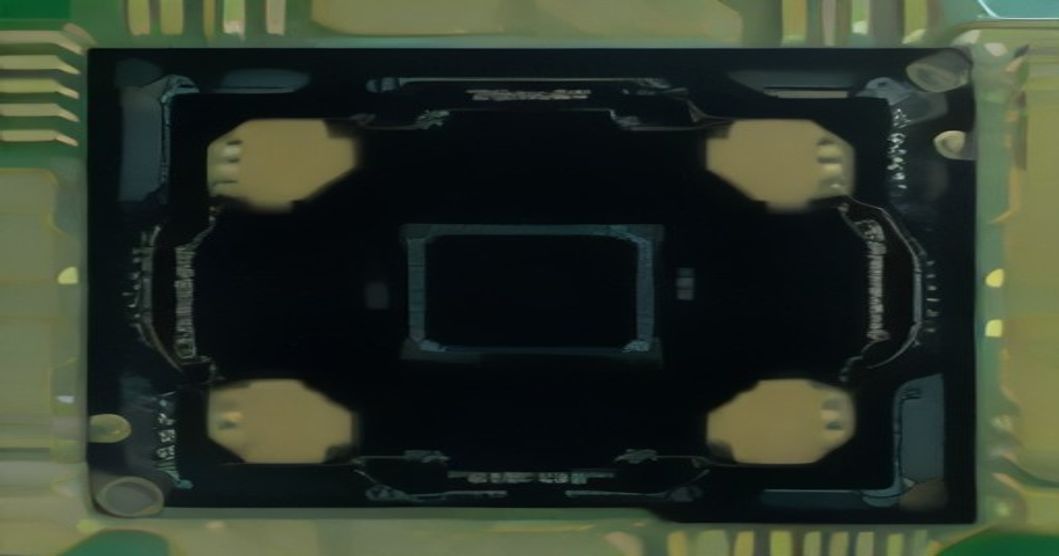
Diagram illustrating the architecture of Xcena and Samsung's near-memory compute CXL device
## Architecture and Functionality The core innovation lies in the architectural shift. Instead of relying solely on the CPU to process data fetched from DRAM, the Xcena-Samsung device incorporates specialized processing elements directly adjacent to the memory channels. These elements are capable of performing specific compute tasks, such as data filtering, aggregation, and even certain AI inference operations, without needing to transfer the entire dataset back to the main processor. This is particularly beneficial for workloads that are heavily dependent on accessing and manipulating large volumes of data, like big data analytics, large language models, and scientific simulations. The CXL interface plays a crucial role in enabling this architecture. CXL 2.0, in particular, allows for memory pooling and fabric management, facilitating the seamless integration of these near-memory compute units into existing server infrastructure. The coherency protocols inherent in CXL ensure that the data processed by these units remains consistent with the main system memory, preventing data corruption and simplifying software development. The device effectively acts as an intelligent memory extension, offloading specific computations from the CPU and accelerating data-intensive operations. ## Performance Implications and Workload Acceleration The primary advantage of near-memory compute is the dramatic reduction in data movement. Moving data between memory and processors is one of the most power-hungry and time-consuming operations in modern computing. By performing computations where the data resides, the Xcena-Samsung device can significantly cut down on latency and energy consumption. Early indications suggest potential performance uplifts of several times for specific memory-bound tasks, such as database queries, graph processing, and genomics analysis. For AI and machine learning, this could mean faster training and inference. Models that require extensive data preprocessing or feature extraction can see substantial speedups. Instead of the CPU fetching large datasets, performing operations, and then sending results back, the near-memory compute units can handle these initial stages efficiently. This also opens up possibilities for new types of AI accelerators that are more tightly coupled with memory, enabling novel architectures for specialized AI hardware. ## Challenges and Future Directions While the potential is immense, challenges remain. Integrating compute logic directly into memory modules increases manufacturing complexity and cost. Ensuring the reliability and thermal management of these densely packed units will be critical. Furthermore, software ecosystems will need to adapt to fully leverage this new paradigm. Developers will need new tools and programming models to effectively partition workloads and utilize the near-memory compute capabilities. However, the trend towards heterogeneous computing and data-centric architectures suggests that near-memory compute is an inevitable evolution. As data volumes continue to explode and AI workloads become more sophisticated, the limitations of traditional von Neumann architectures will become increasingly apparent. Xcena and Samsung's device represents a bold step towards a future where compute and memory are no longer separate entities but integrated components working in concert to unlock unprecedented performance and efficiency. What nobody has addressed yet is the long-term impact on the broader semiconductor supply chain. If near-memory compute becomes standard, it could necessitate significant shifts in fabrication processes, chip design methodologies, and the specialization of foundries. The industry's ability to adapt to this potential paradigm shift will be a key factor in its widespread adoption.