Xbox Users Locked Out of Disc Games Amidst Widespread Outage
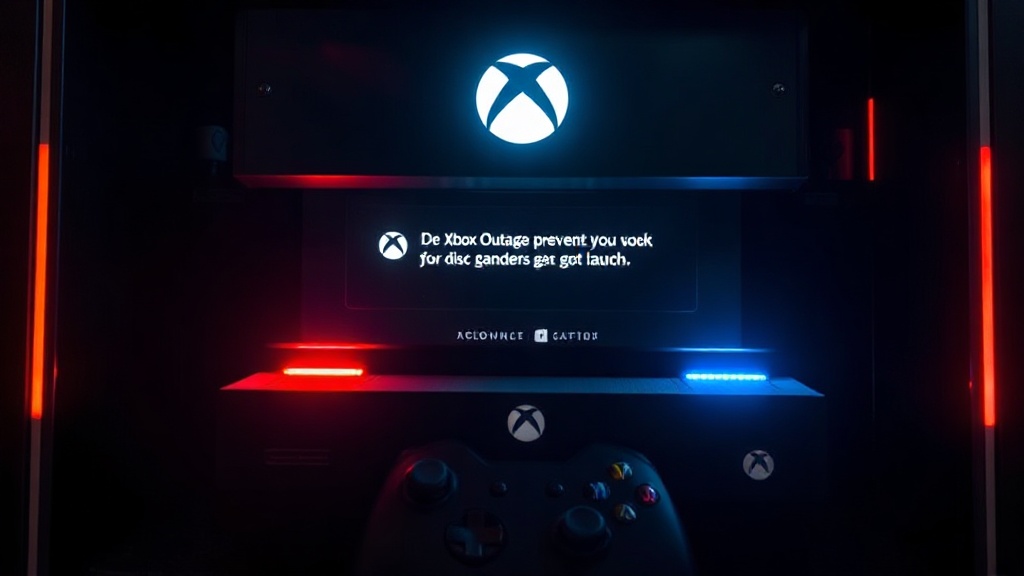
A significant outage is currently impacting Xbox services, with users reporting an inability to play games they own on physical discs. The issue appears to stem from a failure in Microsoft's authentication or licensing servers, which are essential for verifying ownership even for games installed from discs. This means that even if a game is fully installed on the console, players are being met with error messages preventing them from launching their library of physical media.
The problem is not limited to specific titles or regions. Reports are flooding in from across social media platforms and gaming forums detailing the widespread nature of the disruption. Gamers are expressing frustration, as the outage effectively renders their physical game collections inaccessible. This situation starkly contrasts with the perceived permanence and reliability of owning physical media, as players find themselves unable to access content they have paid for and stored in their homes.
The core of the problem seems to be the console's reliance on online checks for game licenses. While the game data resides on the disc and is installed locally, the Xbox system requires a constant or periodic connection to Microsoft's servers to confirm that the user is authorized to play. When these servers are down or malfunctioning, the console cannot perform this verification, leading to the lockout.
The Silent Threat of Outages: Lessons from the Dev Community
This Xbox incident, while highly visible due to its impact on a major gaming platform, echoes a more insidious problem discussed within the developer community: silent outages. As highlighted by developers on platforms like Dev.to, the most damaging failures are often those that go unnoticed by traditional monitoring systems.
A silent outage occurs when a system is experiencing significant user-facing issues, but monitoring tools report everything as healthy. This can happen through several mechanisms. Frontend caching is a prime culprit; if an API returns an error (like a 500 Internal Server Error) and the Content Delivery Network (CDN) caches that error response, all subsequent requests for a period will receive the cached error. Meanwhile, the API itself might appear healthy because the CDN is not continuously probing it, and health checks might pass based on the CDN's status rather than the origin service.
Another common scenario involves partial feature breakage. Core functionalities might work perfectly, allowing basic metrics and dashboards to remain green. However, critical user flows could be silently failing. For example, a search bar might return empty results for all queries, or a checkout process might fail at the final confirmation step, but if these specific failure modes are not explicitly monitored, the system appears operational. This is akin to a car’s engine running smoothly but the steering wheel being disconnected – the core system is 'up,' but the user experience is fundamentally broken.
Stale data pipelines also contribute to silent failures. If a data processing job stops running, dashboards and reports will continue to display outdated information. While the underlying services might be functioning, the data presented to users or decision-makers is no longer accurate, leading to potentially significant operational or business missteps. The system appears fine because it's still serving data, just not current data.
Proactive Monitoring Strategies for Unseen Failures
To combat these silent failures, developers advocate for a shift towards more comprehensive monitoring strategies. The key is to look beyond basic uptime metrics and to simulate actual user interactions with the system from an external perspective.
Synthetic User Journeys: One of the most effective methods is to implement synthetic monitoring. This involves setting up automated scripts that mimic real user actions. For instance, a script could attempt to log into an account, navigate to a specific page, perform a search, and even attempt a simulated purchase. By running these tests from various geographical locations and network conditions, teams can catch issues that affect real users before they become widespread complaints. If the Xbox outage had robust synthetic monitoring for its game launch and license verification processes, the issue might have been detected much earlier, potentially before it impacted a large number of players.
End-to-End Transaction Monitoring: Beyond just checking individual service endpoints, it's crucial to monitor entire user workflows. This means verifying that a series of dependent operations complete successfully. For a gaming platform, this could involve checking not just if the login service is available, but if a user can successfully log in, access their game library, and launch a game.
Real User Monitoring (RUM) with Granular Error Tracking: While synthetic tests provide a controlled environment, RUM captures actual user behavior. However, simply aggregating error rates might not be enough. Developers need to instrument their applications to capture detailed information about specific types of failures, such as 'zero-result searches' or 'failed license verifications.' This allows for the identification of subtle degradation that might not trigger a system-wide alert but significantly impacts user experience.
The Xbox outage serves as a stark reminder that even for established platforms with extensive infrastructure, vulnerabilities exist. The reliance on online services for digital and physical game access creates a single point of failure. For developers and platform operators, the lesson is clear: comprehensive, user-centric monitoring that looks for what *can* go wrong, not just what *is* reporting as wrong, is essential to prevent the silent decay of service quality.