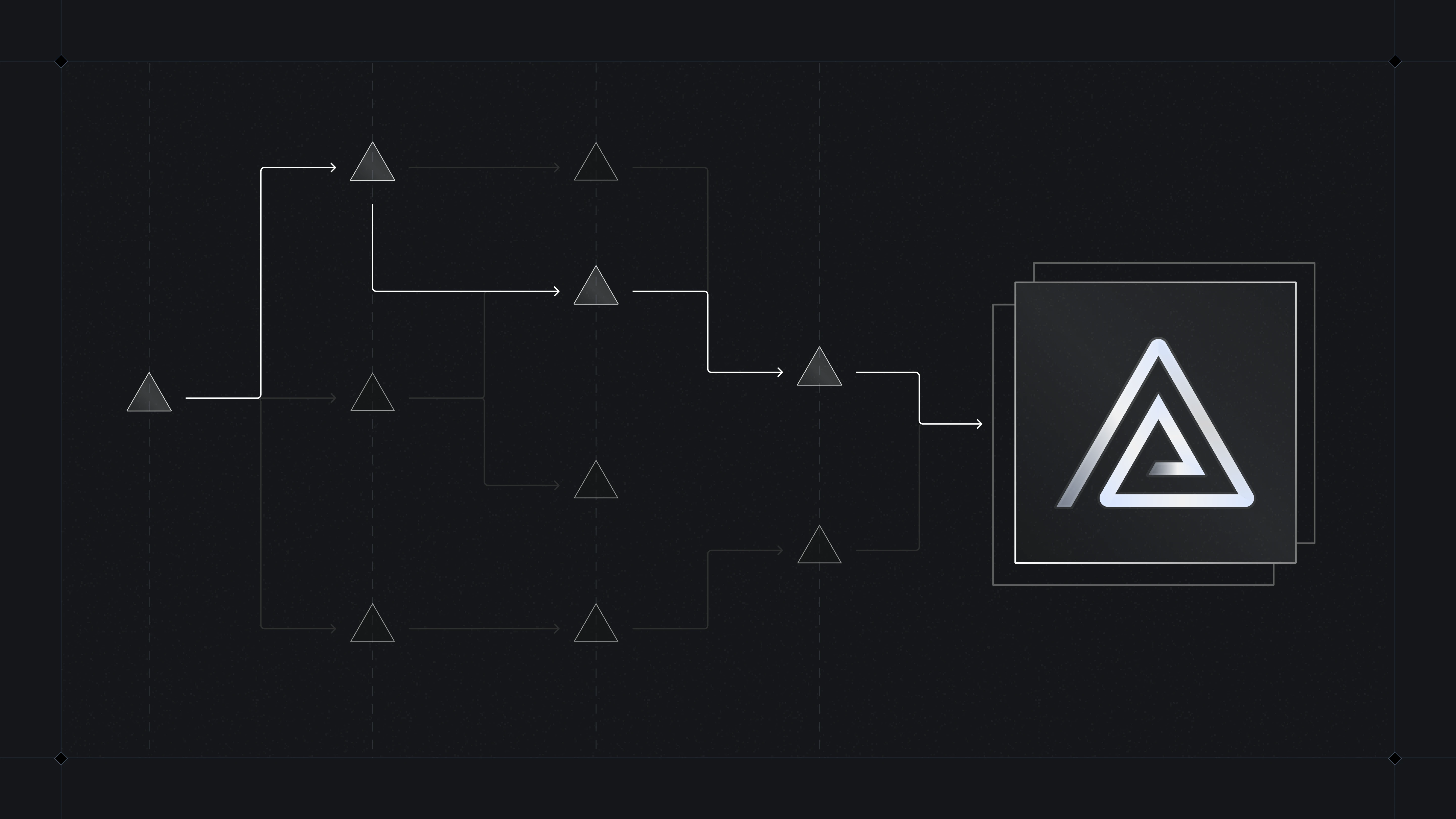
The Dawn of Agentic Quantum Computing
Xanadu, a leader in photonic quantum computing, has unveiled a significant advancement: the integration of AI agents into its quantum computing platform. This move signals a paradigm shift, moving quantum computing from a highly specialized, manual process to a more accessible, agent-driven workflow. The core idea is to empower AI agents to interact with and control quantum hardware, abstracting away much of the complexity that has historically limited broader adoption and accelerated research.
For years, quantum computing has been the domain of highly trained physicists and computer scientists. Developing and running quantum algorithms required a deep understanding of quantum mechanics, intricate circuit design, and specialized programming languages. This steep learning curve has been a major bottleneck, slowing down the pace at which researchers could explore the potential of quantum computers for real-world problems. Xanadu's approach aims to democratize this process by enabling AI agents to act as intelligent intermediaries.
How AI Agents Transform Quantum Workflows
The integration of AI agents into Xanadu's platform, particularly within its PennyLane software library, allows these agents to perform tasks that were previously manual and time-consuming. Think of it less like a traditional software library and more like a highly capable research assistant. This assistant can understand research goals, design quantum experiments, execute them on quantum hardware, analyze the results, and even iterate on the design based on the findings. This is a significant leap from the current model where a researcher meticulously crafts each quantum gate and measurement.
The agents are designed to understand the nuances of quantum hardware, including its limitations and noise characteristics. They can optimize quantum circuits for specific hardware architectures, a task that is notoriously difficult and time-consuming. This optimization is crucial because quantum computers are highly sensitive to environmental noise, which can corrupt computations. By having agents that can adapt and optimize for these conditions, researchers can achieve more reliable and accurate results with less manual intervention.
Accelerating Discovery and Development
The implications for scientific discovery are profound. Researchers in fields like materials science, drug discovery, and financial modeling can now leverage quantum computing power more effectively. Instead of spending weeks or months designing and debugging quantum experiments, they can delegate these tasks to AI agents. This frees up their time to focus on higher-level problem-solving and interpretation of results. For instance, a chemist looking to simulate a complex molecule could instruct an agent to find the ground state energy of that molecule on Xanadu's hardware. The agent would then handle the entire process, from circuit design to result analysis.
This agentic approach also has the potential to accelerate the development of new quantum algorithms and applications. As agents become more sophisticated, they could discover novel ways to utilize quantum phenomena for computation that human researchers might not have conceived. They can explore vast search spaces for optimal quantum circuits or even identify entirely new quantum algorithms by learning from successful past experiments. This is akin to having a tireless, intelligent collaborator working alongside human scientists 24/7.
The Role of PennyLane
PennyLane, Xanadu's open-source software library for quantum machine learning, is central to this initiative. It provides the framework through which AI agents can interact with quantum hardware. PennyLane's ability to interface with various quantum devices, both in the cloud and on-premises, makes it an ideal foundation for building these agentic workflows. The library allows for the definition of quantum circuits as differentiable programs, which is essential for machine learning-based optimization and control that agents will employ.
The development of these agents is not just about automating existing tasks; it's about creating a new way to interact with quantum systems. It involves building agents that can reason about quantum computation, plan sequences of operations, and learn from feedback. This requires a combination of sophisticated AI techniques, including reinforcement learning, planning algorithms, and natural language processing (for user interaction). Xanadu's commitment to open-source through PennyLane means that the broader quantum community can contribute to and benefit from these advancements, fostering a collaborative ecosystem.
Challenges and the Road Ahead
Despite the excitement, significant challenges remain. Building truly autonomous and reliable AI agents for quantum computing is a complex undertaking. Ensuring that these agents can handle the inherent probabilistic nature of quantum mechanics and the high error rates of current quantum hardware requires sophisticated error mitigation and correction strategies. Furthermore, the interpretability of agent-driven results is crucial; researchers need to understand why an agent made certain decisions or arrived at specific conclusions.
What remains to be seen is how quickly these agentic workflows can be scaled to tackle problems that are truly intractable for classical computers. While current demonstrations are promising, the ultimate test will be their ability to unlock quantum advantage for commercially relevant applications. The success of this initiative will also depend on the training data and the reinforcement signals used to guide agent learning. A poorly trained agent might optimize for local minima or fail to explore the full potential of quantum algorithms.
Xanadu's foray into agentic quantum computing is a bold step towards making quantum computation more accessible and powerful. By bridging the gap between AI and quantum physics, they are not just building better quantum computers, but fundamentally changing how we will interact with them, accelerating the journey towards a quantum future.