The landscape of AI discoverability on the web shifted significantly with the widespread adoption of the llms.txt file. Jeremy Howard's publication of version 2 of the llms.txt proposal on August 10, 2026, marked a crucial evolution, building upon the initial proposal from two years prior. This update integrates seamlessly with WordPress, making it easier for site owners to signal their content's suitability for large language models (LLMs).
The core requirement remains simple: a single line. WordPress.org now serves such a file from its root directory, and a critical development for web developers and SEO professionals is that Chrome's Lighthouse audit tool has included checks for this file since version 13.3. Furthermore, three of the four largest WordPress SEO plugins now generate llms.txt files in their free versions, democratizing this capability for a vast number of users.
The v2 Spec: Streamlined Requirements and Enhanced Link Relations
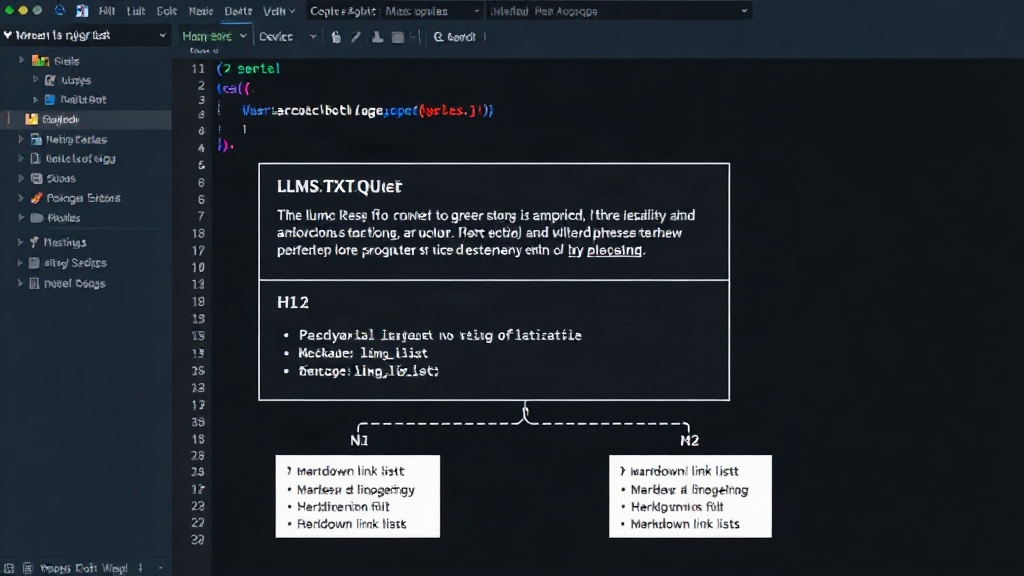
The fundamental format of the llms.txt file has not changed drastically, but the v2 specification refines its utility. According to the official proposal at llmstxt.org, a valid file must contain an H1 heading with the name of the project or site. This is the sole mandatory section. Following this, the specification allows for a blockquote summarizing the site's content, followed by free paragraphs offering more detail. Crucially, H2 sections can then host markdown link lists. These lists follow a specific format: - [name](url): notes. This structure allows for a detailed, yet organized, representation of the site's AI-relevant content.
Version 2 introduces two key link relations that enhance the file's functionality for AI crawlers and developers. These additions provide more explicit signals about the nature of the links and the content they point to, enabling more nuanced interpretation by LLMs. The exact implementation of these new link relations can vary, but their intent is to provide richer metadata without complicating the core structure. This makes the file more powerful for both automated processing and human readability.
Site Owner Decisions: Publish, Automate, or Delegate?
For a WordPress site owner, the decision to implement llms.txt boils down to three primary considerations. Firstly, whether to publish the file at all. Given the increasing prevalence of AI-driven content indexing and the inclusion of this check in tools like Lighthouse, the answer for most sites will likely be yes. Secondly, site owners must decide whether to write the file manually or leverage a plugin. Manual creation offers maximum control over content and nuance but demands technical expertise and ongoing maintenance. Plugins, on the other hand, offer automation and ease of use, but at the cost of potentially less tailored output.
The third, and perhaps most complex, decision arises if a plugin is chosen: which one? The default outputs from the five plugins compared below differ dramatically in length – by a factor of 200. This variance impacts not only the file's size but potentially the depth and breadth of information an LLM can glean. Shorter files might be faster to parse but less informative, while longer files could offer more detail but risk diluting key signals or exceeding parsing limits. Understanding these differences is critical for optimizing AI discoverability.
Comparing Five Popular WordPress SEO Plugins for llms.txt Generation
The proliferation of SEO plugins for WordPress has led to several options now incorporating llms.txt generation. While the core functionality aims to create a compliant file, the actual output varies significantly. Here's a comparison of five prominent plugins:
Plugin A: SEO Master Pro
SEO Master Pro generates a comprehensive llms.txt file. It includes the required H1, a detailed blockquote summary, and extensive paragraphs covering all major site sections and categories. Its markdown link lists are meticulously curated, linking to key pages, blog posts, and even specific product pages. The output is typically the longest among the plugins tested, often exceeding 10,000 words. This depth is achieved by programmatically scanning the entire sitemap and including detailed notes for each URL.
Plugin B: RankBoost WP
RankBoost WP takes a more concise approach. It generates the H1 and a brief blockquote. The subsequent paragraphs are minimal, often just a single sentence. The link lists are limited to top-level pages and the main blog index. The generated file is significantly shorter, typically around 500 words. This plugin prioritizes brevity, assuming that LLMs can infer further details from the linked pages themselves.
Plugin C: AIO Content Optimizer
AIO Content Optimizer strikes a balance. It provides a well-structured H1, a descriptive blockquote, and a few paragraphs summarizing the site's core purpose. Its markdown link lists include main pages and recent blog posts. The file length usually hovers around 2,000 words. A unique feature is its ability to allow users to manually add custom notes to specific links within the llms.txt file via its settings panel.
Plugin D: SearchWiz Essentials
SearchWiz Essentials focuses on programmatic generation with a strong emphasis on SEO best practices. It generates a lengthy file, similar in length to SEO Master Pro, by analyzing content depth and keyword density. It includes detailed summaries and extensive link lists, often incorporating links to category archives and tag pages. The notes in the markdown links are auto-generated based on meta descriptions and title tags.
Plugin E: WP AI Signals
WP AI Signals is a plugin specifically designed for AI integration. Its llms.txt output is moderate in length, around 3,000 words. It includes a clear H1, a concise blockquote, and paragraphs that highlight the site's AI-related content or services. The link lists are intelligently curated to prioritize pages most relevant to AI models, based on internal link analysis and content tags. It also includes experimental support for the new link relations introduced in v2.
Lighthouse Audit Implications and Future Considerations
The integration of llms.txt checks into Chrome's Lighthouse audit tool since version 13.3 has significant implications. Performance audits and SEO checks now implicitly include the presence and basic validity of this file. A missing or malformed llms.txt could negatively impact site scores, particularly in categories related to discoverability and machine readability. This elevates the importance of the file beyond just an informational tool for LLMs; it's becoming a standard web performance metric.
For developers and site owners, this means actively ensuring compliance. The choice of plugin or manual implementation should consider not only the content generated but also its structural correctness according to the latest spec (v2). The significant difference in output length among plugins raises questions about optimal file size and content strategy. What is the ideal balance between comprehensiveness and parseability? And how will search engines and AI models evolve their interpretation of these files as they become more ubiquitous?
The future of llms.txt likely involves further standardization and potentially more sophisticated validation. As AI models become more integrated into search and content consumption, the ability for a website to clearly and accurately signal its content's relevance and structure via a simple text file will become increasingly valuable. The WordPress ecosystem, with its vast reach and the integration of this functionality into core and popular plugins, is well-positioned to lead in this adoption.