Renewable Ammonia Production Takes Root in Minnesota
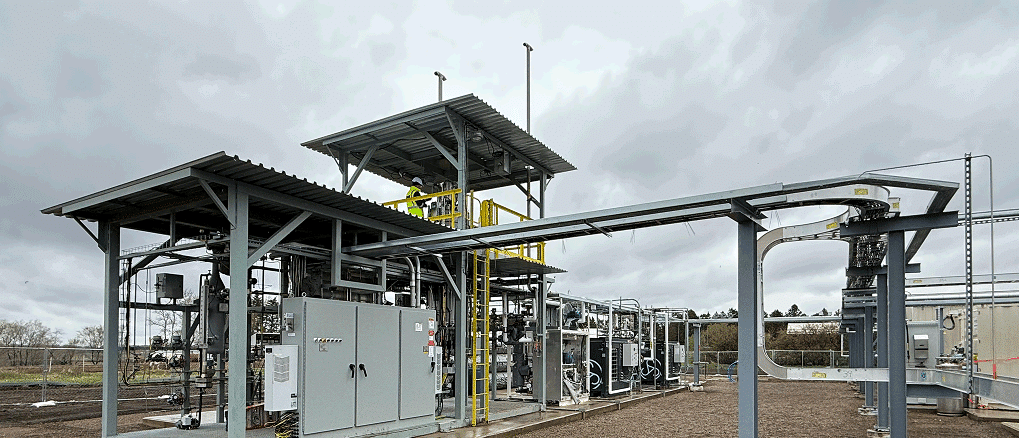
A significant step towards decarbonizing agriculture has been achieved with the operationalization of a new renewable ammonia demonstration plant in Morris, Minnesota. This facility, developed by Ammonia Energy, leverages the region's abundant wind power to produce green ammonia, a critical component in fertilizer production. The project aims to prove the viability of using intermittent renewable energy sources to create a key agricultural input without the substantial carbon footprint associated with traditional ammonia synthesis.
The Haber-Bosch process, the industrial method for producing ammonia, is notoriously energy-intensive, accounting for an estimated 1-2% of the world's total energy consumption and a similar percentage of global CO2 emissions. Traditionally, this process relies on natural gas as both a feedstock and an energy source. The challenge for green ammonia production lies in replicating this process using renewable electricity, which is inherently variable due to the nature of wind and solar power.
This Minnesota facility tackles this challenge head-on by integrating directly with a local wind farm. The plant is designed to operate flexibly, adjusting its output based on the availability of wind power. When wind generation is high, the plant can operate at full capacity, producing ammonia. When generation dips, the plant can scale back or shut down, avoiding the need for fossil fuel backup. This flexibility is key to making renewable ammonia economically and technically feasible on a larger scale.
The Technology Behind Green Ammonia
At its core, the process involves using renewable electricity to split water into hydrogen and oxygen (electrolysis). This green hydrogen then serves as the feedstock for the ammonia synthesis. Unlike conventional plants that use steam methane reforming to produce hydrogen from natural gas, this method relies entirely on electricity and water, drastically reducing the carbon emissions. The nitrogen required for ammonia synthesis is readily available from the air.
The plant's design incorporates advanced control systems that enable it to respond dynamically to the fluctuating power supply from the wind turbines. This is crucial because ammonia synthesis requires stable operating conditions, particularly high temperatures and pressures. By precisely managing the hydrogen input and the overall process, the plant can maintain efficiency even with variable energy availability. The produced ammonia can be stored and transported, serving as a clean energy carrier and a foundational component for nitrogen-based fertilizers.
The fertilizer produced at the Morris facility is intended for local agricultural use. This proximity reduces transportation costs and emissions, further enhancing the sustainability of the operation. The project also serves as a vital testbed for scaling up this technology. Demonstrating its effectiveness in a real-world setting provides invaluable data and operational experience that can inform the design and deployment of future, larger-scale green ammonia plants.
Decarbonizing Agriculture and Beyond
The implications of this project extend far beyond the agricultural sector. Ammonia is not only a fertilizer but also a potential carbon-free fuel for shipping and power generation. By developing cost-effective methods for producing green ammonia, this technology could play a pivotal role in reducing emissions across multiple industries. The ability to store and transport ammonia makes it an attractive option for energy storage and a means to decarbonize sectors that are difficult to electrify directly.
The success of the Morris demonstration plant hinges on several factors, including the cost of renewable electricity, the efficiency of the electrolyzers and synthesis loops, and the market demand for green ammonia. As renewable energy costs continue to fall and governments implement policies to support decarbonization, the economic case for green ammonia is strengthening. This project in Minnesota is a tangible manifestation of that trend.
What remains to be seen is how quickly this technology can be scaled to meet the global demand for fertilizers, which is projected to grow significantly in the coming decades. The capital investment required for large-scale green ammonia production is substantial, and overcoming logistical challenges related to storage and transportation will be critical. However, the operationalization of this plant is a clear signal that the industry is moving decisively towards sustainable solutions. If this model proves scalable and cost-effective, it could fundamentally reshape how we produce food and energy, moving away from fossil fuel dependence towards a cleaner, more sustainable future.
The project highlights the growing synergy between renewable energy development and industrial processes. Regions with strong wind or solar resources are becoming attractive locations for energy-intensive industries that can leverage low-cost, clean electricity. The Morris facility, situated in a state with a robust wind energy sector, exemplifies this new industrial paradigm. It's a clear demonstration that the transition to a low-carbon economy is not just about powering our homes and vehicles, but also about transforming the fundamental processes that underpin global industries like agriculture.