The Illusion of Ephemerality
It's a familiar scene in software development. Somewhere around the four-month mark of a project, the inevitable declaration arises: "Just hardcode it for now, we'll fix it after the release." This statement, often delivered with genuine intent, masks a dangerous assumption. The problem isn't necessarily the shortcut itself; sometimes, a rapid solution is the pragmatic choice under tight deadlines. The real issue is the inherent lack of ownership, a missing ticket, and a non-existent deadline for these "temporary" fixes. They linger, unassigned, until they are not only forgotten as temporary but become deeply integrated, load-bearing components of the system.
Consider a scenario where a team needs to ingest pricing updates from an upstream provider. A partner integration deadline looms, set externally and immovable. The development team has three days, full stop, to implement this crucial functionality. The fastest path is clear: inject a hardcoded solution, perhaps a simple RestClient call that bypasses robust error handling and data validation, just to meet the immediate requirement. This isn't a failure of technical skill, but a consequence of conflicting priorities and external pressures. The shortcut is taken, the deadline is met, and the immediate crisis is averted. The team moves on, believing the hardcoded data ingestion is a temporary placeholder.
The immediate aftermath often involves a sigh of relief. The partner integration launches on time. The external stakeholders are satisfied. Internally, the team might even feel a sense of accomplishment for navigating the tight timeline. However, the hardcoded solution, the very thing intended to be a fleeting placeholder, remains. It sits in the codebase, a silent testament to a moment of pressure. Without a clear owner, a dedicated task in the project management system, or a scheduled refactoring sprint, its "temporary" status begins to erode. The developers who implemented it might move to other projects, their memory of its temporary nature fading with each new challenge.
The Erosion of Intent
The true danger of these temporary workarounds lies in their invisible creep into permanence. Initially, the intent is clear: refactor or replace the shortcut once the immediate pressure subsipates. However, several factors conspire to make this intention wither:
- Lack of Ownership: Without a specific developer or team assigned to track and resolve the workaround, it becomes a collective responsibility that, in practice, becomes no one's responsibility.
- Absence of a Ticket: If the workaround isn't logged in the project management system with a clear description, priority, and estimated effort for resolution, it effectively ceases to exist in the project's formal tracking.
- Shifting Priorities: As new features, bug fixes, and urgent requests emerge, the original, unassigned task of fixing the workaround is perpetually pushed down the backlog.
- Load Bearing Integration: Over time, other parts of the system, or even external systems, may come to rely on the behavior of the workaround. Attempts to remove or refactor it can introduce regressions, making the shortcut seem essential.
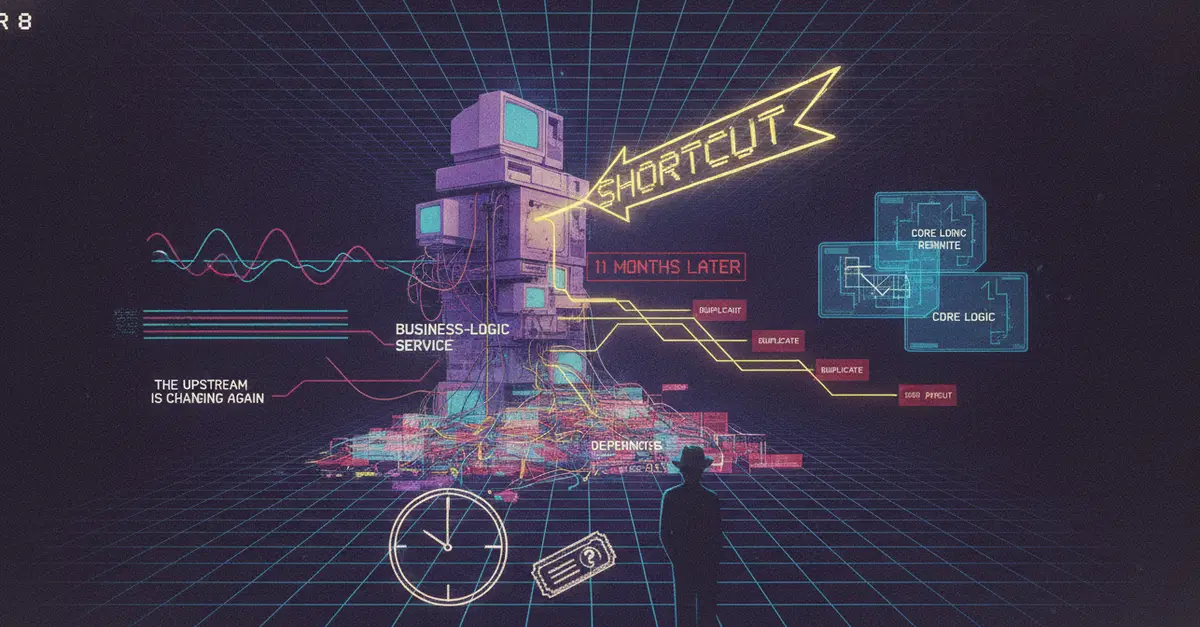
Imagine the pricing ingestion system again. Six months later, a new reporting feature needs to access that pricing data. The easiest way is to query the existing, hardcoded mechanism. Another developer, unaware of the original shortcut's temporary nature, integrates their new feature with it. Now, the hardcoded solution is not just a placeholder; it's a dependency. The original intent has been buried under layers of new development, making the removal of the workaround exponentially more complex and risky. It has become load-bearing.
The Real-World Consequences
The persistence of temporary workarounds has tangible, often negative, consequences for software projects:
- Technical Debt Accumulation: Each unaddressed workaround adds to the project's technical debt, making the codebase harder to understand, maintain, and extend. This debt accrues interest in the form of increased development time and higher bug rates.
- Reduced Agility: A system riddled with hidden dependencies and quick fixes becomes brittle. Making changes, even seemingly small ones, can have unpredictable ripple effects, slowing down future development and innovation.
- Increased Risk of Bugs: Hardcoded values or logic are prone to errors, especially when external factors change. If the upstream provider updates their pricing format, the hardcoded solution will likely break, potentially causing significant financial or operational issues.
- Developer Frustration: Navigating a codebase filled with these remnants of past compromises is frustrating for developers. It leads to wasted time debugging unexpected behaviors and a general sense of working with a fragile system.
The abstract version of this story, where everyone nods along and promises to fix it later, is a common pitfall. The concrete reality is that the "fix it later" never comes without explicit, deliberate action. It requires a conscious decision to allocate resources, create a ticket, assign ownership, and schedule the work. Without these steps, the temporary workaround is, by all practical measures, permanent. It becomes an embedded piece of the system's history, a silent, often problematic, fixture.
Referenced Sources
- verified