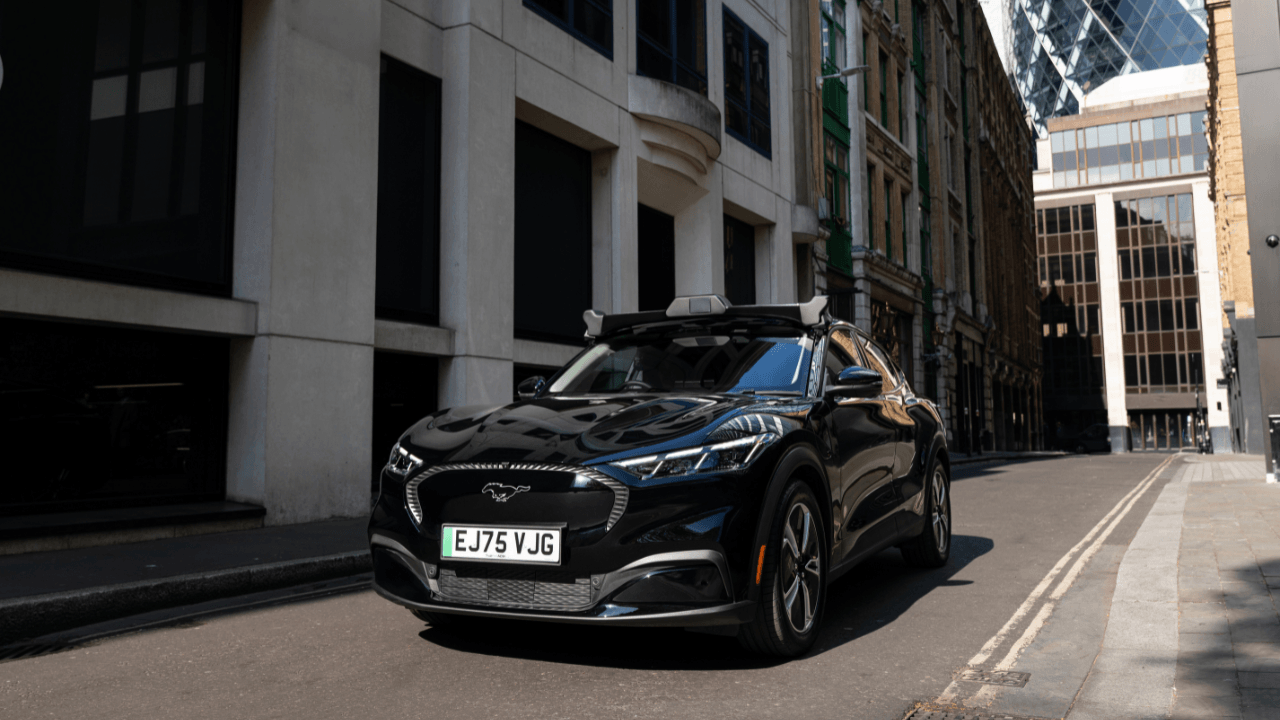
First Supervised Autonomous Rides Launch in the UK
Londoners can now hail Wayve autonomous vehicles through the Uber app, marking a significant milestone as the first time such services are available to the public in the United Kingdom. The launch signifies a new era for both autonomous vehicle technology and ride-hailing services in one of the world's most complex urban environments.
Starting today, users requesting an UberX, Uber Electric, or similar service in select areas of London may be offered a ride in one of Wayve's self-driving vehicles. These rides are supervised, meaning a trained safety driver is present in the vehicle to monitor its performance and intervene if necessary. This supervised approach allows Wayve to gather crucial real-world data and refine its AI driving system while ensuring passenger safety.
The partnership between Uber and Wayve is a strategic move for both companies. For Wayve, it provides immediate access to a massive user base and a diverse range of real-world driving scenarios across London. This exposure is invaluable for training and validating their AI, which aims to learn to drive in any urban environment. For Uber, it represents a step forward in their long-term strategy to integrate autonomous vehicles into their fleet, potentially reducing operational costs and increasing service availability in the future.
London presents a unique and challenging proving ground for autonomous driving technology. Its intricate road network, unpredictable traffic patterns, diverse road users (including cyclists and pedestrians), and varied weather conditions demand a highly sophisticated AI. Wayve's approach, which focuses on an end-to-end deep learning system that learns to drive by observing human drivers, is designed to tackle these complexities. The AI learns to predict the intentions of other road users and navigate safely through dynamic situations.
The initial rollout is limited to specific zones within London. Users who are eligible will see an option within the Uber app to select a ride that may be an autonomous Wayve vehicle. This phased approach allows both companies to manage the service effectively, monitor performance closely, and scale operations responsibly as they gain more experience and refine their technology.
The Technology Behind the Wheel
Wayve's AI driving system is built on a foundation of deep learning. Unlike some traditional autonomous vehicle approaches that rely heavily on detailed, pre-programmed maps and rules, Wayve's system learns to drive through observation. The core idea is that the AI learns to predict the behavior of other road users and make appropriate driving decisions based on its learned understanding of driving, much like a human driver would.
This learning-based approach is particularly suited for complex urban environments like London, where unexpected events and nuanced interactions are common. The system processes data from a suite of sensors, including cameras, LiDAR, and radar, to perceive its surroundings. This sensory input is fed into the AI model, which then generates driving commands for steering, acceleration, and braking.
The supervised nature of these initial rides is critical. While the AI is designed to drive autonomously, the presence of a safety driver ensures that immediate human oversight is available. This driver is not just a passenger; they are actively monitoring the system's performance and are trained to take control if the AI encounters a situation it cannot safely handle or if any system anomaly occurs. This is standard practice for the early stages of deploying autonomous ride-hailing services in public spaces.
The data collected from these supervised rides is invaluable. It feeds back into Wayve's training pipelines, helping to improve the AI's capabilities, identify edge cases, and enhance its ability to handle a wider variety of driving scenarios. This iterative process of real-world testing, data collection, and AI refinement is key to advancing the safety and reliability of autonomous driving technology.
Implications for the Future of Urban Mobility
The availability of Wayve's autonomous vehicles on Uber's platform in London has far-reaching implications. For consumers, it offers a glimpse into a future where on-demand transportation could be more efficient, potentially more affordable, and more widely available, especially during off-peak hours or in areas underserved by human drivers. It also provides a novel experience, allowing people to directly interact with and experience cutting-edge AI technology.
For the broader automotive and technology industries, this launch is a significant signal. It demonstrates that autonomous vehicle technology is progressing beyond controlled test environments and is beginning to integrate into existing public transportation networks. This integration could accelerate the adoption of autonomous fleets and spur further innovation in related fields, such as sensor technology, AI development, and vehicle safety systems.
However, questions remain about the long-term scalability and profitability of such services. The cost of developing and deploying autonomous vehicle technology, including the sophisticated AI, sensors, and safety systems, is substantial. Furthermore, the regulatory landscape for autonomous vehicles is still evolving. While this launch is under existing regulations for supervised autonomous vehicles, broader public deployment will require clear and robust regulatory frameworks.
What nobody has addressed yet is what happens to the thousands of human drivers who currently form the backbone of services like Uber in London. As autonomous technology matures and potentially scales, the economic and social impact on professional drivers will become a critical consideration for policymakers and the industry alike. The transition will require careful planning to ensure a just and equitable future for all stakeholders.
This partnership underscores the ongoing race among tech companies and automakers to perfect and deploy autonomous driving. Wayve's success in London, a city known for its complexity, could set a precedent for other major global cities. It highlights the potential for AI-driven mobility solutions to transform urban landscapes, improve transportation efficiency, and reshape how people move.
The immediate impact for Londoners is the opportunity to experience a new form of mobility. By choosing an eligible Uber ride, they might find themselves in a vehicle navigated by Wayve's AI. This is not just a technological demonstration; it is a functional service that aims to provide safe and reliable transportation, with the added benefit of contributing to the advancement of autonomous driving technology.
The long-term vision is clear: autonomous vehicles integrated seamlessly into ride-sharing platforms, offering a more efficient and sustainable urban transport system. Wayve and Uber's collaboration in London is a tangible step towards realizing that vision, moving the needle from research and development to real-world public deployment.