Bridging the Gap: WASM-4 on Java ME
A novel project, W4ME Station, is making waves in the retro computing and game development scene by enabling the execution of WebAssembly (WASM) code on devices that were once ubiquitous: Java ME (J2ME) feature phones. WASM-4 is a minimalist fantasy console that compiles down to WebAssembly, designed for creating small, standalone games. W4ME Station acts as the runtime environment, translating WASM bytecode into instructions that older Java ME virtual machines can understand and execute.
This initiative is particularly significant given the sheer volume of Java ME-enabled devices that were deployed globally. While smartphones have long since dominated the mobile landscape, a vast number of feature phones, often found in emerging markets or as dedicated devices, still exist. These devices, with their limited processing power and memory, were not designed for modern web applications. However, by leveraging WebAssembly, a technology known for its efficiency and portability, W4ME Station aims to breathe new life into these dormant hardware platforms.
The project, spearheaded by developer Mulfyx on GitHub, is a testament to the enduring appeal of retro gaming and the ingenuity of finding new use cases for old technology. WASM-4 itself provides a simple API for graphics, input, and sound, making it an ideal target for developers looking to create games with a distinct retro aesthetic. W4ME Station's role is to bridge the architectural chasm between the WASM binary format and the Java bytecode that Java ME devices run.
Technical Challenges and Solutions
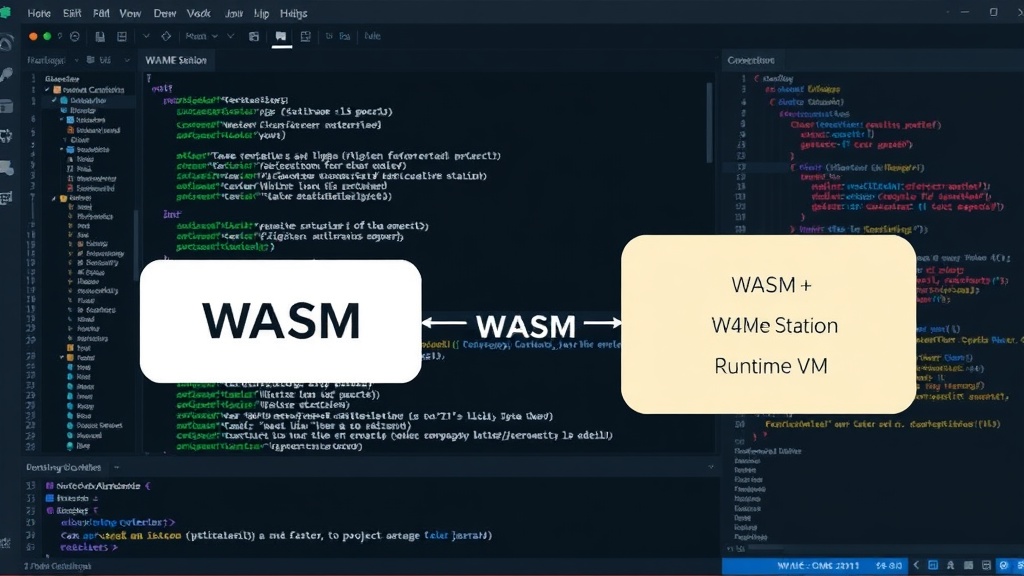
The core challenge lies in the fundamental differences between the execution environments. WebAssembly is designed for high-performance execution in modern browsers or standalone runtimes, offering features like garbage collection (though often optional) and direct memory access. Java ME, on the other hand, operates within a constrained virtual machine environment with its own specific bytecode, memory management, and limited API set.
W4ME Station tackles this by essentially creating a WASM interpreter or a transpiler specifically tailored for the Java ME environment. It must parse the WASM instructions and map them to equivalent Java ME operations. This involves handling memory management, translating input/output calls to the phone's hardware (like screen rendering and button presses), and managing the overall execution loop. The WASM-4 API, being deliberately simple, aids this process. Developers writing for WASM-4 are already working within a constrained set of functionalities, which makes the translation task more manageable than if they were targeting a more complex WASM environment.
The project is open-source, hosted on GitHub, allowing interested developers to examine the codebase, contribute, and even adapt it for specific devices or use cases. This collaborative approach is crucial for such an ambitious undertaking, as the diversity of Java ME hardware means that optimizations and specific adaptations might be necessary for different phone models.
Implications for Retro Development and Beyond
The primary appeal of W4ME Station is undoubtedly for retro game developers. It opens up a new avenue for creating games that can run on a vast array of devices that might otherwise be considered obsolete. This is akin to the demoscene or the homebrew communities that thrive on older hardware, but with the power and tooling of modern development languages like Rust or C/C++ (which can compile to WASM) coupled with the accessibility of WASM-4.
Imagine developing a small, engaging game in Rust, compiling it to WASM using WASM-4, and then having it run on a Nokia 3310 (or its spiritual successors). This is the vision W4ME Station enables. It democratizes game development for a class of hardware that has been largely inaccessible to modern developers due to the lack of tooling and the complexity of native J2ME development.
Beyond gaming, the concept could potentially be extended. While Java ME devices are not capable of running complex applications, the ability to execute WASM code, even in a simplified form, might open doors for other lightweight, portable applications. Think of simple utility tools or specific embedded functionalities that could be developed once in WASM and then deployed across a wide range of Java ME devices. The surprising detail here is not the technical feasibility, but the potential resurgence of development for a platform many believed was dead.
What's Next for W4ME Station?
The W4ME Station project is still in its early stages, and its success will depend on several factors. Firstly, wider adoption and community contribution are key. As more developers experiment with it, potential bugs will be found, performance optimizations will be identified, and new features or support for specific device quirks might emerge. Secondly, the performance limitations of Java ME hardware will always be a factor. While WASM is efficient, the translation layer and the VM itself will introduce overhead. Developers will need to be mindful of these constraints when designing their games or applications.
What nobody has addressed yet is the long-term viability and support for such a project. Will it remain a niche hobbyist endeavor, or can it evolve into a more robust platform with broader tooling and community support? The potential is certainly there to revive interest in a massive installed base of devices, but it requires sustained effort and a clear roadmap for development and community engagement. For now, W4ME Station stands as an exciting proof-of-concept, a digital bridge connecting the modern world of WebAssembly to the enduring legacy of Java ME phones.