The Problem: Fragmented PDF Generation in Vue 3
Generating PDFs directly from web applications, particularly within the browser, presents a recurring challenge for developers. Before the advent of vue3-pdf-export, Vue 3 developers often found themselves wrestling with inconsistent or complex solutions. The process typically involved piecing together multiple libraries, each handling different aspects of PDF creation, such as HTML parsing, styling, pagination, and element rendering. This fragmented approach led to significant development overhead, boilerplate code, and difficulties in maintaining a consistent output across different browsers and environments.
Developers frequently encountered issues with accurate HTML-to-PDF conversion, especially when dealing with complex layouts, dynamic content, or specific styling requirements. Libraries might excel at basic text rendering but falter with advanced CSS properties, image embedding, or multi-page document structures. The need to manually manage pagination, headers, footers, and page breaks added further layers of complexity, often requiring custom logic that was difficult to reuse or scale. This led to a cycle of rebuilding similar PDF generation functionalities across various projects, a time-consuming and inefficient practice.

The Solution: A Unified Vue 3 PDF Export Package
Recognizing this widespread pain point, Saurabh Zaiswal developed and released vue3-pdf-export. This open-source package aims to provide a streamlined, integrated solution for generating PDFs directly from HTML content within Vue 3 applications. Built with Vue 3 and TypeScript, it offers a more cohesive and developer-friendly experience compared to stitching together disparate tools.
The core functionality of vue3-pdf-export revolves around its ability to take existing HTML structures rendered in the browser and convert them into a PDF document. This means developers can leverage their existing Vue components and templates to define the content and layout of the PDF. The package handles the intricacies of parsing this HTML, applying styles, and rendering it into a PDF format, including essential features like pagination, which is critical for multi-page documents.
Key Features and Functionality
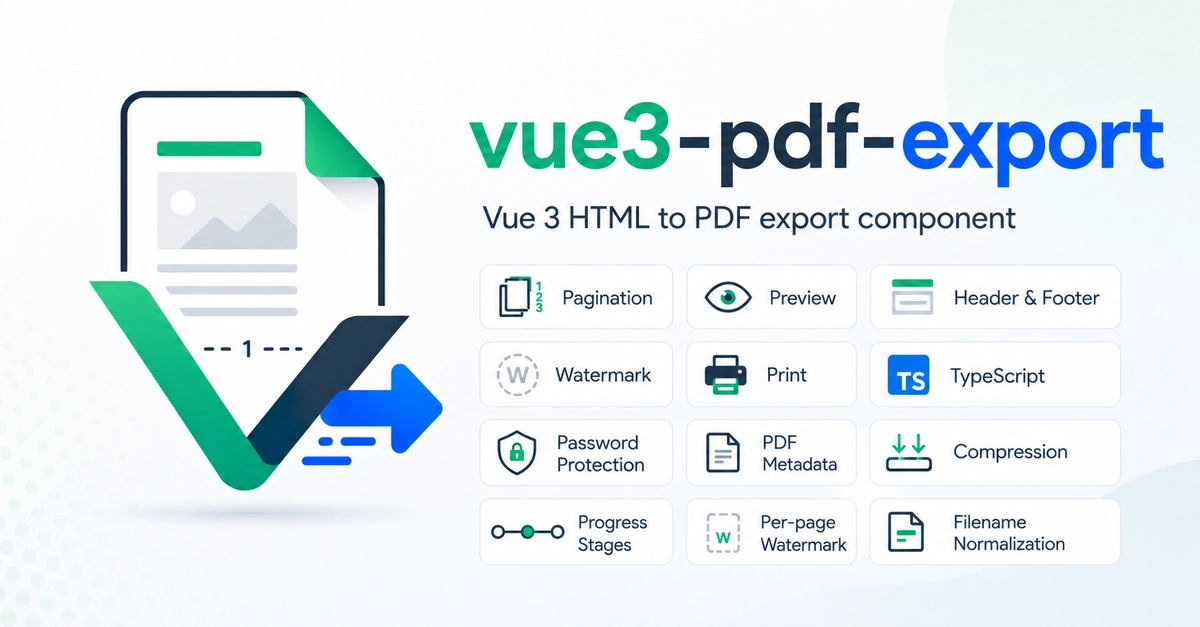
vue3-pdf-export is designed to address the common requirements of PDF generation in web applications. Its key features include:
- Direct HTML to PDF Conversion: The package efficiently parses HTML elements and their associated CSS to generate PDF content. This allows developers to use familiar web technologies for PDF design.
- Vue 3 and TypeScript Compatibility: Built specifically for the Vue 3 ecosystem and leveraging TypeScript, it offers type safety and integrates seamlessly with modern Vue development practices.
- Pagination Management: Automatic handling of page breaks and pagination is a crucial aspect, ensuring that long content is correctly divided across multiple pages with consistent headers and footers if defined.
- Customization Options: While providing sensible defaults, the package aims to offer flexibility for developers to customize aspects of the PDF output, such as page size, orientation, margins, and potentially header/footer content.
The decision to build this package stemmed from Zaiswal's own repeated experiences rebuilding these features. Instead of creating bespoke solutions for each project, a reusable, open-source library offers a more sustainable and efficient approach for the broader Vue development community. This also allows for collaborative improvements and bug fixes as more developers adopt and contribute to the project.
Technical Implementation and Considerations
The underlying technology for vue3-pdf-export likely relies on established JavaScript PDF generation libraries that can interpret HTML and CSS. Libraries like html2pdf.js or jsPDF with HTML plugins are common choices for such tasks. The Vue 3 wrapper abstracts the complexity of these libraries, providing a Vue-idiomatic API. Developers can typically pass HTML elements or component templates to the export function, and the package orchestrates the conversion process.
One of the significant challenges in HTML-to-PDF conversion is the fidelity of styling. Web browsers use sophisticated rendering engines that interpret CSS in ways that are difficult to replicate perfectly in a PDF context. vue3-pdf-export aims to bridge this gap by supporting a substantial subset of CSS properties, enabling developers to create PDFs that closely resemble their web counterparts. However, developers should remain aware that certain advanced CSS features or JavaScript-driven rendering might not translate perfectly and may require specific handling or simplification.
The inclusion of TypeScript not only enhances developer experience through autocompletion and compile-time checks but also signals a commitment to robust, maintainable code. For developers integrating vue3-pdf-export, this means better predictability and fewer runtime errors. The open-source nature of the project, hosted on platforms like GitHub, allows for community contributions, issue tracking, and feature requests, fostering continuous improvement.
Impact and Future Potential
For developers working with Vue 3, vue3-pdf-export offers a welcome simplification. It reduces the time and effort required to implement PDF generation capabilities, allowing teams to focus on core application logic rather than repetitive utility development. This is particularly valuable for applications that need to generate reports, invoices, certificates, or any other document format directly from user interfaces.
The package's success will depend on its adoption rate, community engagement, and its ability to keep pace with evolving web standards and browser rendering behaviors. As the Vue ecosystem continues to grow, a well-maintained and feature-rich PDF export solution becomes increasingly essential. Future developments could include enhanced support for more complex CSS, better image handling, integration with server-side PDF generation workflows, or even support for template-based PDF creation beyond direct HTML rendering.
What remains to be seen is how vue3-pdf-export handles the performance implications of generating PDFs client-side for very large or complex documents. Optimizing the parsing and rendering process will be key to ensuring a smooth user experience without freezing the browser tab.