The Illusion of Static Frames
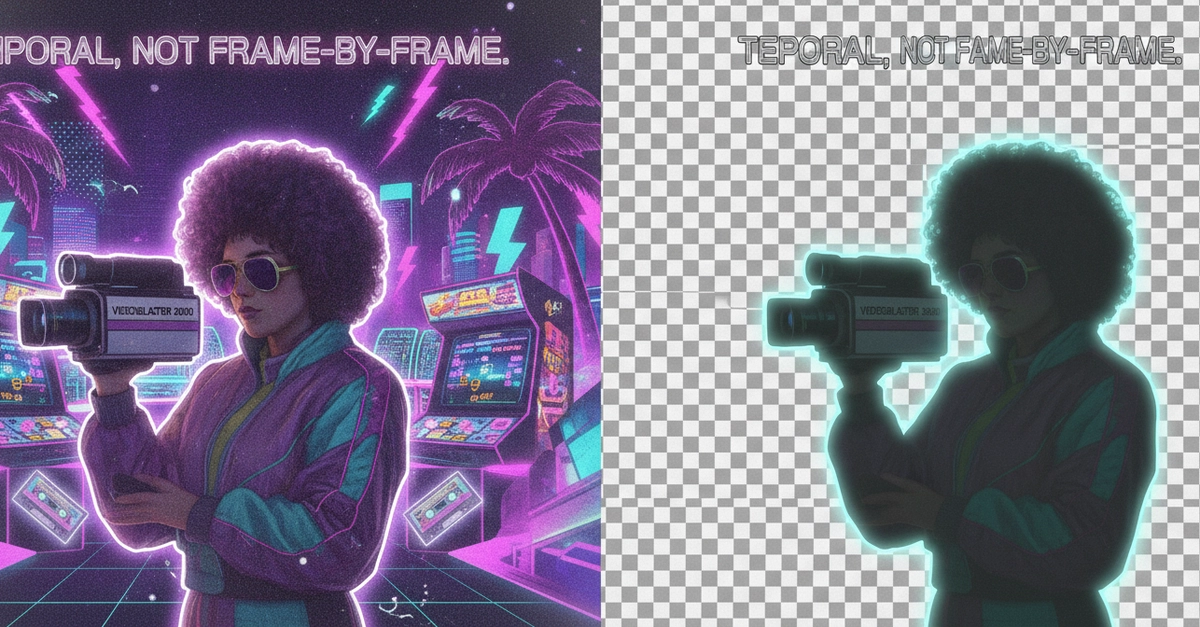
You’ve seen it. You feed a video into a background removal tool, export the result, and the subject’s hair looks like it was cut with a dull pair of scissors. Fast hand movements blur into ghostly, semi-transparent smears. The precise edge between foreground and background flickers erratically from one frame to the next, a constant visual stutter that screams “amateur.” This isn't necessarily a failure of the underlying model; it’s a failure of the mental model applied to the problem. The common pitfall, especially for developers, is importing an image-based approach into a medium that is fundamentally temporal: video.
For the past year, I’ve been building video segmentation pipelines, and the single most pervasive mistake I observe is the assumption that video is simply a sequence of independent photographs. This approach, often termed the “frame-by-frame trap,” leads directly to the visual artifacts that plague video background removal. When you run a segmentation model on each frame in isolation, the model has no memory of the previous frame. It treats frame 47 as a completely new problem, unaware that it just meticulously outlined a strand of hair or the edge of a table in frame 46. This lack of temporal awareness means that minor variations in lighting, slight camera jitters, or subtle shifts in the subject's pose can cause the segmentation mask to change inconsistently. A strand of hair detected in one frame might not be detected in the next, or its shape might be subtly altered. These small, frame-to-frame inconsistencies don't just add up; they compound, creating visible noise and instability in the final output. The result is a mask that flickers, a subject that appears to dissolve at the edges, and a general lack of coherence that undermines the entire process.
Understanding Temporal Consistency
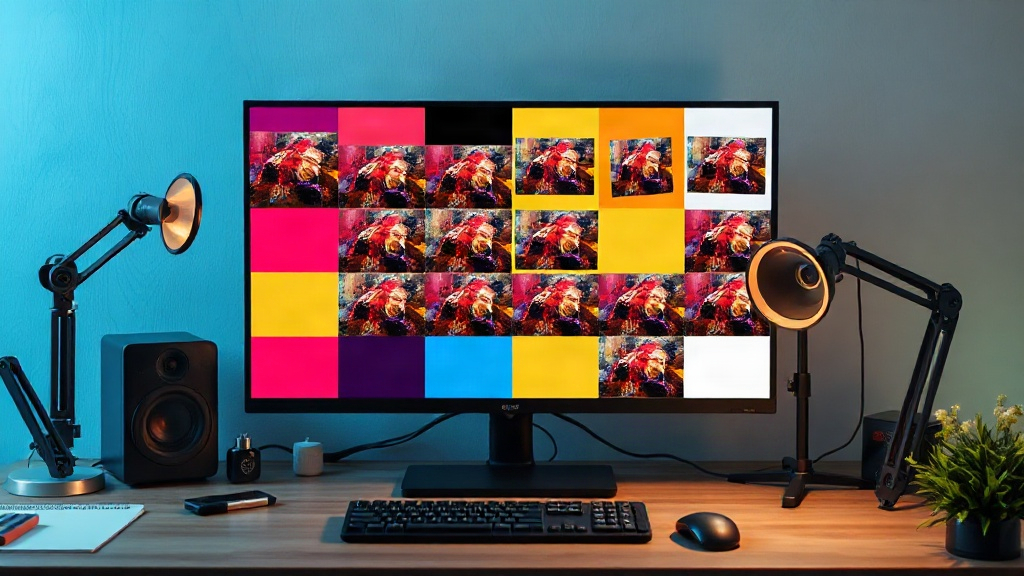
The core issue lies in how video data differs from still images. Video possesses a temporal dimension; each frame is not an isolated event but part of a continuous stream of motion and change. Effective video segmentation, therefore, requires models that can leverage this temporal information. Instead of analyzing each frame as a distinct entity, advanced techniques consider the relationships between consecutive frames. This allows the model to maintain consistency over time. For instance, if a particular object or feature (like a person’s arm) is identified in frame 100, the model can use that information to inform its prediction for frame 101. It’s less about making a perfect prediction for every single frame from scratch and more about making a series of predictions that are coherent and stable across the entire sequence.
Think of it like drawing a flipbook animation. If you draw each page independently without considering the previous and next pages, your characters will jump around erratically. But if you draw each frame with a slight, consistent adjustment from the last, you create smooth motion. Video segmentation models that ignore this principle are essentially drawing independent flipbook pages, leading to jerky, inconsistent results. The goal is not just to identify pixels belonging to the foreground in a single moment, but to track those pixels consistently as they move and change over time. This requires models that incorporate concepts like optical flow, recurrent neural networks (RNNs), or transformer architectures designed to handle sequential data. These methods allow the model to build a more robust understanding of the scene and the objects within it, leading to significantly more stable and accurate masks.
Beyond Simple Removal: The Power of Context
The limitations of the frame-by-frame approach extend beyond mere visual artifacts. By treating each frame independently, these models miss crucial contextual information that could improve segmentation accuracy. For example, if a subject is moving rapidly, their features might become blurred or distorted in a single frame, making accurate segmentation difficult. However, by analyzing the motion trajectory across multiple frames, a model can infer the subject’s likely position and shape, even in frames where the visual data is ambiguous. This is akin to how the human brain processes motion; we don't just see a snapshot, but perceive continuous movement and infer the object’s path.
Furthermore, temporal consistency helps in handling occlusions. If a subject briefly moves behind an object, a frame-by-frame model might lose track of them entirely or produce an erratic mask upon their reappearance. A temporally aware model, however, can maintain a memory of the subject and re-establish its mask more reliably once it becomes visible again. This continuity is vital for applications like virtual green screens, object tracking, or augmented reality overlays, where seamless integration with the video stream is paramount. The ability to maintain a stable, context-aware segmentation across the entire video clip is what separates basic background removal from professional-grade video manipulation.
Building for Temporal Awareness
For developers building video processing tools, embracing a temporal mental model is critical. This means choosing or developing segmentation models that are designed for video, not just still images. Libraries and frameworks that offer video-specific segmentation capabilities, often built on architectures that incorporate recurrent connections or attention mechanisms across frames, are essential. When evaluating tools or models, look for metrics that assess temporal consistency, not just per-frame accuracy. This might involve looking at metrics like mask jitter or the rate of mask disappearance.
Consider the implications for your application. If you are building a real-time video conferencing tool that needs to replace backgrounds, a frame-by-frame approach will likely result in a distracting, flickering experience for users. You need a solution that can maintain a stable mask as participants move and interact. Similarly, for video editing software, the ability to generate clean, consistent masks is fundamental to professional workflows. Instead of treating video as a collection of JPEGs, developers must think of it as a dynamic, evolving entity. This shift in perspective is not just a technical nuance; it's the key to unlocking high-quality video segmentation and creating truly compelling visual experiences.
The pursuit of perfect video background removal is not about finding a more powerful image segmentation model. It's about adopting a fundamentally different approach, one that respects the temporal nature of video. By moving beyond the frame-by-frame trap and embracing temporal consistency, developers can build tools that deliver professional-grade results, transforming raw footage into polished, engaging content.