
Formal Verification Comes to Rust with Verus
Developing software that is demonstrably free of bugs is a perennial challenge. For systems programming languages like Rust, where correctness is paramount due to memory safety guarantees and performance requirements, this challenge is amplified. Amazon, through its Amazon Science division, has introduced Verus, a novel tool designed to bring formal verification to Rust development. Verus allows developers to write specifications alongside their Rust code and then mathematically prove that the code adheres to these specifications, thereby eliminating entire categories of bugs before runtime.
Traditional testing and static analysis catch many bugs, but they cannot guarantee correctness. Formal verification, on the other hand, employs mathematical methods to prove that a program’s behavior conforms to its specification. This is particularly valuable for critical systems where failure can have severe consequences. Verus targets Rust, a language already celebrated for its strong safety features, aiming to elevate its reliability to an even higher level.
How Verus Works
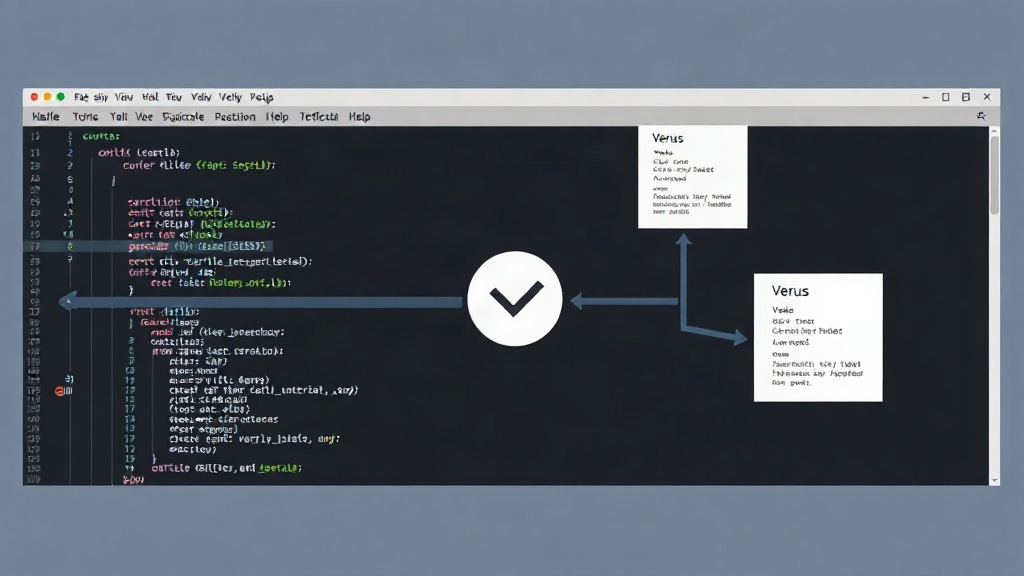
Verus integrates with the Rust compiler and uses a SMT (Satisfiability Modulo Theories) solver to perform its verification. The process involves writing Rust code that includes assertions and specifications. These specifications describe the intended properties of the code, such as invariants, pre-conditions, and post-conditions. When the code is compiled with Verus, the tool translates these specifications and the code into a format that an SMT solver can understand.
The SMT solver then attempts to find a counterexample—a scenario where the code violates its specification. If the solver can prove that no such counterexample exists, the code is considered formally verified with respect to its specifications. This process is akin to providing a mathematical proof that your code will behave as intended under all possible valid inputs and execution paths, within the scope of the defined specifications.
One of the key innovations of Verus is its ability to handle Rust's complex features, including generics, traits, and macros, while also supporting verification of concurrent programs. This is a significant step beyond many existing formal verification tools, which often struggle with the expressiveness and low-level control offered by languages like Rust.
Key Features and Benefits
Verus offers several compelling features for developers:
- Specification-Rich Rust: Developers write Rust code with embedded specifications that describe desired properties. This allows for a unified codebase where logic and verification requirements coexist.
- Verification of Concurrent Programs: Verus can verify the correctness of multithreaded Rust programs, a notoriously difficult area for bug detection. This includes ensuring data races do not occur and that shared mutable state is handled safely.
- Support for Generics and Traits: The tool is designed to work with Rust's advanced type system, enabling verification of generic functions and types, as well as code leveraging traits.
- Macro Support: Verus can verify code that uses Rust macros, a common feature in idiomatic Rust development, which is often a hurdle for verification tools.
- Integration with Existing Toolchains: It aims to integrate smoothly into existing Rust development workflows, minimizing disruption for developers.
The primary benefit of Verus is the significant reduction in bugs, particularly those related to memory safety, concurrency, and logic errors that are hard to catch with traditional methods. For developers working on high-assurance systems, such as those in aerospace, automotive, or critical infrastructure, Verus provides a powerful new tool to build trust in their software.
The Importance of Provable Correctness
The drive towards provably correct software is not merely academic. In an era where software controls everything from financial transactions to autonomous vehicles, the cost of bugs can be astronomical. While Rust’s ownership system dramatically reduces memory-related bugs compared to C/C++, it doesn’t eliminate all classes of errors, especially those arising from complex logic or concurrency. Verus addresses this gap by providing a mechanism to mathematically prove that the code behaves precisely as intended.
Think of it like this: Rust’s compiler is a highly skilled inspector who checks your building blueprints for structural integrity based on standard building codes. Verus, however, is like a master mathematician who can prove, using rigorous theorems, that the entire building will stand up under any specified load, even in extreme weather conditions. It moves beyond checking against rules to proving inherent properties.
Challenges and the Road Ahead
Formal verification, even with tools like Verus, is not a silver bullet. It requires a different mindset and a significant investment of developer time. Writing detailed specifications and understanding how to guide the SMT solver can be challenging. The complexity of the specifications themselves can also introduce errors. Furthermore, the performance overhead of verification, while not affecting the runtime performance of the verified code, can impact development iteration times.
Amazon’s Verus is still in its early stages. Its adoption will depend on its usability, the quality of its error messages, and its ability to scale to larger, more complex codebases. The team behind Verus will need to focus on developer experience to make formal verification accessible to a broader audience of Rust developers. The surprising detail here is not the development of another verification tool, but its specific focus on Rust's advanced features and concurrency, areas where Rust already excels but could still benefit from an extra layer of mathematical assurance.
What nobody has addressed yet is how Verus will influence Rust's ecosystem maturity and the potential for specialized Rust development roles focused on formal verification. As the tool evolves, it could become an indispensable part of building highly reliable Rust applications, pushing the boundaries of what we consider safe and correct software.
