
Secure Data Extraction, Anywhere, Anytime
Verify has introduced a significant advancement in its data extraction capabilities with the launch of its on-device field extraction technology. This new feature allows users to securely extract data from documents directly on their device, eliminating the need for an internet connection. This capability is particularly crucial for industries and applications where data privacy is paramount, or where reliable internet access is not consistently available.
Traditional data extraction often relies on cloud-based processing. While efficient, this model presents inherent challenges. Sending sensitive documents to external servers, even those with robust security protocols, can introduce vulnerabilities and compliance hurdles. For sectors like finance, healthcare, and legal services, where documents often contain personally identifiable information (PII) or confidential business data, maintaining data sovereignty is non-negotiable. Verify's on-device solution addresses these concerns head-on by keeping the entire extraction process localized.
The implications of on-device processing extend beyond just security. Offline functionality means that data extraction can continue uninterrupted regardless of network status. This is a game-changer for field operations, remote work scenarios, and applications requiring real-time data capture in environments with spotty or non-existent connectivity. Imagine a sales representative capturing invoice details from a client site, or a surveyor logging property data – all without needing to wait for a signal or worry about data transmission errors.
How On-Device Extraction Works
Verify's technology leverages advanced machine learning models that are optimized to run efficiently on mobile and desktop devices. Unlike cloud-based models that require substantial computational resources, these on-device models are designed for performance within the constraints of typical hardware. This involves careful model quantization, pruning, and architecture selection to ensure speed and accuracy without compromising the user experience or draining device battery life excessively.
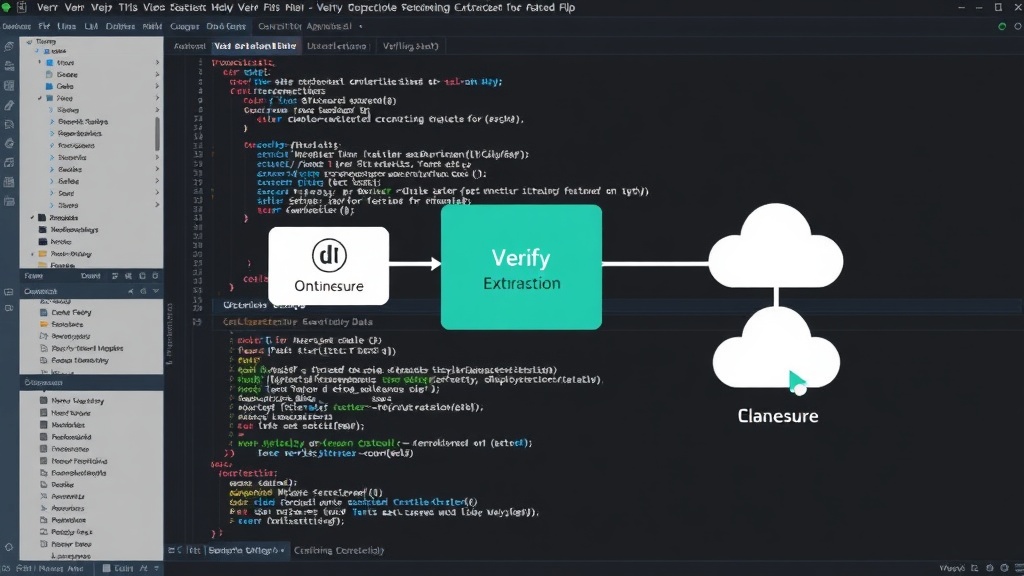
The process typically begins with the user capturing an image of a document using their device's camera or selecting an existing file. Verify's SDK then processes this document locally. It identifies relevant fields – such as invoice numbers, dates, amounts, names, or addresses – and extracts the corresponding data. This data is then available for use within the application, either for immediate processing, local storage, or later synchronization when a network connection becomes available. The entire pipeline, from image ingestion to data output, happens on the user's device.
This approach significantly reduces latency. Instead of sending an image to a server, waiting for processing, and receiving the results, users get near-instantaneous extraction. This is critical for workflows that demand immediate data availability, such as automated data entry into local databases or immediate validation against local records.
Privacy and Security by Design
The core advantage of on-device extraction is its inherent privacy and security. By processing data locally, sensitive information never leaves the user's device. This eliminates the risk of data breaches during transit and reduces the compliance burden associated with data residency and cross-border data transfer regulations. For organizations handling sensitive financial, medical, or personal data, this is a critical differentiator.
Verify's commitment to security is evident in their design choices. The models are trained on diverse datasets but deployed in a way that ensures the raw document data is never uploaded or stored remotely. This is particularly important for compliance with regulations like GDPR, HIPAA, and CCPA, which impose strict rules on the handling of personal data. By keeping data on-device, organizations can more easily demonstrate compliance and build greater trust with their users.
Consider a healthcare provider needing to extract patient information from intake forms. With on-device extraction, the sensitive patient data remains within the secure confines of the clinic's device, significantly reducing the risk of a HIPAA violation. Similarly, a financial institution processing loan applications can extract critical details without ever exposing the applicant's financial data to external servers.
Use Cases and Market Impact
The applications for Verify's on-device field extraction are vast and varied. In the financial sector, it can be used for mobile check deposits, expense report automation, and invoice processing, all while ensuring sensitive financial data remains protected.
For the insurance industry, it enables faster claims processing by allowing agents in the field to extract information from accident reports, repair estimates, and policy documents directly from their mobile devices. Healthcare providers can leverage this for patient registration forms, medical records, and prescription details, enhancing efficiency and patient privacy.
The logistics and supply chain sectors can benefit from real-time capture of shipping manifests, delivery confirmations, and customs documents, even in remote or offline locations. Retail businesses can streamline inventory management and point-of-sale data capture. Even in consumer applications, like personal finance managers or document scanners, the ability to extract data securely and offline offers a superior user experience.
This technology directly challenges cloud-centric data extraction providers. By offering a secure, offline-capable alternative, Verify is positioning itself as a leader for organizations with stringent privacy requirements or operational needs that demand local processing. The market is increasingly aware of the risks associated with cloud dependencies, making on-device solutions like Verify's highly attractive.
The Future of Localized AI
Verify's on-device field extraction is more than just a product update; it's a step towards a future where powerful AI capabilities are distributed, not centralized. As edge computing and on-device AI become more sophisticated, we can expect more applications to move processing from the cloud to the user's device. This trend promises enhanced privacy, reduced latency, and increased resilience.
What remains to be seen is how this capability will evolve in terms of model complexity and the types of documents that can be processed. As on-device hardware continues to improve, the sophistication of the AI models that can be deployed locally will also increase, potentially enabling even more complex extraction tasks. The challenge for companies like Verify will be to balance this increasing capability with the need for efficient resource utilization on a wide range of devices.
For developers and businesses looking to implement robust, privacy-preserving data extraction, Verify's new offering provides a compelling solution. It underscores a broader shift in how we think about data processing and AI, moving towards more localized, secure, and user-centric applications.