The digital landscape is shifting. We are moving beyond static applications to intelligent systems capable of autonomous thought and action. At the heart of this transformation lies agentic infrastructure, a meticulously engineered environment designed to support and scale autonomous AI agents. Vercel's insights from Ship 2026, drawing on the development of over 50 AI systems, offer a clear roadmap for building and deploying these powerful agents.
What is Agentic Infrastructure and AI Agents?
Agentic infrastructure is a specialized computing environment built to support and scale autonomous AI agents. Think of it less like a traditional server farm and more like a highly specialized, secure operating system for AI. It provides an end-to-end set of building blocks that enable intelligent software to perform tasks autonomously. This includes components like the Vercel Agent Stack, which offers core functionalities, and Vercel Connect, a crucial element for securely accessing external systems and data. Frameworks like 'eve' are also key, providing durable execution and sandboxed compute environments, ensuring agents operate reliably and safely.
Businesses are leveraging this infrastructure to deploy intelligent software that can think, automate complex workflows, and proactively interact with both digital systems and human users. The primary benefit is significant operational efficiencies and the creation of entirely new product capabilities that were previously impossible with static applications. These agents are not just tools; they are becoming active participants in digital processes, capable of decision-making and complex problem-solving.
The Core Components of Agentic Infrastructure
Vercel's approach, as detailed in their Ship 2026 insights, emphasizes several critical components for robust agentic infrastructure:
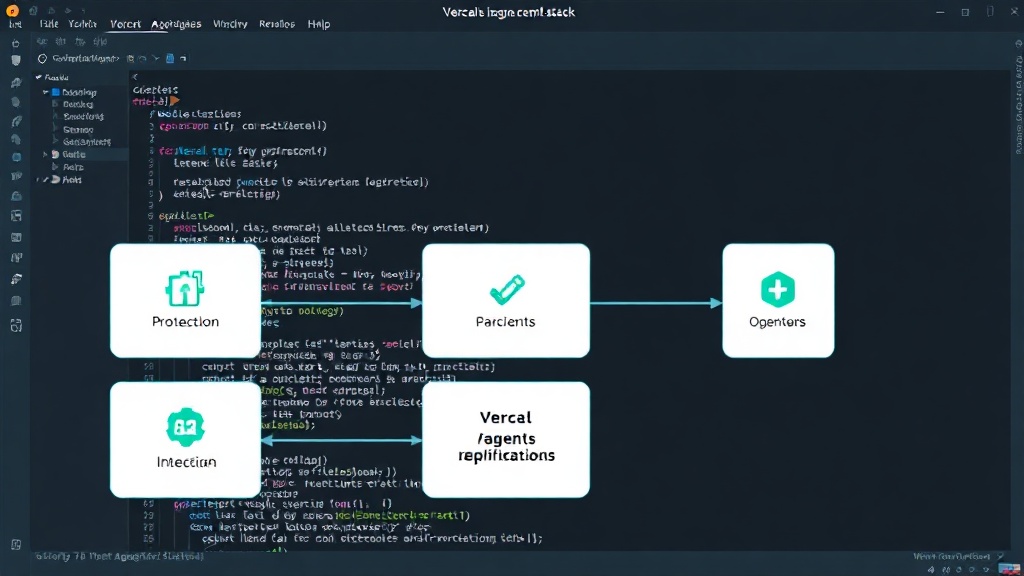
- Vercel Agent Stack: This is the foundational layer, providing the core libraries and services necessary to build and manage AI agents. It abstracts away much of the complexity of agent orchestration, memory management, and tool integration.
- Vercel Connect: Secure access to external systems is paramount for agents to be truly useful. Vercel Connect acts as a secure gateway, allowing agents to interact with APIs, databases, and other services without compromising security or requiring extensive custom integration for each interaction. This is analogous to giving an agent a secure, pre-approved set of credentials and permissions to perform specific actions in the outside world.
- Durable Execution & Sandboxed Compute (e.g., 'eve'): Autonomous agents often require long-running processes and the ability to execute code safely. Frameworks like 'eve' provide reliable execution environments that can handle interruptions and state management, while sandboxing ensures that agent operations do not negatively impact the underlying infrastructure or other agents. This is critical for tasks that might take hours or days to complete, or for agents that need to perform potentially risky operations in a controlled manner.
These components work in concert to create an environment where AI agents can operate effectively, securely, and at scale. The abstraction provided by these tools allows developers to focus on the agent's intelligence and logic rather than the underlying infrastructure complexities.
Use Cases and Business Impact
The applications for agentic infrastructure are vast and span numerous industries. At its core, it enables the automation of tasks that require complex reasoning, decision-making, and interaction with multiple systems. Consider customer support: AI agents can handle intricate queries, access customer history, consult knowledge bases, and even initiate actions like processing refunds or scheduling follow-ups, all without human intervention for routine complex cases. This moves beyond simple chatbots to proactive, intelligent problem solvers.
In software development, agents can assist with code generation, debugging, testing, and even deployment pipelines. They can monitor systems for anomalies, predict potential failures, and automatically implement corrective actions. For data analysis, agents can ingest data from disparate sources, perform complex transformations, identify trends, and generate reports, freeing up data scientists for higher-level strategic thinking.
The business impact is clear: increased operational efficiency through automation, reduced costs associated with manual processes, enhanced customer satisfaction due to faster and more capable service, and the creation of new revenue streams through innovative AI-powered products and services. Companies that adopt agentic infrastructure early position themselves to gain a significant competitive advantage.
The Future of Autonomous Systems
Vercel's Ship 2026 insights point towards a future where autonomous AI agents are not a niche technology but a fundamental part of digital infrastructure. The trend is towards more sophisticated agents capable of multi-step reasoning, long-term planning, and collaborative problem-solving with other agents or humans. The development of agentic infrastructure is crucial to enabling this evolution.
What remains to be fully explored is the governance and ethical framework for highly autonomous agents operating at scale. As agents become more integrated into critical business processes, ensuring their alignment with human values, transparency in their decision-making, and accountability for their actions will become paramount. This is not merely a technical challenge but a societal one that will need to be addressed as the technology matures.
The underlying technology is rapidly advancing, promising agents that are more capable, more efficient, and more seamlessly integrated into our digital lives. The focus will likely shift from building individual agents to orchestrating complex ecosystems of interacting agents that can tackle problems far beyond the scope of current applications.