Why USDT for Global Payouts?
When building systems that require automated payouts – from AI agent marketplaces to freelance platforms – the traditional banking system presents significant hurdles. Slow transfer times, prohibitive fees, and geographic limitations can cripple margins and frustrate users. USDT, the dominant stablecoin pegged to the US dollar, offers a compelling alternative. Its stability, liquidity, and global reach make it a critical tool for the future of the gig economy. The key challenge, however, lies in selecting the optimal blockchain network for these cross-chain payouts.
TRC-20: The Tron Network's High-Throughput Option
The TRC-20 standard on the Tron network has emerged as a popular choice for USDT transfers due to its impressive transaction speeds and remarkably low fees. Tron was designed from the ground up for high throughput and scalability, making it an attractive option for applications requiring frequent and high-volume transactions. For developers, integrating TRC-20 USDT payouts means users can receive funds quickly and with minimal cost, which is particularly beneficial for micro-transactions or platforms serving a large, globally distributed user base.
However, the Tron network's ecosystem, while growing, may not be as deeply integrated into the broader DeFi landscape as some other chains. Its primary strength lies in its efficiency for token transfers, especially USDT, rather than a vast array of complex smart contract interactions. The network's consensus mechanism, Delegated Proof-of-Stake (DPoS), offers speed but has different decentralization characteristics compared to other blockchain models.
BEP-20: Binance Smart Chain's Interoperable Ecosystem
Binance Smart Chain (BSC), now BNB Smart Chain, utilizes the BEP-20 standard, offering another robust option for USDT payouts. BSC is known for its compatibility with the Ethereum Virtual Machine (EVM), which simplifies migration for developers familiar with Ethereum's smart contract language (Solidity). This EVM compatibility fosters a rich ecosystem of decentralized applications (dApps) and readily available liquidity.
BEP-20 USDT transactions on BSC are generally fast and cost-effective, though typically slightly higher in fees than TRC-20. The network's main advantage is its deep integration with the Binance ecosystem and its strong community support. For platforms whose users are already familiar with or active within the Binance world, BEP-20 USDT payouts offer a seamless experience. The trade-off can sometimes be concerns around network centralization, given its close ties to Binance.
Arbitrum: Ethereum's Scalability Solution
Arbitrum is a Layer-2 scaling solution for Ethereum, designed to increase transaction throughput and reduce costs while inheriting Ethereum's robust security. USDT on Arbitrum (often an ERC-20 token bridged to Arbitrum) benefits from significantly lower gas fees compared to native Ethereum mainnet transactions. This makes it a viable option for developers who prioritize leveraging Ethereum's security and established ecosystem but need to avoid the high transaction costs associated with the mainnet.
Arbitrum One uses an optimistic rollup mechanism. This means transactions are processed off-chain and then batched and submitted to the Ethereum mainnet. While this dramatically speeds up transactions and lowers costs, there's a challenge for immediate payouts: a withdrawal period is typically required to move assets back to the Ethereum mainnet, which can take days. This delay might not be suitable for applications requiring instant fund availability. However, for payouts that don't require immediate mainnet withdrawal, Arbitrum offers a secure and cost-effective middle ground.
TON: Telegram's Native Blockchain for Mass Adoption
The TON (The Open Network) blockchain, originally developed by Telegram, is built for massive scalability and aims to integrate seamlessly with the Telegram messaging app. USDT on TON leverages this native integration, potentially offering extremely fast and low-cost transactions directly within the Telegram environment. This is a significant differentiator for applications targeting the vast Telegram user base.
TON's architecture is designed for high performance, utilizing sharding to handle a large number of transactions concurrently. For developers looking to embed payments directly into a messaging-first user experience, TON presents a unique opportunity. The primary consideration here is the maturity and breadth of the TON ecosystem. While rapidly growing, it may not yet have the same level of developer tooling, dApp variety, or established DeFi presence as Ethereum-based solutions or even Tron and BSC. The success of TON payouts will heavily depend on its adoption within the Telegram ecosystem and its ability to attract developers and users beyond immediate messaging integrations.
Choosing the Right Chain for Your Payouts
The selection of a blockchain for USDT payouts hinges on specific application requirements:
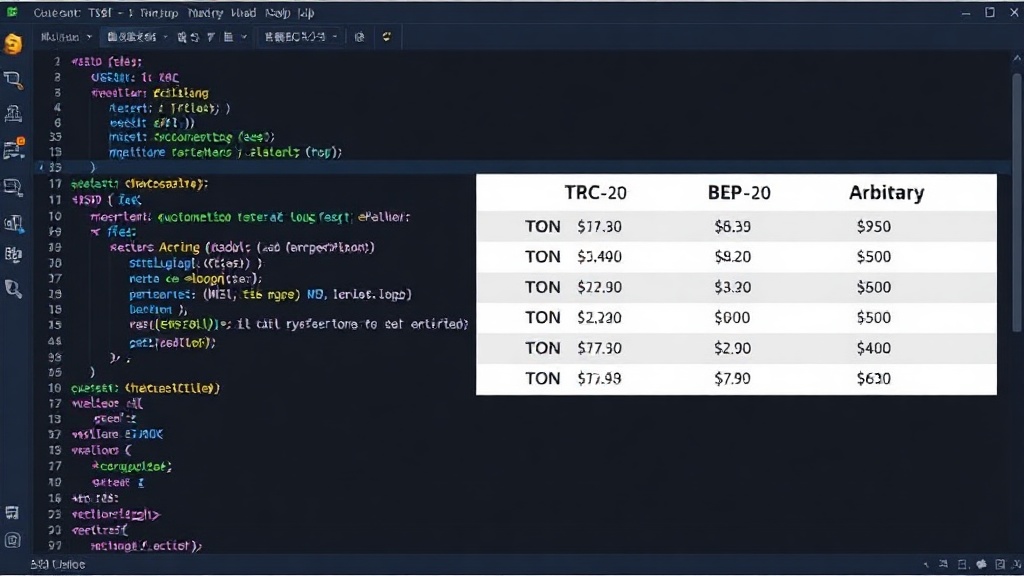
- For maximum speed and lowest fees: TRC-20 on Tron is often the top contender. It's ideal for high-frequency, low-value transactions where cost is paramount.
- For broad ecosystem integration and EVM compatibility: BEP-20 on BNB Smart Chain offers a balance of speed, cost, and a rich dApp environment, especially appealing to users familiar with Binance.
- For Ethereum security with reduced costs: Arbitrum provides a Layer-2 scaling solution that benefits from Ethereum's security, but developers must account for potential withdrawal delays to the mainnet.
- For Telegram-centric applications: TON offers native integration and potentially the fastest, cheapest transactions for users within the Telegram ecosystem, provided its ecosystem maturity aligns with project needs.
As a developer building payment infrastructure, the decision isn't just about current transaction costs. It's about user experience, the target audience's existing crypto footprint, and the long-term scalability and security of the chosen network. Each chain offers a distinct set of trade-offs, and the optimal choice will evolve with user needs and network developments.