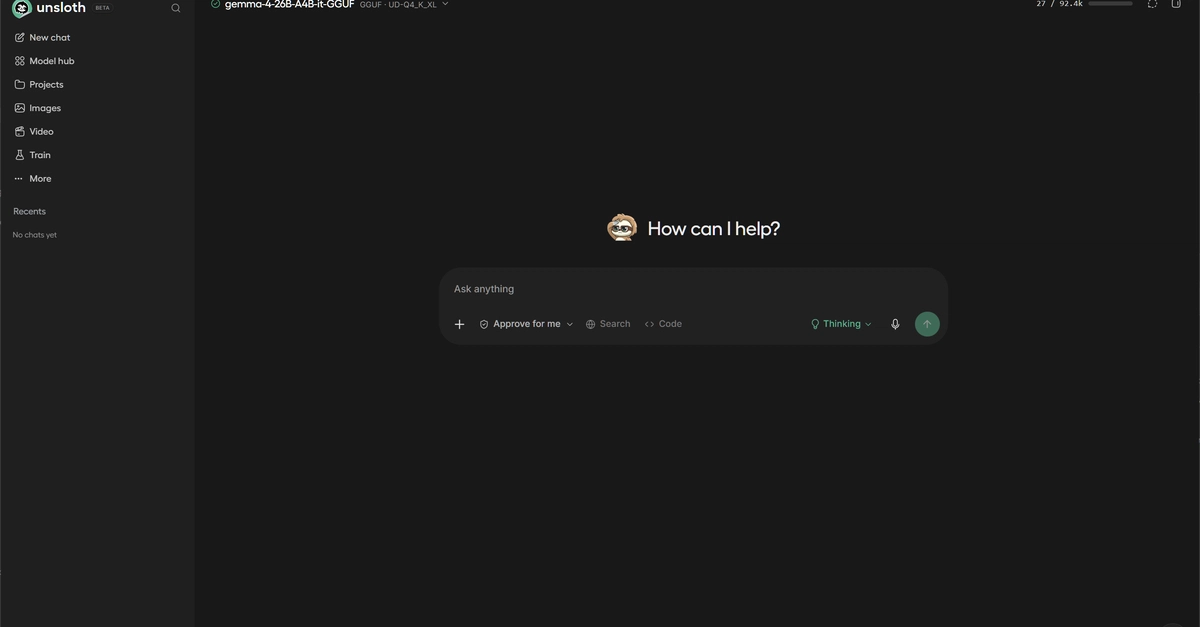
The Promise of Local AI
The allure of running Artificial Intelligence models directly on your own hardware, often referred to as Local AI, has grown significantly. While cloud-based solutions offer immense power and scale, they come with inherent limitations: subscription fees, usage-based token costs, potential for service outages, and the ever-present concern of data privacy. Local AI sidesteps these issues entirely. It runs on your machine, meaning no recurring costs, no arbitrary limits on your queries, and complete offline functionality. For developers, researchers, and businesses handling sensitive intellectual property or proprietary data, this offline, on-premise approach is a critical advantage. The data stays local, mitigating risks associated with third-party data handling and model training on user-submitted information.
However, bringing this powerful capability to the average user has been a hurdle. Historically, setting up local LLMs involved navigating complex command-line interfaces with tools like Ollama or llama.cpp. This technical barrier, while manageable for enthusiasts, proved too steep for friends and colleagues eager to explore the magic of AI without becoming system administrators. The setup process often demanded specific technical knowledge, troubleshooting skills, and a willingness to wrestle with configuration files and dependencies.
Unsloth Desktop emerges as a direct answer to this challenge. Its core mission is to democratize access to local AI, making it as simple as installing any other desktop application. By abstracting away the intricate setup procedures, Unsloth aims to bring the benefits of local LLMs – privacy, cost-effectiveness, and offline access – to a much wider audience, particularly those who may not have deep technical backgrounds.
Hardware Considerations for Local AI
Before diving into Unsloth Desktop, understanding your hardware's capabilities is paramount. The performance of local AI models is directly tied to the processing power and memory available on your machine. For an optimal experience with Unsloth Desktop, the developers recommend an Apple Silicon Mac. These systems, equipped with Apple's M-series chips (M1, M2, M3, etc.), offer a unified memory architecture that can be particularly beneficial for LLMs. This architecture allows the CPU and GPU to access the same memory pool, reducing latency and improving efficiency when handling large models and datasets. The recommendation is for a Mac with at least 24 GB of unified memory. This threshold is crucial because large language models, by their nature, require substantial amounts of RAM to load their parameters and process information effectively. Insufficient memory will lead to slow performance, frequent swapping to disk (which is orders of magnitude slower), and potentially the inability to run larger, more capable models altogether.
While Apple Silicon Macs are highlighted, the underlying principle applies broadly: the more RAM and processing power you have, the better your local AI experience will be. Users with high-end Windows PCs or Linux machines equipped with ample RAM (32GB or more) and powerful GPUs might also find ways to leverage local AI, though Unsloth Desktop's current focus is on the macOS ecosystem for its streamlined approach.
Unsloth Desktop: Simplifying the User Experience
Unsloth Desktop tackles the complexity of local AI setup by providing a graphical user interface (GUI). This means users can interact with the software through windows, buttons, and menus, rather than typing commands into a terminal. The application handles the downloading, installation, and configuration of compatible LLMs behind the scenes. Users can browse and select from a curated list of models, often optimized for performance on Apple Silicon, and launch them with just a few clicks.
The application is designed to abstract the underlying technologies, such as the inference engines and model formats, allowing users to focus on their interaction with the AI. This approach is akin to how modern web browsers abstract away the complexities of network protocols and rendering engines, making the internet accessible to billions. Similarly, Unsloth Desktop aims to make local LLMs accessible to millions of Mac users.
Referenced Sources
- verified