
The Memory Crunch of Early Computing
In the late 1970s, computing resources were a luxury. A typical Unix system might have had 64 kilobytes (kB) of RAM available for user programs. To put this into perspective, a single modern high-resolution image can easily exceed this size. Yet, it was on such systems that powerful tools like the Unix `spell` command were developed and deployed. The `spell` utility, designed to identify misspelled words in a text document, seems like a simple program. However, achieving its functionality within such a minuscule memory footprint required an extraordinary level of engineering ingenuity and a deep understanding of data structures and algorithms.
The challenge wasn't just about writing code; it was about fitting the entire program, its data, and the operating system's overhead into a space so small it would cripple a modern application before it even loaded. This necessitated a fundamental rethinking of how data could be stored and accessed efficiently.
Core Data Structures and Algorithms
The heart of the `spell` command's efficiency lay in its dictionary. A naive approach of storing a plain text list of every English word would be far too large. Instead, early Unix developers employed clever techniques to compress the dictionary and the lookup mechanism.
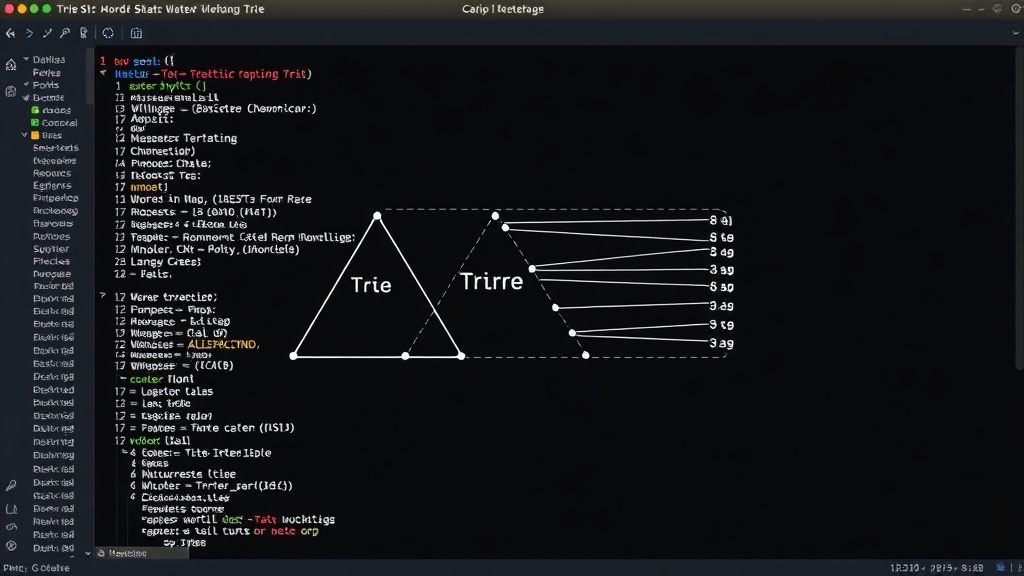
One of the primary methods used was a form of compressed bit-mapped dictionary or a Trie (prefix tree) optimized for space. A standard Trie stores words by sharing common prefixes. For example, 'cat', 'car', and 'cart' would share the 'ca' prefix. While efficient, a naive Trie can still consume significant memory due to node overhead. The Unix `spell` implementation likely used variations that reduced this overhead.
Another key technique involved using a hash table with a carefully chosen hash function and collision resolution strategy. A hash table can provide near-constant time lookups. However, the size of the hash table is directly related to the size of the dictionary. To fit within 64kB, the dictionary itself had to be compressed, and the hash table would have been sized to match this compressed data, potentially using techniques that allowed for dynamic resizing or pre-calculated optimal sizes.
Reducing the Dictionary Size
The most significant memory consumer for `spell` was its dictionary. The original Unix dictionary was a compiled version of words, not a plain text file. This compilation process involved several steps to minimize its size:
- Alphabetical Sorting and Prefix Compression: Words were sorted alphabetically, allowing for efficient compression by storing only the differences or common prefixes between consecutive words.
- Encoding: Instead of using standard ASCII or UTF-8 for each character, a more compact encoding might have been used. For instance, if the dictionary only contained lowercase English letters, a 5-bit encoding per character could be used (2^5 = 32, sufficient for 26 letters plus some control characters). This would reduce the storage needed for each word significantly.
- Phonetic or Rule-Based Filtering: It's possible that the dictionary was not exhaustive. Some versions might have focused on common English words and potentially excluded very rare words or proper nouns, reducing the total number of entries. Furthermore, the system might have relied on simple phonetic rules or regular expressions to catch common misspellings rather than listing every possible permutation.
- Multiple Dictionaries: Instead of one massive dictionary, `spell` could have used multiple smaller dictionaries, perhaps one for common words and another for less common ones, loaded only when necessary or combined in memory.
The process of creating this compressed dictionary was computationally intensive and performed offline. The resulting file was then loaded into memory when the `spell` command was executed. The efficiency of this loading and lookup process was paramount.
Program Logic and Memory Management
Beyond the dictionary, the `spell` program itself had to be lean. This involved:
- Minimal Dependencies: The program would have avoided any unnecessary library calls or system services that would consume precious RAM.
- In-Memory Processing: The entire dictionary and the input text segment being processed would likely reside in RAM simultaneously. This meant that the input text itself had to be chunked or processed line-by-line to avoid exceeding memory limits.
- Algorithmic Optimization: The core spell-checking algorithm would be highly optimized. Instead of complex fuzzy matching, it likely relied on direct dictionary lookups. A word was either in the dictionary (correct) or not (misspelled). The complexity came from efficiently checking against the compressed dictionary structure.
- Clever Use of System Features: Early Unix systems had specific ways of managing memory. Developers would have exploited these, perhaps using memory-mapped files or shared memory segments if available and efficient enough for the time, though direct allocation and management were more common.
The original `spell` implementation was a testament to the power of algorithmic thinking and a deep appreciation for resource constraints. It wasn't just about fitting a program into memory; it was about achieving robust functionality with minimal overhead, a lesson that remains relevant even today in embedded systems and performance-critical applications.
The Legacy of Memory Efficiency
The techniques used to make `spell` run in 64kB of RAM are not merely historical curiosities. They represent fundamental computer science principles that are still applicable. Developers today, even with terabytes of storage and gigabytes of RAM, face similar challenges when optimizing for mobile devices, IoT devices, or performance-critical server applications. Understanding how to minimize memory footprint, compress data effectively, and design efficient lookup structures remains a core skill. The `spell` command, in its original form, serves as an enduring example of what can be achieved with limited resources through clever design and meticulous implementation.