The Core Trade-off: Breadth vs. Depth
When building applications that interact with multiple social media platforms, developers face a fundamental architectural decision: adopt a unified API layer or integrate directly with each platform’s native APIs. Neither approach is universally superior; the optimal choice hinges on specific project requirements, team resources, and strategic priorities. A unified API offers a single point of entry for publishing and managing content across diverse networks, simplifying authentication and ensuring consistent behavior. This is ideal when broad reach, predictable scheduling, and reduced maintenance of OAuth credentials are paramount. Conversely, native integrations grant direct access to each platform's unique data models, granular permissions, and the very latest features as they roll out. This path makes sense for applications where a limited set of core platforms drive the majority of engagement and deep, platform-specific control is a non-negotiable requirement.
The decision boils down to where your team prefers to manage complexity. Is it in abstracting away the differences between platforms, or in mastering the intricacies of each individual one? Understanding this distinction is key to avoiding unnecessary operational overhead and identifying the right architecture for your application's needs. A hybrid approach, leveraging both unified and native integrations, is also a viable strategy, but requires careful planning for how to manage the interplay between the two.
When Unified APIs Shine
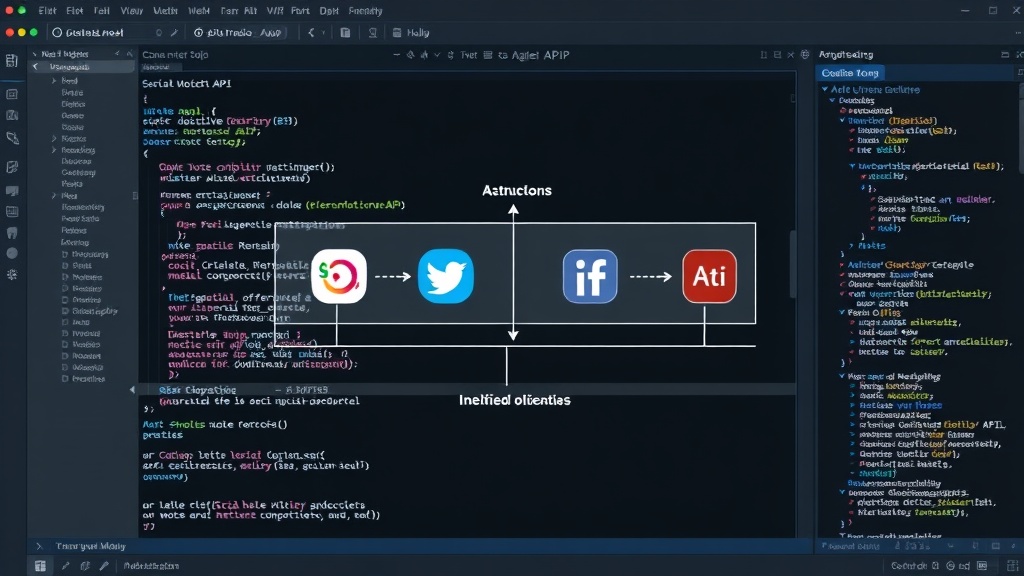
A unified social media API acts as an abstraction layer. Instead of learning and implementing the specific authentication flows, data structures, and endpoint quirks of Twitter, Facebook, Instagram, LinkedIn, and others, your application talks to a single intermediary. This intermediary handles the translation and communication with each individual platform. The primary benefits are:
- Simplified Development: A single set of SDKs or API calls can be used for all supported platforms. This dramatically reduces the learning curve and the amount of code developers need to write and maintain.
- Consistent User Experience: Features like content posting, media uploads, and profile management can be implemented with a uniform interface, ensuring a predictable experience for users of your application, regardless of the underlying social network.
- Reduced OAuth Overhead: Managing OAuth tokens and their lifecycles for multiple platforms is notoriously complex and error-prone. A unified API consolidates this, often handling token refresh and re-authorization behind the scenes.
- Easier Scalability (Breadth-wise): Adding support for a new social network typically involves updating the unified layer rather than modifying the core application logic for each existing integration.
This approach is akin to using a universal remote control for your home entertainment system. You don't need to learn the specific button layout for your TV, Blu-ray player, and soundbar individually. One interface controls them all. However, a universal remote might not expose every single advanced setting or niche function of each individual device. Similarly, a unified API might lag behind native platforms in exposing brand-new features.
The Case for Native Integrations
Native platform APIs offer a direct line to the source. When you choose this path, your application communicates directly with, for example, the Twitter API, the Facebook Graph API, or the LinkedIn API. Each integration is built and maintained independently.
The advantages of native integrations are:
- Access to Latest Features: Social media platforms frequently release new features, content types, or advertising capabilities. Native integrations provide immediate access to these, allowing your application to leverage them as soon as they become available.
- Deep Platform Control: You can fine-tune your interactions with each platform, taking advantage of platform-specific nuances in data retrieval, content formatting, and user permission management. This is crucial for applications where deep engagement with a specific network's ecosystem is a core differentiator.
- Performance Optimization: Direct communication can sometimes be more performant, as it bypasses any intermediate processing or translation layers inherent in a unified API.
- Provider-Specific Data: Each platform offers unique datasets and analytics. Native integrations allow for the most granular and direct access to this proprietary information.
Opting for native integrations is like learning to pilot each aircraft model you fly individually. You gain an intimate understanding of every control, every emergency procedure, and every nuance of its performance envelope. This allows for mastery and exploitation of each machine's full capabilities, but requires significant training and ongoing practice for each new model.
Where Complexity Resides
The critical question is not whether to use unified or native APIs, but where you want your team to invest its engineering effort. A unified API shifts complexity to the abstraction layer itself. Your team might need to:
- Choose and Vet Providers: Selecting a reliable unified API provider is crucial. You are entrusting them with critical integrations.
- Manage the Abstraction: Even with a third-party unified API, you may need to configure it, handle its limitations, and potentially contribute to its development if it’s open-source.
- Handle Provider-Specific Workarounds: Sometimes, a unified API might not perfectly support a specific edge case on a particular platform. You’ll need a strategy to address these exceptions.
Native integrations, on the other hand, distribute complexity across individual platform implementations. Your team will need to:
- Master Multiple Authentication Flows: Each platform has its own OAuth 2.0 implementation, scopes, and consent screens.
- Track API Changes: Social platforms frequently update their APIs, deprecate endpoints, and change data formats. Staying current requires continuous monitoring and adaptation.
- Build and Maintain Each Integration: Developing, testing, and maintaining distinct codebases for each platform’s API requires significant developer time and expertise.
Hybrid Approaches and Escape Hatches
For many applications, a hybrid strategy offers the best of both worlds. You might use a unified API for the bulk of your content publishing and basic profile management to maintain consistency and reduce development time. However, for a critical feature that relies heavily on a platform-specific capability—perhaps advanced analytics on Instagram or targeted advertising on Facebook—you would implement a native integration as an escape hatch.
This hybrid model requires careful architectural planning. You need clear guidelines on when to use the unified API and when to drop down to a native integration. The complexity here lies in ensuring that these two approaches coexist harmoniously within your application, without creating conflicting logic or data inconsistencies. Defining clear boundaries and responsibilities for each part of the system is paramount. For instance, if your application supports 10 social networks but 80% of its usage comes from Twitter and Instagram, you might use a unified API for the other 8 for basic posting, but build native integrations for Twitter and Instagram to unlock their full potential.
The decision matrix should consider factors like the number of platforms supported, the importance of real-time feature adoption, the need for granular control, and the team's capacity to manage complex, multi-platform integrations. Ultimately, the goal is to choose an architecture that aligns with your product strategy and minimizes the most detrimental forms of technical debt.