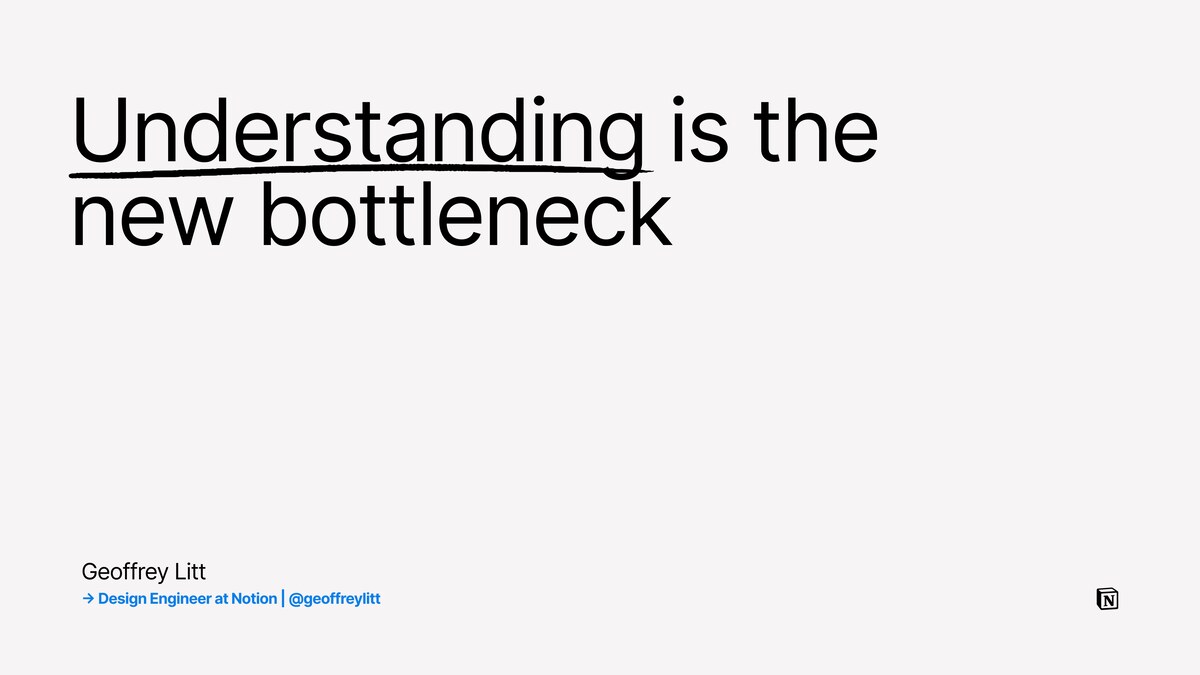
The Shifting Landscape of AI Development
For years, the primary hurdle in artificial intelligence development was computational power and algorithmic innovation. We chased bigger datasets, faster processors, and more sophisticated neural network architectures. The goal was to make AI smarter, more capable, and more efficient. This era saw rapid advancements, with breakthroughs in areas like natural language processing, computer vision, and reinforcement learning. The focus was squarely on the creation and optimization of AI models. We were in a race to build the most powerful engines, believing that more power would inherently lead to better outcomes.
However, the very success of these efforts has fundamentally altered the development paradigm. As AI models become increasingly complex and their capabilities expand exponentially, a new, more insidious bottleneck has emerged: understanding. It's no longer enough to simply build a model that performs a task; we must now grapple with the profound challenge of comprehending how it performs that task, why it makes certain decisions, and what its inherent limitations truly are. This shift represents a maturation of the field, moving from pure engineering to a more nuanced interplay of science, philosophy, and practical application.
The Problem of the Black Box
The concept of the AI "black box" is not new, but its implications have become far more acute with the advent of large language models (LLMs) and other sophisticated deep learning systems. These models, trained on massive, diverse datasets, can generate remarkably coherent text, create photorealistic images, and even write code. Yet, their internal workings remain largely opaque. We can observe their inputs and outputs, and we can tweak their parameters, but tracing the precise chain of reasoning or the specific features that led to a particular result is often an intractable problem.
This lack of transparency poses significant challenges across various domains. In scientific research, for instance, if an AI model discovers a novel drug compound or predicts a complex protein folding structure, researchers need to understand the underlying principles guiding that discovery to validate it, build upon it, and ensure its generalizability. Without this understanding, the discovery remains a black box output, difficult to trust or replicate. Similarly, in critical applications like autonomous driving or medical diagnostics, explainability is not a luxury but a necessity for safety and regulatory compliance. Developers and users alike need to know why a system made a specific decision, especially when that decision has life-or-death consequences.
The sheer scale of modern models exacerbates this issue. Imagine trying to understand the decision-making process of a single neuron in a network with trillions of parameters. It's akin to trying to understand a complex city's traffic flow by examining the behavior of a single ant. The emergent properties of these systems, while powerful, are a direct consequence of the intricate, non-linear interactions between countless components, making traditional debugging and causal analysis methods woefully inadequate.
Beyond Performance Metrics: The Need for Interpretability
Historically, AI development has been heavily reliant on quantitative performance metrics: accuracy, precision, recall, F1 scores, BLEU scores, and so on. These metrics are invaluable for benchmarking and optimizing models. However, they fail to capture the qualitative aspects of AI behavior that are becoming increasingly critical. A model might achieve a high accuracy score on a benchmark dataset, but if it does so by relying on spurious correlations or exhibiting subtle biases, its real-world utility can be severely compromised.
The push for interpretability and explainability in AI is a direct response to this limitation. Researchers are developing new techniques, such as LIME (Local Interpretable Model-agnostic Explanations), SHAP (SHapley Additive exPlanations), and attention mechanisms, to shed light on model decisions. These methods aim to provide insights into which input features were most influential, how different parts of the model contributed to the output, and whether the model is reasoning in a way that aligns with human understanding and domain knowledge. Think of it less like a magic spell that just works, and more like a meticulously documented scientific experiment where every step and variable is accounted for.
This transition demands a different skill set from AI practitioners. Beyond coding and model architecture design, developers and researchers now need expertise in areas like causality, cognitive science, and even philosophy. They must ask not just "Does it work?" but "How does it work?" and "Can we trust it to work this way in all situations?" This interdisciplinary approach is essential for building AI systems that are not only powerful but also reliable, ethical, and aligned with human values.
The Bottleneck's Impact on Innovation
The difficulty in understanding complex AI models creates a significant bottleneck for further innovation. When we cannot fully grasp the mechanisms behind an AI's success, it becomes harder to identify its true failure modes, to debug effectively, or to reliably transfer its capabilities to new, related tasks. This uncertainty can slow down the adoption of AI in high-stakes industries and limit the scope of applications we are willing to entrust to these systems.
Consider the development of more advanced AI agents capable of complex problem-solving. If such an agent proposes a novel solution to a challenging scientific or engineering problem, the inability to understand its rationale could prevent that solution from being implemented. The human expert needs to be convinced not just that the solution works, but that the AI's reasoning is sound and robust. Without this understanding, the AI remains a sophisticated tool for generating possibilities, but not a partner in genuine discovery.
Furthermore, the ethical implications of deploying inscrutable AI systems are profound. How can we ensure fairness and prevent discrimination if we don't understand the biases embedded within a model? How can we maintain accountability when the decision-making process is hidden? These questions are not merely academic; they are central to the responsible deployment of AI technologies. The bottleneck of understanding forces us to confront these issues head-on, pushing the field towards greater transparency and accountability.
The Path Forward: Embracing Uncertainty and Demand for Clarity
The future of AI development will likely be characterized by a dual focus: pushing the boundaries of capability while simultaneously deepening our understanding of existing systems. This means investing heavily in interpretability research, developing new evaluation methodologies that go beyond simple performance metrics, and fostering interdisciplinary collaboration. The demand for AI that is not only effective but also understandable, auditable, and trustworthy will only grow.
For developers, this means adapting their toolkits and mindsets. It requires moving beyond purely empirical approaches and embracing methods that probe the internal logic of models. It also means contributing to the development of better documentation and best practices for understanding and deploying complex AI. For researchers, it signals a shift towards asking more fundamental questions about the nature of intelligence and representation within artificial systems. For businesses and policymakers, it underscores the need for clear standards and regulations that prioritize transparency and accountability in AI deployment.
Ultimately, "understanding is the new bottleneck" is not a statement of defeat, but a call to action. It signifies that the field has matured to a point where the challenges are no longer solely about building more powerful machines, but about building machines that we can truly comprehend and integrate responsibly into our world. The next wave of AI innovation will be defined not just by what AI can do, but by how well we can understand why it does it.