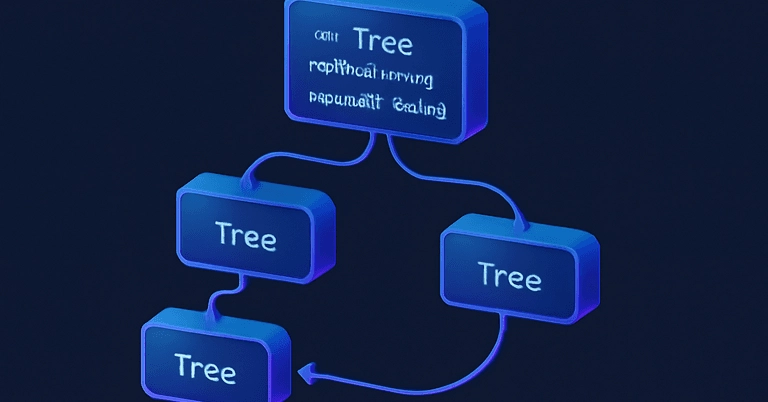
The Problem with Deeply Nested Data
Frontend engineers frequently encounter deeply nested data structures. Think of configuration objects with arbitrary nesting, comment threads that span dozens of replies, or complex JSON responses from APIs. The current TypeScript type system struggles to represent these structures accurately. Developers often resort to using any, effectively disabling type checking for these critical data segments, or implement runtime validation, which adds boilerplate and complexity. When attempting to access a deeply nested property, like config.theme.colors.primary.default, the type system offers no protection. This leads to runtime errors such as Cannot read property 'default' of undefined, forcing developers to spend valuable time debugging type-related issues that should ideally be caught at compile time.
The core issue is that traditional type definitions have a finite depth. While you can define types for one or two levels of nesting, accurately modeling structures with potentially unlimited depth becomes an exercise in futility. This limitation forces a trade-off between type safety and developer productivity. Developers are left with a choice: either accept a less safe codebase by using any, or introduce significant overhead with manual validation logic.
Introducing Recursive Types
The upcoming advancements in TypeScript, specifically targeting features expected around 2026, promise to fundamentally change how we handle these complex data structures. The key innovation lies in enhanced support for recursive types. This means the type system will be able to understand and validate data structures that refer to themselves, enabling the creation of types that can accurately model arbitrary levels of nesting.
Consider a generic tree structure. Previously, modeling this might involve an interface like:
interface TreeNode {
  value: string;
  children: TreeNode[] | undefined;
}
This works for a few levels, but it doesn't inherently handle the arbitrary depth that might be encountered in real-world scenarios. The new recursive type support allows for a more robust definition. Imagine a type that can define its own children as having the same structure, without a predefined limit. This is akin to defining a set of Russian nesting dolls where each doll can contain another, smaller version of itself, ad infinitum.
Modeling JSON and Trees
The implications for modeling JSON data are profound. JSON objects, by their nature, can be deeply nested and contain arrays of objects, which themselves can contain more nested objects. A type like Record<string, any> is the common, albeit unsafe, workaround. With improved recursive type support, developers can define a type that accurately reflects this structure.
For instance, a type for a generic JSON object could look something like this:
type JsonValue = string | number | boolean | null | JsonObject | JsonArray;

type JsonObject = {
  [key: string]: JsonValue;
};

type JsonArray = JsonValue[];
This definition is recursive: JsonObject can contain JsonValue, which in turn can be a JsonObject or JsonArray, creating a self-referential loop that the compiler can now understand and manage. This allows for compile-time checks on data structures of any depth, significantly reducing runtime errors.
Deep Partial Types Made Practical
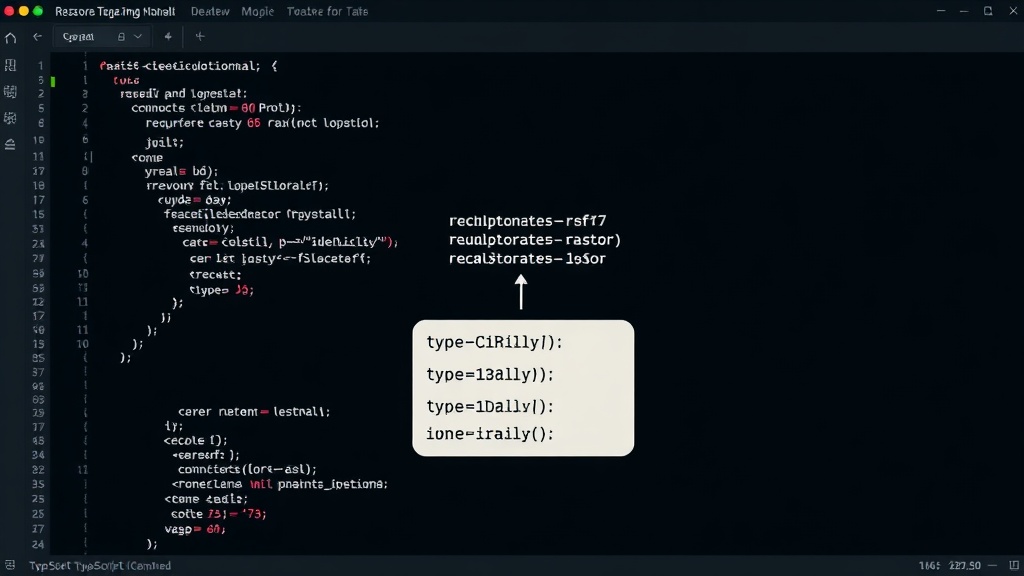
Another significant area benefiting from this advancement is the creation of DeepPartial types. Often, when working with complex configurations or state management, you need to create a version of a type where all properties, including those nested deeply, are optional. Manually creating such a type for a deeply nested interface is tedious and error-prone.
A typical DeepPartial utility type might look like this:
type DeepPartial<T> = T extends object
  ? {
      [P in keyof T]?: DeepPartial<T[P]>;
    }
  : T;
While this utility type has existed for some time, its effectiveness and performance within the compiler for extremely deep or complex structures have been points of friction. With enhanced recursive type handling, these utility types will become more performant and reliable. This means developers can confidently create optional versions of their most complex types, knowing the compiler can efficiently process and validate them. This is invaluable for scenarios like optional configuration overrides or partial updates to large state objects.
The Road Ahead: What This Means for Developers
The shift towards robust recursive type support in TypeScript represents a significant leap forward. It means developers can finally model complex, nested data structures with the same level of confidence they expect from simpler types. The era of any for nested data is drawing to a close.
This advancement will reduce the cognitive load on developers, decrease the likelihood of runtime errors related to data shape, and improve the maintainability of codebases that deal with complex data. It’s not just about catching errors earlier; it’s about enabling developers to build more sophisticated applications with greater confidence in their type safety. The compiler becomes a more powerful ally, not a limitation, when dealing with the intricate data landscapes of modern applications.
What remains to be seen is how effectively these new capabilities will be integrated into existing tooling and IDEs. While the compiler support is crucial, a seamless developer experience relies on intelligent autocompletion, error highlighting, and refactoring tools that fully leverage these advanced type features. The expectation is that by 2026, these aspects will mature, making recursive types a standard, indispensable part of the TypeScript developer's toolkit.