The Jev Promise: A Unified AI Development Layer?
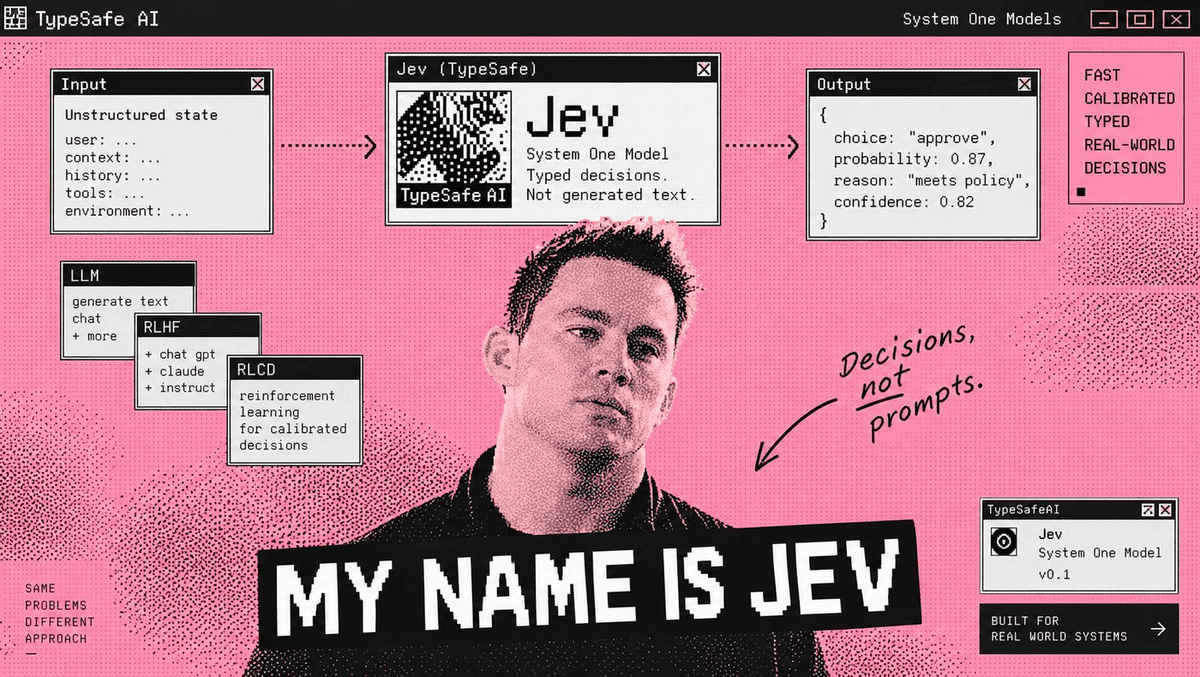
TypeSafe AI has generated significant excitement with the announcement of Jev, a platform they claim will revolutionize AI development. The core promise of Jev is to provide a unified, type-safe layer for building and deploying AI models. This aims to address the long-standing challenges in AI development, particularly around reproducibility, maintainability, and the brittle nature of many AI pipelines. The narrative suggests that Jev offers an end-to-end solution, simplifying the complex workflows that often involve disparate tools for data preprocessing, model training, versioning, and deployment.
The vision presented is one where developers can define their AI artifacts – datasets, models, and pipelines – with strong types. This approach, inspired by the success of static typing in traditional software engineering, is intended to catch errors earlier in the development cycle, reduce the "it works on my machine" syndrome, and enable more robust collaboration among AI teams. The ambition is to make AI development as predictable and reliable as building a web application, a significant leap from the current often experimental and iterative process.
What Jev Actually Does: Type-Safe Artifacts and Pipelines
At its heart, Jev introduces a formal system for defining and managing AI components. Instead of relying on ad-hoc file formats and manual tracking, Jev allows developers to specify the schema and expected properties of their data, models, and the transformations applied to them. This means a dataset can be defined as a table with specific columns and data types, a model can have a defined input and output signature, and a pipeline can enforce that the output of one stage correctly matches the input of the next.
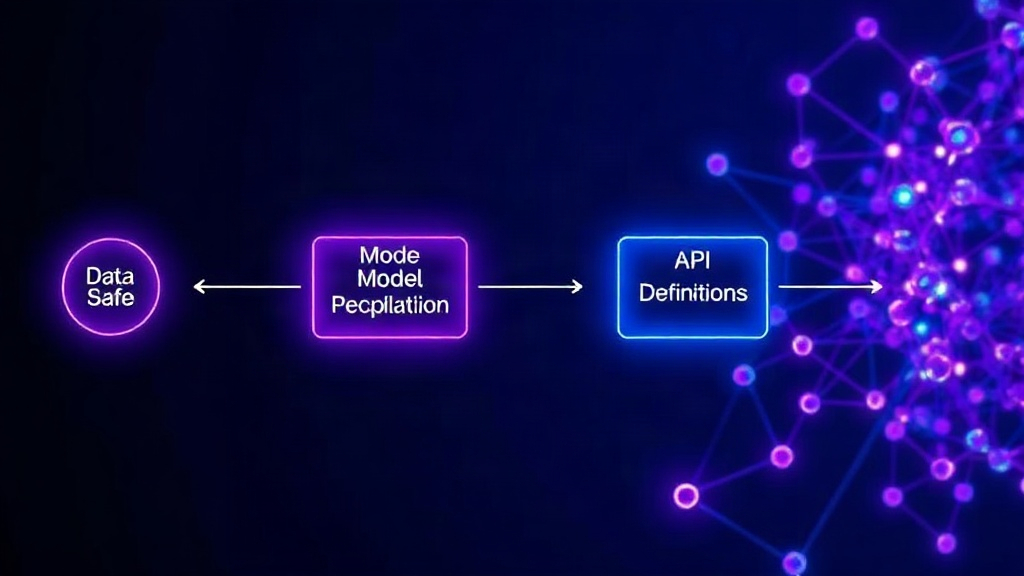
This type-safety extends to the entire lifecycle. When a developer trains a model, Jev can verify that the input data conforms to the expected schema. When deploying a model, Jev can ensure that the inference API adheres to the defined input and output types. This is particularly valuable in large, complex projects where multiple teams might be contributing to different parts of an AI system. It acts as a central source of truth for what each component expects and provides, reducing integration friction and debugging time. Think of it less like a loosely organized garage of AI tools and more like a meticulously planned factory assembly line where every part is guaranteed to fit.
Where the Hype Goes Too Far: Jev is Not a Silver Bullet
While the technical underpinnings of Jev are sound and address real pain points, the current narrative risks overstating its immediate impact. The claim that Jev will "revolutionize" AI development, while aspirational, overlooks the deeply entrenched complexities of the field. AI development is not solely a matter of static typing and pipeline definition; it involves significant research, experimentation, and a degree of inherent uncertainty. Jev provides a framework for managing these components, but it does not eliminate the need for deep expertise in machine learning, data science, and domain knowledge.
One of the most significant areas where the hype exceeds the current reality is in the breadth of AI tasks Jev can effectively manage out-of-the-box. While it excels at defining and managing structured data and model artifacts, the world of AI is much broader. Unstructured data, complex generative models, reinforcement learning environments, and novel research experiments often defy rigid type definitions. Jev's strength lies in bringing order to existing, well-defined workflows. For cutting-edge research or highly experimental projects, the overhead of defining strict types might even become a hindrance, slowing down the rapid iteration that is crucial for discovery.
Furthermore, the adoption of a new, comprehensive platform like Jev requires a significant shift in developer tooling and workflow. While TypeSafe AI is building integrations, the ecosystem of AI tools is vast and diverse. For organizations heavily invested in existing MLOps platforms, custom scripts, or specific cloud provider services, migrating to a new, opinionated framework like Jev will be a substantial undertaking. The success of Jev will depend not only on its technical merits but also on its ability to integrate seamlessly with the tools developers already use and trust, or to offer compelling enough advantages to justify a complete overhaul.
The Real Value: Enhanced Reproducibility and Maintainability
Despite the overhyped claims, the genuine innovation of Jev lies in its potential to dramatically improve reproducibility and maintainability in AI projects. For years, the AI community has grappled with the challenge of making research and production models reliably reproducible. Jev’s type-safe artifact definitions, versioning, and pipeline management offer a concrete path towards solving this. By formalizing the relationships between data, code, and models, Jev provides a clear audit trail and a robust mechanism for tracking experiments.
This improved reproducibility is not just an academic concern; it has direct, tangible benefits for businesses. It means that when a model that performed well in production starts to degrade, teams can more easily identify the specific version of the data and code that produced it, enabling targeted debugging and retraining. It also makes it easier to onboard new team members, as the structure and dependencies of the AI system are clearly defined. The focus on type safety, while not a panacea, provides a much-needed layer of discipline that can prevent many common errors and reduce the long-term cost of maintaining AI systems.
The broader implication is a move towards more mature, software-engineering-like practices within AI development. As AI systems become more integrated into critical business processes, the need for reliability, security, and maintainability will only grow. Jev represents a significant step in that direction, offering a framework that encourages better design and more robust development practices. It shifts the focus from simply getting an AI model to work to building AI systems that are trustworthy, scalable, and sustainable over time. The true value of Jev will be realized by teams that leverage its structured approach to build more reliable and manageable AI applications, rather than expecting it to magically solve all the inherent challenges of AI research and development.