
AI as the New Tutor: A Bold Recommendation
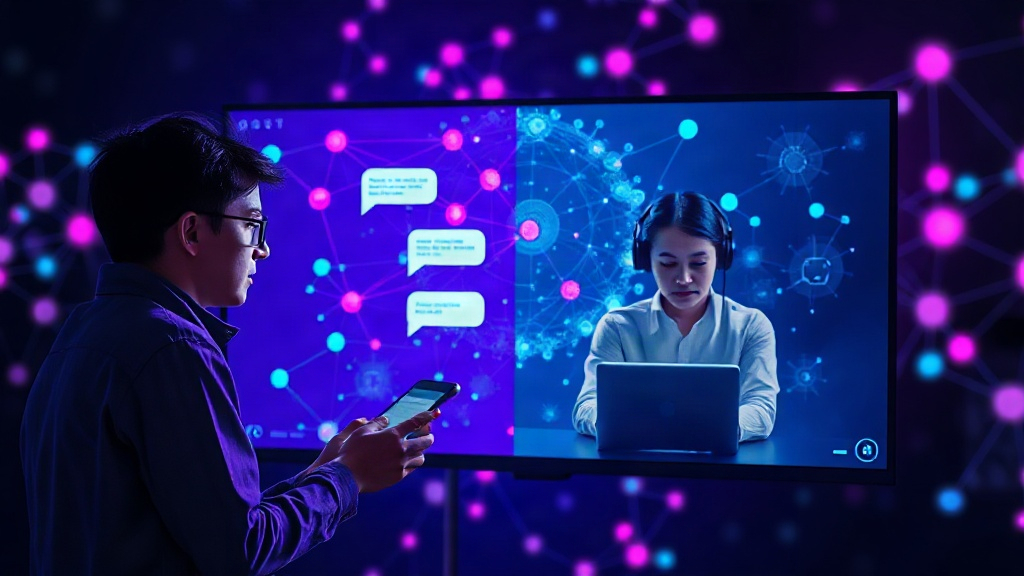
In a move that has sent ripples through the education technology sector, leading Australian tutoring company, The Tutoring Company, is openly advising parents to leverage artificial intelligence tools for their children's educational needs, rather than enrolling them in traditional paid tutoring programs. This unconventional stance, revealed in a recent statement, positions AI not as a supplementary tool, but as a direct, cost-effective, and potentially superior alternative to human-led tutoring.
The company's CEO, who has been a vocal proponent of educational innovation, stated that advancements in AI, particularly large language models, have reached a point where they can effectively replicate many of the core functions of a human tutor. This includes explaining complex concepts, answering specific questions, providing practice problems, and even offering personalized feedback, all at a fraction of the cost – often for free.
This declaration is particularly striking coming from a company whose business model is built on providing paid educational support. It suggests a profound shift in how educational assistance is perceived and delivered, driven by the rapid evolution of AI capabilities. The Tutoring Company isn't suggesting AI will replace teachers, but rather that for supplementary, one-on-one academic support, AI has become the most practical and accessible solution for many families.
The Rationale Behind the AI Push
The core argument presented by The Tutoring Company centers on accessibility and affordability. Traditional tutoring, while valuable, can be a significant financial burden for many families. The cost of private tutors, especially for subjects requiring specialized knowledge or for students needing extensive support, can quickly accumulate. AI tools, on the other hand, are largely accessible through existing devices and internet connections, with many powerful models available for free or at a nominal subscription cost.
Furthermore, the company highlights the 24/7 availability of AI tutors. Unlike human tutors who operate on schedules, AI can provide assistance anytime, anywhere. This is particularly beneficial for students who study at odd hours, need immediate clarification on homework, or prefer to learn at their own pace without the pressure of a scheduled appointment. The ability to ask the same question multiple times, rephrase it, or explore different angles without feeling judged is another advantage AI offers over a human interaction, especially for students who are shy or lack confidence.
The personalization aspect is also a key factor. While good human tutors adapt to a student's learning style, AI can be trained on vast datasets to identify patterns in a student's responses and tailor explanations and practice problems accordingly. This can lead to highly individualized learning paths that adapt in real-time to a student's progress and areas of difficulty. The company pointed to specific examples where AI has demonstrated an uncanny ability to pinpoint knowledge gaps and provide targeted remediation, something that can take human tutors considerable time and effort to diagnose.
Implications for the Education Landscape
This announcement has significant implications for the broader education technology market. It signals a potential disruption where companies offering traditional supplementary education services may need to fundamentally rethink their value proposition. If a leading player is advocating for AI as a primary solution, it suggests that the competitive landscape is rapidly shifting.
For parents, this news offers a powerful new option. It democratizes access to high-quality academic support, making it available to a wider socioeconomic spectrum. However, it also raises questions about the role of human interaction in education. While AI can deliver information and practice, it cannot (yet) fully replicate the mentorship, emotional support, and nuanced pedagogical judgment that experienced human educators provide. The Tutoring Company's stance seems to acknowledge this, by focusing its recommendation on the *functional* aspects of tutoring – explanation, practice, and feedback – rather than the holistic development of a student.
The surprising detail here is not that AI can tutor, but that an established company is actively encouraging its clients to opt for a free, AI-driven alternative over its own paid services. This suggests a pragmatic, forward-thinking approach, perhaps anticipating a future where AI is the default for many educational support needs, and positioning themselves as guides through this transition rather than gatekeepers of traditional methods.
The Future of Supplementary Education
What remains to be seen is how other tutoring companies will respond. Will they integrate AI more deeply into their offerings, perhaps using it to augment their human tutors and reduce costs, or will they double down on the unique benefits of human interaction? The Tutoring Company's bold move forces this conversation to the forefront. They are essentially saying that for many common tutoring needs, the ROI on paid human tutoring has diminished significantly due to AI's capabilities.
This shift could also impact curriculum development and assessment. As AI becomes more adept at teaching and testing, educational institutions may need to adapt their methods to ensure students are not just learning to pass AI-driven assessments but are developing critical thinking, creativity, and problem-solving skills that AI cannot easily replicate. The challenge for educators and parents alike will be to find the optimal balance between leveraging AI's efficiency and retaining the irreplaceable aspects of human guidance and mentorship.
For parents considering their options, the message is clear: explore AI tools. They offer a powerful, often free, resource that can significantly supplement a child's learning journey. While The Tutoring Company continues to operate, its current recommendation suggests that its primary role may be evolving from direct service provider to an advisor in the new AI-augmented educational landscape.