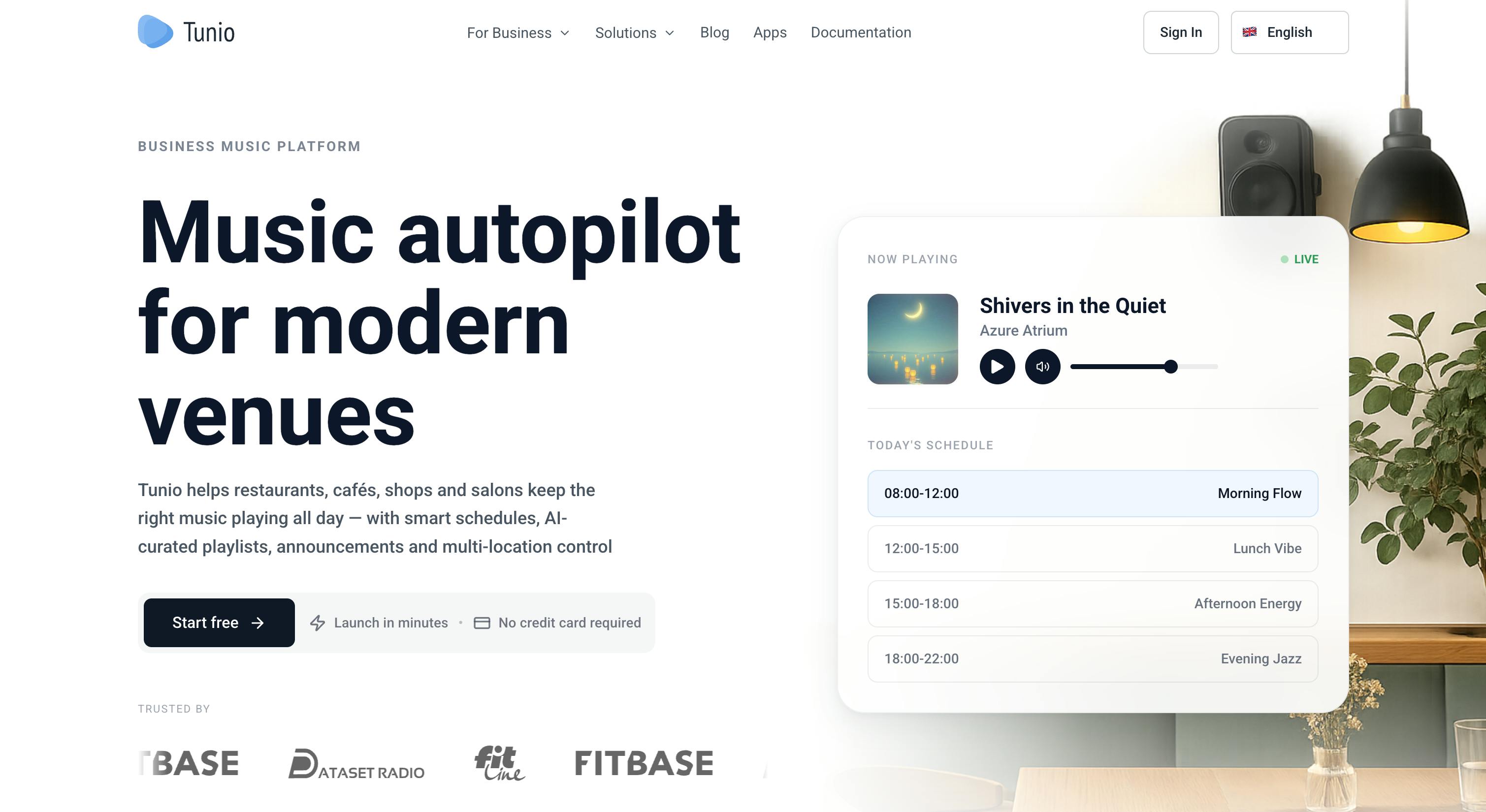
Tunio: AI-Powered Operations for Live Music Venues
Tunio has launched, introducing an AI-driven platform designed to simplify and optimize the operational complexities faced by live music venues. The platform targets a critical, often overlooked, segment of the music industry: the businesses that host live performances. By leveraging artificial intelligence, Tunio promises to automate tasks related to booking talent, managing schedules, and executing promotional campaigns, freeing up venue managers and promoters to focus on enhancing the live music experience itself.
The core challenge Tunio addresses is the fragmented and labor-intensive nature of venue operations. Traditionally, booking an artist involves extensive communication, contract negotiation, and calendar coordination. Scheduling staff, sound engineers, and other personnel adds another layer of complexity. Furthermore, effective promotion requires consistent outreach across multiple channels, from social media to local press. These tasks, while essential, can consume significant time and resources, often detracting from a venue’s ability to curate compelling lineups or engage with its audience.
Tunio’s AI engine acts as a central nervous system for these operations. For talent booking, the platform can analyze venue capacity, genre preferences, and available dates to suggest suitable artists. It can also assist in managing contracts and payments, ensuring compliance and timely transactions. This moves beyond simple contact databases, offering intelligent matchmaking based on data-driven insights into what performs well for a specific venue and its clientele.

Automating Scheduling and Promotion
Beyond booking, Tunio tackles the intricate task of scheduling. Venue managers often struggle to create efficient staff rotas, coordinate sound checks, and ensure all technical requirements are met for each performance. Tunio’s AI can generate optimized schedules, taking into account staff availability, skill sets, and the specific needs of incoming artists. This predictive scheduling aims to minimize conflicts and reduce the risk of last-minute disruptions.
Promotional efforts are also brought under the AI umbrella. Tunio can generate social media posts, draft press releases, and identify target audiences for upcoming shows. By analyzing past event performance and audience engagement data, the platform can tailor promotional messages for maximum impact. This intelligent marketing approach is designed to increase ticket sales and drive foot traffic, making promotional activities more effective and less time-consuming.
The platform’s introduction on Product Hunt highlights its aim to capture the attention of venue owners, managers, and independent promoters who are constantly seeking ways to improve efficiency and profitability. The current music industry landscape, particularly post-pandemic, requires venues to be agile and data-informed. Tools that can streamline back-office functions while enhancing customer reach are therefore highly valuable.
The AI Advantage in Venue Management
The integration of AI into venue operations represents a significant shift. Instead of relying on manual processes and individual intuition, venue managers can now access a system that learns and adapts. This data-driven approach can lead to more informed decisions regarding artist selection, pricing, and marketing strategies. For instance, an AI could identify that a particular genre consistently sells out on a specific weeknight, prompting the venue to book more acts of that type during that slot.
What remains to be seen is the depth of AI’s integration and its ability to handle the nuances of live music. While AI can optimize schedules and suggest artists, the human element of curation, artist relationships, and understanding local music scenes is crucial. Tunio’s success will likely hinge on its ability to augment, rather than replace, the expertise of venue professionals. The platform must provide actionable insights that are easily integrated into existing workflows, without requiring extensive technical training.
Competitors in the broader event management software space exist, but few are as specifically tailored to the unique challenges of live music venues. Many existing solutions focus on ticketing or general event planning. Tunio’s niche focus on the end-to-end operational lifecycle, powered by AI, sets it apart. The challenge for Tunio will be to prove its efficacy in a market that often relies on established relationships and a keen understanding of local culture, alongside data-driven optimization.
The company behind Tunio has not yet detailed specific case studies or performance metrics, leaving potential users to assess its capabilities based on the platform’s feature set. However, the promise of reduced administrative burden, improved booking success rates, and more effective promotion offers a compelling value proposition for a sector that operates on tight margins and demands constant innovation.