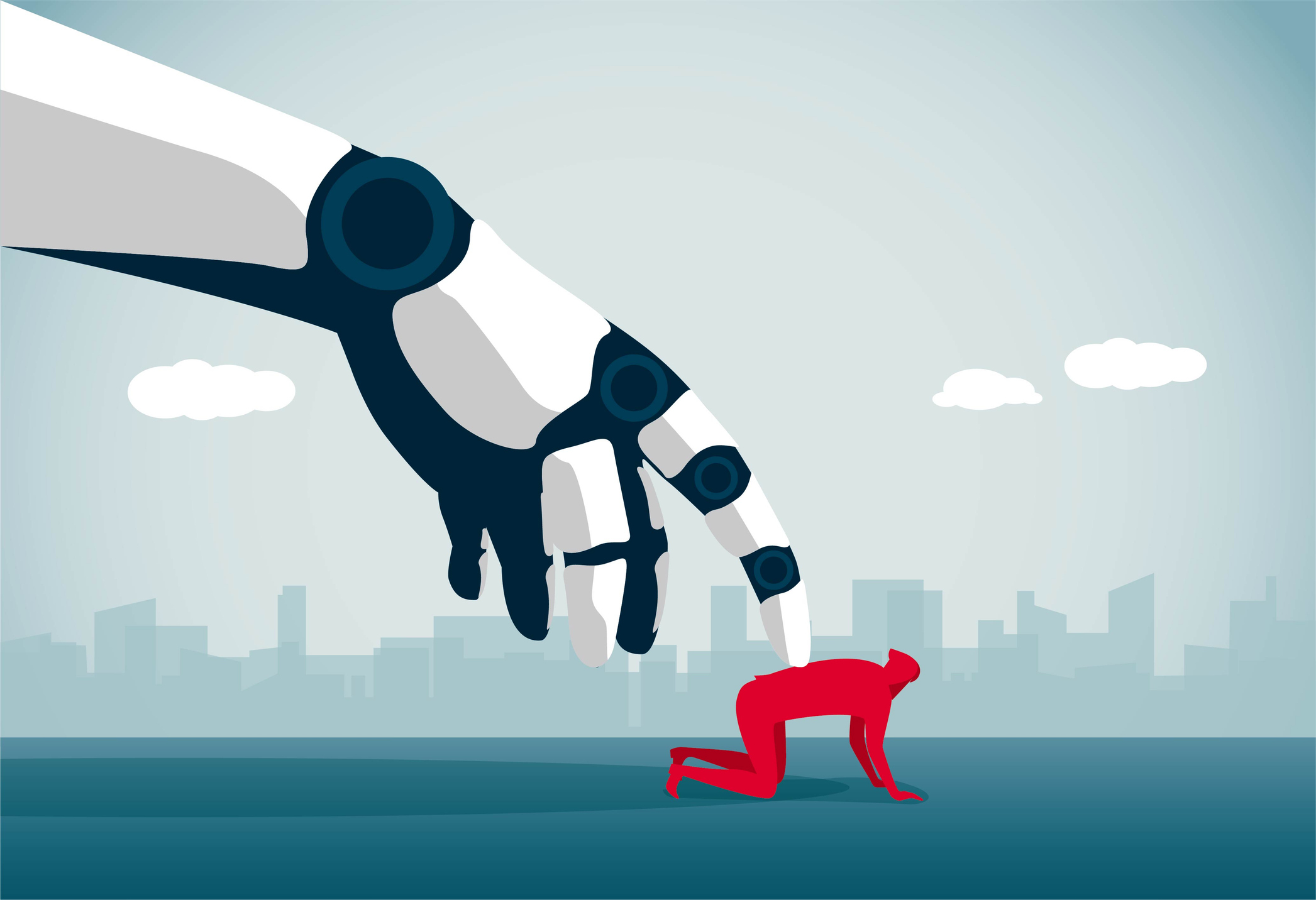
Trump's Stance on AI Development
Former President Donald Trump has publicly rejected calls from some within the artificial intelligence industry for a pause or slowdown in AI development. This stance positions him against a segment of the tech community that has raised concerns about the rapid, unchecked advancement of AI, citing potential existential risks and societal disruptions. Trump's perspective, however, centers on maintaining American leadership in a critical technological race, viewing any pause as a strategic disadvantage.
The debate over AI's future trajectory has intensified recently, with prominent figures and organizations advocating for more cautious development and robust regulatory frameworks. These calls often stem from fears of AI's potential to displace jobs, spread misinformation, or even pose long-term threats to humanity. However, Trump's rhetoric consistently frames AI as an engine for economic prosperity and national security, suggesting that slowing down would cede ground to international competitors, particularly China.
His position aligns with a broader narrative of American exceptionalism and technological dominance. During his presidency, Trump often emphasized policies aimed at fostering domestic innovation and securing technological superiority. This current stance on AI appears to be a continuation of that philosophy, prioritizing rapid advancement and deployment over potential risks that might necessitate a slowdown.
The former President's rejection of the slowdown proposals is not merely a passive disagreement; it actively signals a commitment to accelerating AI research and deployment. This approach suggests that his administration, should he be re-elected, would likely favor policies that encourage investment and innovation in AI, potentially sidelining or downplaying the concerns about safety and ethical implications that are driving the calls for a pause.
Trump's perspective can be understood as a direct counterpoint to the 'AI existential risk' discourse. While some in Silicon Valley and academia are sounding alarms about the long-term dangers of superintelligence, Trump appears to view these warnings as secondary to the immediate economic and geopolitical benefits of leading the AI revolution. He seems to believe that the best way to manage AI's risks is not by slowing down, but by accelerating development under American leadership, thereby ensuring that the technology is shaped by U.S. values and interests.
This divergence highlights a fundamental tension within the AI community and the broader political landscape. On one side are those who advocate for caution, risk assessment, and regulation, often drawing on theoretical long-term dangers. On the other are those who emphasize the immediate economic opportunities, national security advantages, and the inevitability of progress, arguing that slowing down is not a viable or desirable option.
Economic and Geopolitical Imperatives
Trump's emphasis on AI development is intrinsically linked to economic growth and geopolitical competition. He has consistently argued that AI is a key driver of future economic prosperity, capable of creating new industries, enhancing productivity, and securing America's competitive edge on the global stage. The argument is that nations that lead in AI will lead the world, not just technologically, but also economically and militarily.
The former President's advisors and surrogates have echoed this sentiment, framing the push for AI advancement as crucial for national security. They argue that advanced AI capabilities are essential for maintaining military superiority, enhancing intelligence gathering, and protecting critical infrastructure from cyber threats. A slowdown, in this view, would leave the U.S. vulnerable to adversaries who continue to push the boundaries of AI technology.
This perspective casts the calls for a slowdown as potentially naive or even detrimental to national interests. The argument is that while ethical considerations are important, they should not paralyze innovation or create an opening for other nations to surpass the United States. The focus, therefore, shifts from mitigating potential future risks to actively pursuing the benefits and securing the strategic advantages that AI offers today and tomorrow.
The economic argument is equally potent. Trump and his supporters often point to the potential for AI to create high-paying jobs, boost GDP, and drive innovation across all sectors. They see AI as a tool for revitalizing American industry and ensuring that the nation remains at the forefront of technological development. Any policy that might impede this progress, such as a mandated slowdown, is viewed as counterproductive to these economic goals.
Silicon Valley's Internal Debate
The calls for an AI slowdown within Silicon Valley are not monolithic. While some high-profile figures and organizations have signed open letters and advocated for a pause, others within the industry remain skeptical of such proposals. These internal debates reflect a broader spectrum of views on AI's potential impact, ranging from utopian optimism to deep-seated concern.
Some of the most vocal proponents of a slowdown, such as those who signed the Center for AI Safety's statement on AI risk, highlight the potential for AI to become an existential threat. This perspective often draws on theoretical scenarios involving advanced AI systems that could act in ways detrimental to human survival. The argument is that the potential consequences are so severe that extreme caution is warranted, even if it means delaying certain advancements.
Conversely, many in the AI industry, including numerous founders and researchers, believe that the focus should be on harnessing AI's benefits while developing practical safeguards and ethical guidelines. They often argue that a pause is not only impractical but also counterproductive, as it could stifle innovation and prevent the development of AI solutions that could address pressing global challenges, from climate change to disease.
This internal division within Silicon Valley means that Trump's rejection of the slowdown calls resonates with a significant portion of the tech industry that prioritizes rapid innovation and market leadership. It also highlights the complex and often conflicting priorities at play as the world grapples with the implications of increasingly powerful AI technologies. The debate is not simply about whether AI is good or bad, but about how, when, and under what conditions it should be developed and deployed.
The underlying tension can be likened to the early days of the automobile. Some might have called for limiting car production due to safety concerns and potential societal disruption. However, the prevailing sentiment, driven by innovation and economic opportunity, pushed for continued development, with safety and regulation evolving alongside the technology. Trump's stance on AI appears to adopt a similar philosophy: push forward, innovate rapidly, and address challenges as they arise, rather than preemptively halting progress.
What remains unclear is how Trump's administration would implement policies to foster AI leadership without potentially exacerbating the very risks that others are concerned about. The challenge lies in balancing the drive for innovation with the need for responsible development and societal well-being. His administration's approach to AI regulation, if any, will be closely watched by both proponents and critics of rapid AI advancement.