The Power of Incremental Scraping
A single scrape of a company's careers page provides a snapshot of current openings. However, the real value lies in understanding change over time. By running the same scrape on a recurring schedule, specifically a week apart, you gain actionable insights into what's new, what's gone, and the underlying hiring velocity of organizations.
For job seekers, this delta is crucial. A role posted yesterday might have few applicants, offering a significant advantage. The same role a month later could be swamped. For sales professionals or investors targeting companies, a newly posted job signals growth, budget allocation, and an expanding team. This approach demystifies hiring trends by focusing on the difference between two data points.
Building the Change Detection System
The core of this system is straightforward: schedule identical web scrapes to run at regular intervals, ideally weekly. The key is to store the unique identifiers for each job posting identified in every scrape. Subsequent scrapes are then compared against the previous run's data.
The comparison logic yields three critical categories of information:
- Newly Posted: Job IDs present in the current scrape but absent from the previous one indicate roles that have recently been advertised. This is a direct signal of immediate hiring needs.
- Closed or Filled: Conversely, job IDs found in the previous scrape but missing from the current one signify roles that have been filled, are no longer available, or have been removed from the careers page.
- Hiring Momentum: By aggregating the count of new postings per company over multiple comparison cycles, you can track a company's overall hiring momentum. A consistent increase in new postings suggests aggressive growth, while a decrease might indicate a hiring freeze or a shift in strategy.
The engineering challenge is minimal. The primary technical requirement is maintaining a stable, unique identifier for each job posting across scrapes. This identifier could be a URL, a specific job ID field within the HTML, or a combination of elements that reliably distinguishes one role from another. The discipline lies in ensuring this identifier remains consistent and accurately captured.
Technical Implementation Details
Implementing such a system involves several components. First, a web scraping tool is necessary. Options range from simple Python libraries like BeautifulSoup and requests to more robust frameworks like Scrapy, or even managed scraping services that handle proxy rotation, JavaScript rendering, and CAPTCHA solving.
The scraping script needs to be configured to target specific careers pages. For each page, it must locate and extract the unique identifier for every job listing. This could involve parsing HTML, inspecting network requests, or interacting with JavaScript-rendered content. The extracted identifiers, along with metadata such as the company name and the timestamp of the scrape, are then stored.
A reliable storage mechanism is essential. This could be a simple CSV file for very small-scale operations, but a database (SQL or NoSQL) is recommended for scalability and efficient querying. For instance, a PostgreSQL database could store records with columns for `job_id`, `company_name`, `scrape_timestamp`, and `url`. When a new scrape completes, its results are inserted into the database.
Scheduling and Comparison Logic
Scheduling the scrapes can be achieved using cron jobs on a server, cloud-based schedulers like AWS EventBridge or Google Cloud Scheduler, or task scheduling features within CI/CD pipelines. The frequency should be set to run the scrape at least once a week, ideally on the same day and time to minimize external variables.
The comparison logic is the heart of the analysis. After a new scrape runs, a separate process or script queries the database to retrieve the identifiers from the most recent scrape and the immediately preceding one.
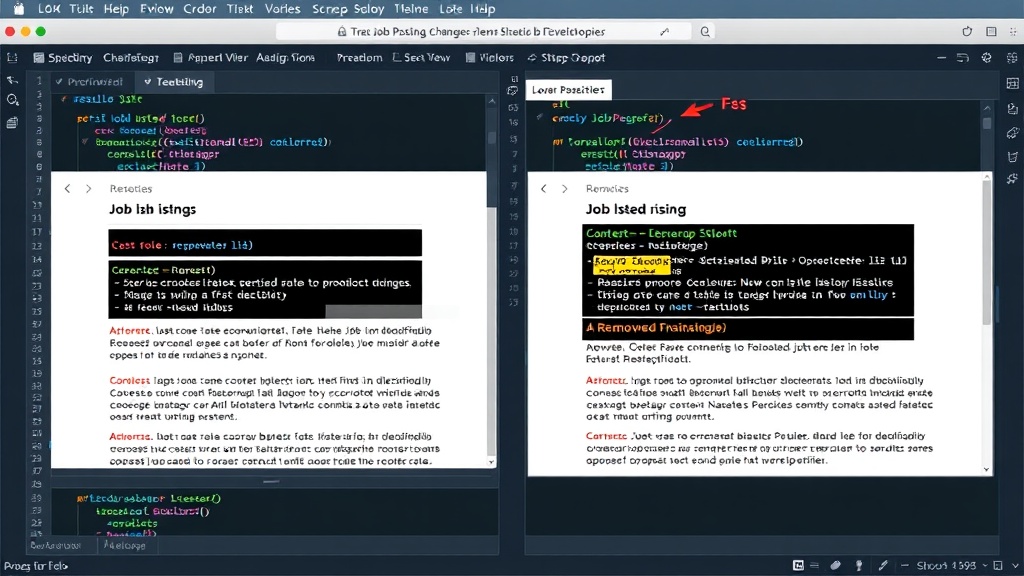
To find newly posted jobs, the system queries for `job_id`s that exist in the latest scrape's results but do not exist in the previous scrape's results. For closed or filled jobs, it queries for `job_id`s present in the previous scrape but absent from the latest.
To calculate hiring momentum, the system aggregates the count of newly posted jobs for each `company_name` over a rolling period (e.g., the last 4 weeks). This provides a quantifiable measure of how actively a company is expanding its workforce.
Data Storage and Evolution
The choice of data storage significantly impacts the system's flexibility. A relational database like PostgreSQL or MySQL allows for structured querying and easy identification of changes. For example, finding new jobs involves a simple `INSERT INTO new_jobs SELECT job_id FROM current_scrape_results WHERE job_id NOT IN (SELECT job_id FROM previous_scrape_results);` type of query.
However, managing historical data is crucial. Storing each scrape's output separately or using timestamped tables allows for analyzing trends over longer periods. This historical data can reveal seasonal hiring patterns, responses to market conditions, or the impact of company-specific events on recruitment.
The system's evolution could include adding more sophisticated diffing algorithms, handling different data formats from various websites, or integrating with job boards' APIs if available. The challenge often lies in maintaining the scraper's robustness as websites change their HTML structure or employ anti-scraping measures.
Broader Applications and Implications
The value of this incremental scraping technique extends beyond individual job hunting or sales intelligence. For market research firms, it can provide real-time data on industry growth and talent demand. For recruiters, it offers a competitive edge in identifying companies that are actively hiring and might be open to new candidates or agencies.
For founders, understanding hiring momentum can inform strategic decisions. A surge in postings from a competitor might signal an expansion into new markets or product lines. Conversely, a decline could indicate internal challenges or a strategic pivot. This granular, time-series data offers a unique lens into the operational health and strategic direction of companies.
The surprising detail here is not the complexity of the scraping itself, but the profound insights derived from such a simple comparison. By focusing on the delta—what's new and what's gone—we unlock a dynamic view of the job market that static snapshots cannot provide. This method transforms passive observation into active intelligence, offering a quantifiable edge to anyone monitoring hiring activity.
Future Considerations
As the system matures, consider implementing anomaly detection for hiring trends. A sudden, massive increase or decrease in job postings for a specific company could warrant further investigation. Additionally, integrating natural language processing (NLP) on job descriptions could reveal shifts in required skill sets or focus areas within a company over time. If you're building a tool for job seekers or sales teams, this continuous, diff-based approach should be a core feature.