The Cost of Plaintext Communication
Running infrastructure for a small startup or as a solo developer often means battling resource constraints. Security, especially something as seemingly complex as TLS and mTLS, can feel like a luxury reserved for larger organizations. However, leaving internal service communication in plaintext is a significant, often underestimated, risk. The initial motivation for exploring TLS/mTLS might not be a security mandate, but a practical cost-saving measure coupled with the need for basic hygiene.
Consider a common setup: a few servers, one for databases (Postgres, Redis) and another for application containers (e.g., NestJS apps). By default, these services communicate over what's perceived as a 'private network.' While basic network segmentation and firewall rules (like iptables) are essential — restricting which hosts can access which ports and using private IPs instead of public ones — this is not encryption. Anyone gaining a foothold on that internal network or a misconfigured firewall rule could potentially intercept all traffic. This is where TLS becomes a critical layer, not just for external-facing services, but for internal communication too.
Understanding TLS for Internal Services
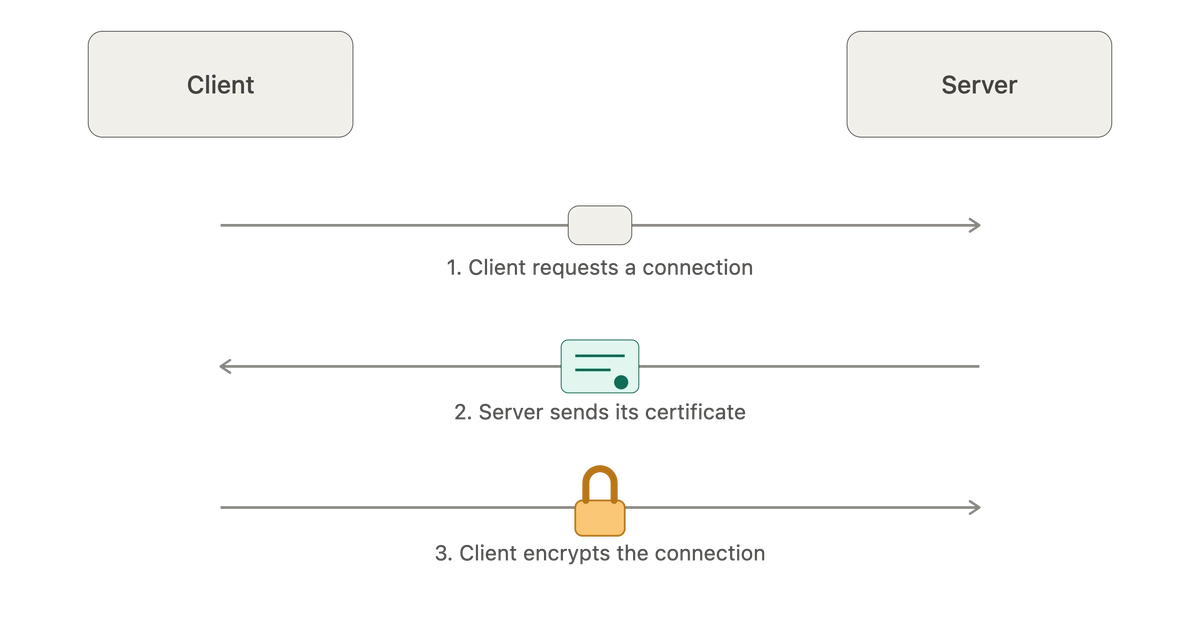
Transport Layer Security (TLS) encrypts data in transit between two services. For internal infrastructure, this means your application containers talking to your database or cache are sending data over an encrypted channel. This prevents eavesdropping and man-in-the-middle attacks within your network perimeter. The primary benefit here is confidentiality and integrity of data flowing between your services.
Implementing TLS typically involves obtaining and managing digital certificates. For small teams, the cost and complexity of traditional Certificate Authorities (CAs) can be a barrier. Fortunately, several approaches exist:
- Self-Signed Certificates: The simplest form. You generate your own root CA and then issue certificates from that CA. Your services trust your custom CA. This is free but requires careful management and distribution of the CA certificate to all clients.
- Let's Encrypt (with caveats): While primarily for public-facing services, Let's Encrypt can be used for internal services if you can prove domain ownership (e.g., using internal DNS records). However, automating this for numerous internal services can become cumbersome.
- Internal CA Solutions: Tools like HashiCorp Vault, Smallstep, or even simple scripts can automate the issuance and rotation of certificates from an internal CA. This offers a more robust solution for managing internal PKI.
The Leap to Mutual TLS (mTLS)
While TLS ensures the server's identity is verified by the client (preventing clients from talking to impostor servers), Mutual TLS (mTLS) adds another layer: it ensures the client's identity is also verified by the server. Both the client and server present certificates and validate each other. This is crucial for securing communication between services where you need to be certain about the identity of both parties.
For infrastructure services, mTLS provides:
- Strong Authentication: Services can only connect to other services if they possess a valid, trusted certificate issued by an approved CA.
- Enhanced Security: It goes beyond simple network access control, providing cryptographic proof of identity for each connection.
Implementing mTLS requires a more sophisticated PKI (Public Key Infrastructure) setup. For small teams, this often means:
- Establishing a Root CA: This can be self-signed or managed through a dedicated internal CA tool.
- Issuing Server Certificates: Each service that needs to be accessed will have a certificate signed by your CA.
- Issuing Client Certificates: Each service that needs to access others will have its own certificate.
- Configuring Services: Both client and server sides of the connection must be configured to present and verify certificates.
Practical Implementation for Small Teams
The key to making TLS/mTLS manageable for solo developers and small startups lies in automation and choosing the right tools. Instead of manual certificate generation and deployment, leverage tools designed for this purpose.
Leveraging HashiCorp Vault
HashiCorp Vault is a powerful tool for secrets management, including certificate issuance. It can act as an internal CA, allowing you to define policies for certificate generation, set TTLs (Time To Live), and automate rotation. This significantly reduces the operational overhead.
- Setup: Deploy Vault and enable the PKI secrets engine. Configure it to act as an intermediate CA, chained to a root CA you manage (or a self-signed one).
- Issuance: Define roles that specify allowed common names (CNs) and alternative names (SANs) for certificates. Applications can then authenticate to Vault (e.g., via its Kubernetes auth method or other methods) and request certificates dynamically.
- Distribution: Certificates can be dynamically delivered to applications or mounted via secrets management systems.
Vault's ability to integrate with orchestrators like Kubernetes further simplifies certificate management for containerized environments. Applications can automatically receive their certificates and private keys as secrets, and Vault can even handle certificate renewal.
Alternative: Smallstep Certificate Manager
Smallstep offers a more focused solution for certificate management, often with a simpler initial setup than Vault for this specific use case. It provides an ACME server for internal use, allowing services to request certificates using the ACME protocol, similar to how Let's Encrypt operates.
- Simplified ACME: You can run a Smallstep ACME server internally. Your services (or a sidecar proxy) can then request certificates from this server using standard ACME clients.
- Policy Control: Define policies to control which services can request certificates and for which hostnames.
- Integration: Smallstep integrates well with various systems and can automate certificate issuance and renewal for internal infrastructure.
Choosing the Right Approach
For a solo developer or a very small team, starting with self-signed certificates managed via simple scripts might be the quickest way to get started. However, this quickly becomes unmanageable as the number of services grows. Investing time in setting up a tool like Vault or Smallstep early on pays dividends in terms of scalability and security posture.
The critical takeaway is that securing internal service-to-service communication is not an insurmountable challenge for small teams. By leveraging modern tooling and understanding the principles of TLS and mTLS, even resource-constrained startups can implement robust security measures, moving beyond the risks of plaintext communication.