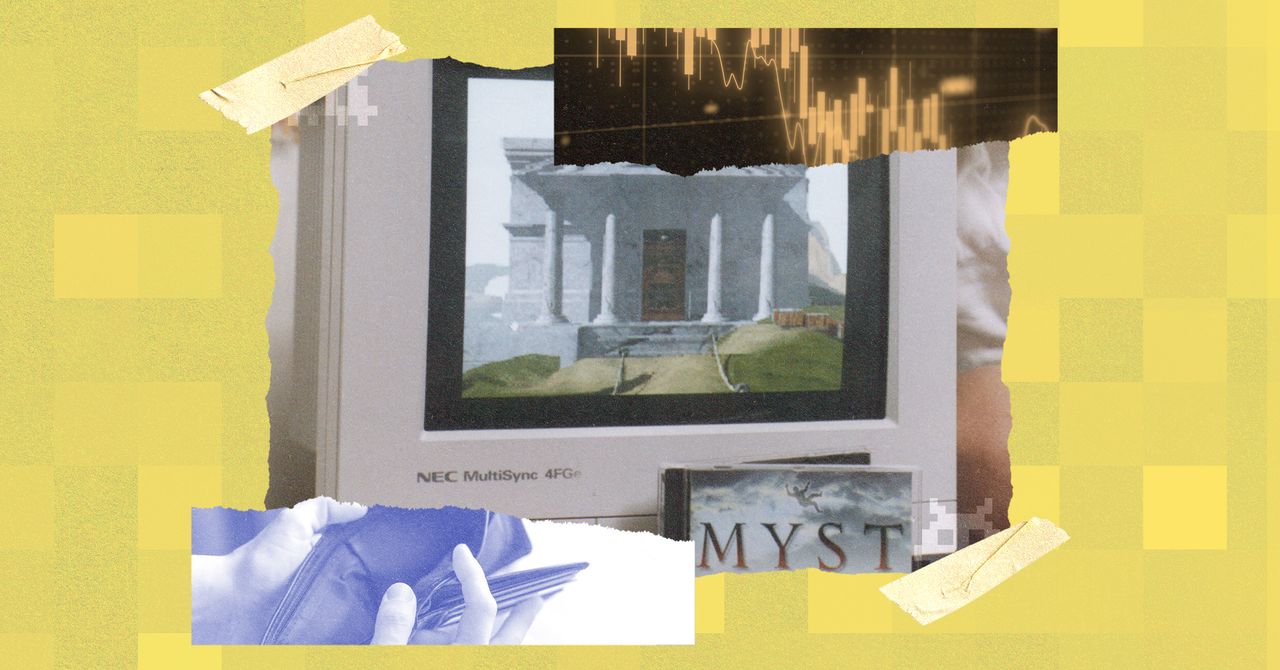
The original Myst, released in 1993, was a marvel. Its pre-rendered 3D graphics, intricate puzzles, and immersive atmosphere captivated millions, selling over six million copies and becoming one of the best-selling PC games of its era. Today, the ambition to create games with that same level of wonder and detail, now amplified by decades of technological advancement, has become an economic impossibility for all but the largest, most established studios. The escalating costs of AAA game development mean that the kind of ambitious, singular vision exemplified by Myst is simply out of reach for most creators.
The core issue isn't just about more polygons or higher resolution textures, though those contribute. It's the sheer scale of the undertaking. Modern game development is an industrial process. A single AAA title can involve hundreds of developers working for five to seven years, with budgets routinely exceeding $200 million and sometimes approaching half a billion dollars. This figure encompasses not just art and programming, but also extensive QA testing, localization into dozens of languages, marketing campaigns that can cost as much as the game's development, and the ongoing costs of maintaining live services for games that are expected to evolve for years.
Consider the teams required. To build a world as detailed and interactive as a modern equivalent of Myst, you need specialized artists for everything from environmental design and character modeling to visual effects and UI. Then there are programmers for gameplay mechanics, AI, physics, networking, and engine development. Add to that sound designers, composers, writers, level designers, narrative designers, producers, project managers, and a vast QA department. Each specialist commands a significant salary, and coordinating their efforts across multiple years and often distributed teams adds layers of complexity and cost.
The Unseen Costs of Immersion
The pursuit of photorealism and deep interactivity, hallmarks of modern gaming ambition, demands immense computational power and therefore immense development effort. Creating a single convincing character model can take weeks of work from multiple artists, involving high-polygon sculpting, detailed texturing, rigging for animation, and then further work to integrate them into the game engine. Environments are no longer static backdrops; they are complex ecosystems with dynamic lighting, destructible elements, and sophisticated AI behaviors. This level of detail, while artistically rewarding, translates directly into hundreds of thousands of hours of labor.
Furthermore, the tools themselves have become incredibly sophisticated and expensive. Game engines like Unreal Engine and Unity, while offering powerful frameworks, require highly skilled engineers to optimize and customize. The middleware for animation, physics, and asset management also carries licensing fees or requires dedicated teams to build and maintain in-house solutions. Even the hardware used by developers — high-end workstations, motion capture studios, VR testing rigs — represents a significant capital investment.
The financial risk associated with such massive budgets is staggering. A game that fails to meet sales expectations, or worse, is a critical failure, can sink a studio. This pressure incentivizes a focus on proven formulas and risk-averse design, often leading to iterative sequels or games that adhere to established genre conventions. The kind of bold, singular artistic vision that defined Myst — a game that was a significant departure from the norm at the time — is precisely what is most dangerous in today's economic climate.
The Myth of the Indie Renaissance
While the indie game scene has exploded in creativity and diversity, it operates on a fundamentally different economic model. Indie developers, often working in small teams or even solo, cannot possibly replicate the scope and fidelity of AAA productions. Their success often lies in clever mechanics, unique art styles that don't rely on photorealism, or narrative innovation. They are not competing on the same scale of graphical fidelity or world-building complexity.
The comparison to the original Myst is stark. Cyan, the studio behind Myst, was a relatively small team when it released the game. They leveraged cutting-edge technology for their time, but the scale of the production was manageable. Today, replicating Myst's innovative use of pre-rendered 3D and interactive environments would require a team size and budget that would make it a AAA project, with all the associated financial pressures. It’s a paradox: the technology that allows for unprecedented immersion also prices out the very creators who might dream up such experiences.
This economic reality has a chilling effect on creativity. Studios are hesitant to greenlight projects that don't have a clear path to recouping hundreds of millions of dollars. This often means prioritizing games with established IPs, multiplayer components designed for long-term engagement, or genres with predictable market appeal. The space for the kind of experimental, single-player, narrative-driven experience that Myst represented is shrinking rapidly. It's less about artistic freedom and more about financial necessity.
What Comes Next?
The question facing the industry is whether this trend is sustainable. As development costs continue to climb, only a handful of mega-corporations will be able to afford to play in the AAA space. This could lead to a bifurcation of the market: hyper-expensive, risk-averse blockbusters from major publishers, and a more diverse, but necessarily smaller-scale, landscape for independent studios.
Perhaps we will see a renewed appreciation for stylized art directions that bypass the need for photorealism, allowing for more ambitious scope within smaller budgets. AI tools might eventually democratize certain aspects of asset creation, but the fundamental challenge of coordinating large teams and managing multi-year, multi-million dollar projects remains. The dream of creating a Myst-like experience, one that captivates with pure wonder and innovative design, is becoming a luxury few can afford to pursue, leaving a void in the landscape of interactive entertainment.