
TEKEVER's Massive Series D Funding Round
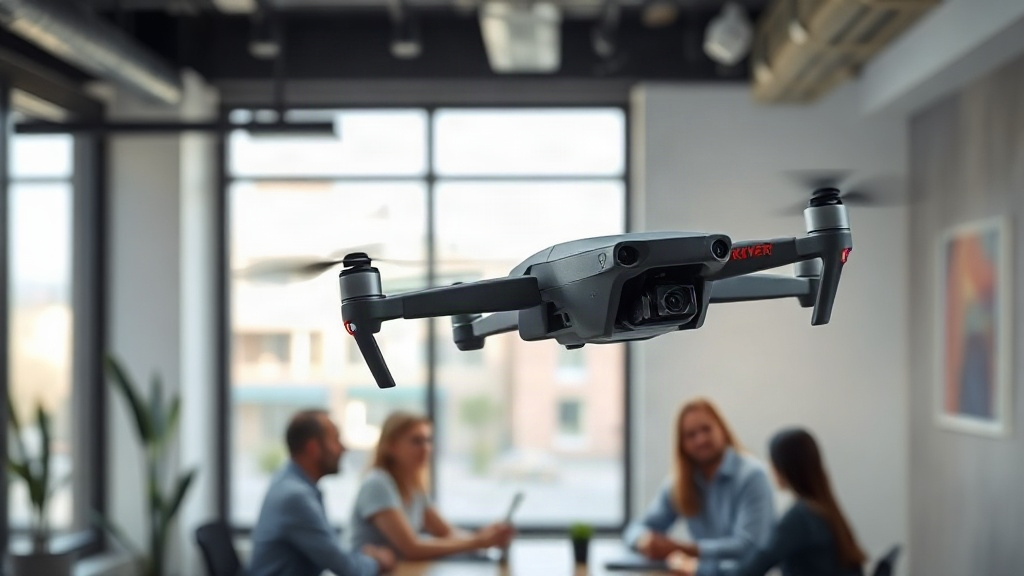
Portuguese drone manufacturer TEKEVER has announced a significant $580 million Series D funding round. This capital injection positions the company for substantial growth and expansion in the rapidly evolving unmanned aerial systems (UAS) market. The funding will primarily fuel TEKEVER's research and development efforts, aiming to enhance its existing drone platforms and develop new capabilities. Expansion of manufacturing capacity and global market penetration are also key objectives, as the demand for advanced drone solutions continues to surge across defense, security, and commercial sectors.
TEKEVER, known for its high-performance, long-endurance drones, has been a consistent player in the defense and surveillance space. The company's flagship products, such as the DRONEFLY and the larger Sky-Eye, are designed for complex missions requiring extended flight times and robust operational capabilities. This latest funding round underscores the market's confidence in TEKEVER's technology and its strategic vision. The investment is expected to accelerate the company's ability to meet the growing global demand for sophisticated aerial intelligence and surveillance solutions.
DTCP Closes Substantial Defence Technology Fund
In parallel, Digital Transformation Capital Partners (DTCP) has successfully closed its new defense technology fund at €455 million. This dedicated fund signals a strategic pivot and increased focus on the defense sector, a market experiencing renewed investment interest due to geopolitical shifts. DTCP plans to deploy this capital to support innovative European companies operating at the intersection of technology and defense. The fund's investment thesis likely centers on areas such as cybersecurity, artificial intelligence for defense applications, advanced sensing, and resilient communication systems.
The closure of DTCP's defense fund highlights a broader trend of institutional investors recognizing the strategic importance and growth potential of the defense technology landscape. European nations are increasingly prioritizing modernization and technological advancement within their armed forces, creating a fertile ground for specialized venture capital. DTCP's involvement is expected to provide not only financial backing but also strategic guidance and access to a network of industry experts and potential government contracts for its portfolio companies. This move by DTCP could catalyze further innovation and consolidation within the European defense tech ecosystem.
The Persistent Challenge of Reinventing Chip Design
While significant capital is flowing into specific sectors like drones and defense tech, the fundamental challenge of reinventing chip design remains a complex, long-term endeavor. The semiconductor industry, the bedrock of all modern technology, faces immense pressure to innovate at an accelerated pace. This includes developing more power-efficient architectures, specialized processors for AI and machine learning, and novel materials to overcome the physical limitations of silicon.
The quest to reinvent chip design is not merely about incremental improvements; it's about paradigm shifts. This involves exploring areas like neuromorphic computing, which mimics the human brain's structure and function, and quantum computing, which promises to solve problems currently intractable for even the most powerful supercomputers. However, the path forward is fraught with challenges: the immense cost of fabrication facilities, the intricate global supply chains, the shortage of highly specialized engineering talent, and the sheer complexity of designing and verifying cutting-edge chips. Companies are grappling with how to balance the need for rapid innovation with the immense capital expenditure and long development cycles inherent in semiconductor manufacturing. The current geopolitical landscape further complicates matters, with nations striving for semiconductor sovereignty and redesigning global supply chains to mitigate risks.
The recent funding announcements, while substantial, address specific market needs and growth opportunities. TEKEVER's funding will enable it to scale its drone solutions, and DTCP's fund will bolster the defense tech sector. However, the foundational work required to truly reinvent chip design, which underpins all these advancements, requires a different kind of sustained, multi-faceted effort. It demands breakthroughs in materials science, advanced lithography, novel transistor designs, and sophisticated software-hardware co-design. The industry needs to foster an environment where long-term research and development can flourish, unhindered by short-term market pressures. The question remains: how can we foster the kind of patient, deep-tech investment and collaborative research needed to unlock the next generation of computational power, and when will we see the tangible results of such efforts on a scale that truly redefines what's possible?
The convergence of AI, advanced materials, and new computing paradigms presents both an opportunity and a formidable hurdle for chip designers. The race is on to create chips that are not only faster and more powerful but also more sustainable and capable of handling the ever-increasing data demands of emerging technologies. This ongoing challenge is critical for the future of technology, impacting everything from consumer electronics and cloud computing to the very defense and aerospace industries that are attracting significant investment today. The ability to push the boundaries of silicon and beyond will determine the pace of innovation across the entire tech landscape for decades to come.