
Reviving Vintage Hardware with Modern Tech
In a testament to ingenuity and the enduring appeal of well-built hardware, one tech enthusiast has successfully refurbished a 15-year-old HP ProLiant N40L tower server. This isn't a simple software update; it involves a complete hardware overhaul, centered around a custom-designed motherboard that integrates a modern Raspberry Pi 5 Compute Module (CM5). The goal: to imbue the aging server with contemporary features like NVMe storage and USB 3.0 connectivity, transforming a relic into a capable home lab or NAS device.
The HP ProLiant N40L, a server popular among home lab enthusiasts for its compact size, low power consumption, and surprisingly robust build quality, was released around 2009. While its original hardware, likely featuring an AMD Turion II Neo or similar processor, is now significantly outpaced by modern silicon, its chassis and power supply remain functional. The challenge for many looking to repurpose such hardware is the limitations imposed by its original, dated motherboard and associated I/O. This project tackles that head-on.
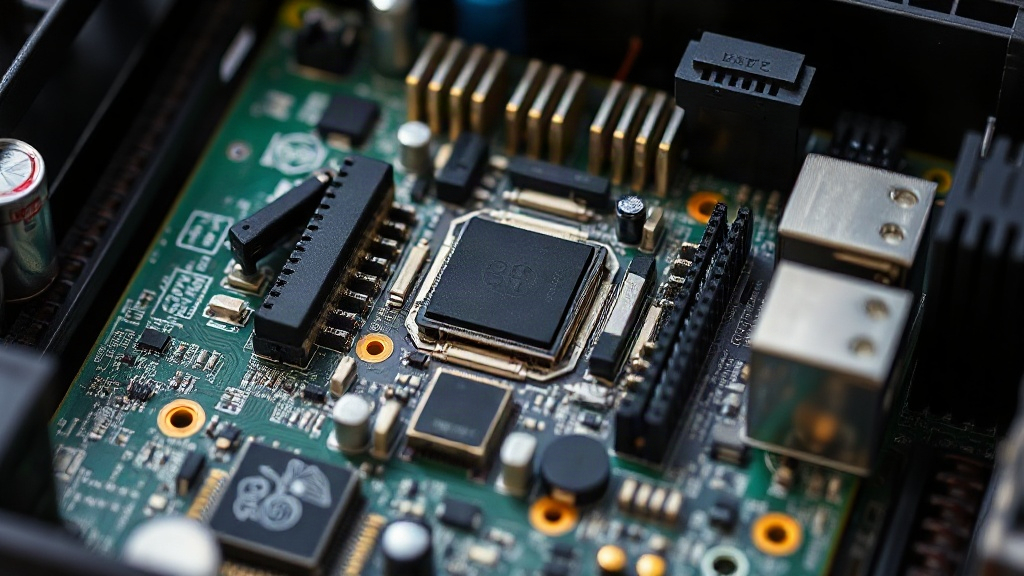
The Custom Motherboard Solution
At the heart of this project is the creation of a bespoke motherboard. This isn't a trivial undertaking; it requires a deep understanding of electrical engineering, component selection, PCB layout, and signal integrity. The enthusiast designed a board that acts as an intermediary, bridging the capabilities of the Raspberry Pi CM5 to the physical constraints and power delivery systems of the HP ProLiant N40L.
The primary objective was to provide modern interfaces that the original N40L board lacked. The Raspberry Pi CM5, with its significantly more powerful ARM-based processor and onboard peripherals, is the perfect candidate for this role. The custom board facilitates the CM5's integration, likely connecting to the server's existing power supply and potentially utilizing some of the original server's SATA ports or PCIe slots, albeit through custom interfaces.
Key additions enabled by this custom board include:
- NVMe Support: The original N40L was limited to SATA storage. By integrating an M.2 slot and the necessary PCIe lanes from the CM5, the refurbished server can now utilize fast NVMe SSDs, dramatically improving storage performance for operating systems, applications, and data access.
- USB 3.0 Connectivity: While the N40L might have had USB 2.0 ports, the CM5 natively supports USB 3.0 (and potentially USB 3.1/3.2 depending on the exact CM5 variant and implementation). The custom board exposes these faster ports, essential for modern peripherals, external drives, and faster data transfers.
- CM5 Integration: The design ensures the Raspberry Pi CM5 is securely mounted and properly powered, receiving signals and power from the ProLiant's internal infrastructure. This involves careful consideration of voltage regulation and signal routing to avoid interference.
Bridging the Generational Divide
The HP ProLiant N40L's original motherboard is a bottleneck for any significant upgrade. Its CPU, RAM capacity, and I/O are all constrained by its age. By replacing its functional role with the Raspberry Pi CM5, the project effectively gives the server a new brain. The CM5, based on the Raspberry Pi 5 architecture, offers a quad-core ARM Cortex-A76 processor, significantly more RAM options (up to 8GB), and a host of modern interfaces. This performance leap is crucial for tasks like running virtual machines, hosting Plex media servers, managing Docker containers, or acting as a responsive network-attached storage (NAS) device.
The true elegance of this project lies in its ability to leverage the strengths of both old and new. The N40L chassis provides a sturdy, well-ventilated enclosure with a reliable power supply and ample drive bays. The custom motherboard acts as the intelligent adapter, allowing the nimble and powerful CM5 to interface with this robust foundation. This approach circumvents the need to purchase an entirely new, modern server or NAS, which can be costly, and instead revitalizes existing hardware that might otherwise end up in a landfill.
Why This Project Matters
This endeavor is more than just a hobbyist project; it highlights several important trends in technology and sustainability. Firstly, it underscores the growing capabilities of single-board computers and compute modules like the Raspberry Pi CM5. These devices are no longer just for simple electronics projects; they are powerful enough to serve as the core of complex systems.
Secondly, it champions hardware longevity and the concept of repairability and refurbishment. In an era where electronic waste is a significant concern, finding innovative ways to extend the life of functional hardware is critical. Instead of discarding a perfectly good server chassis and power supply, this project gives them a new lease on life with a modern computing core.
The most surprising detail here is not the technical complexity of designing a custom motherboard, which is considerable, but the inherent value proposition. For a fraction of the cost of a new equivalent system, this enthusiast has created a highly capable machine. This approach offers a compelling alternative for individuals and small businesses looking for cost-effective, yet powerful, home lab or server solutions.
Looking Ahead: The Future of Refurbishment
Projects like this raise questions about the future of hardware refurbishment. As components become more modular and standardized, could we see more accessible tools or platforms that simplify the process of integrating modern compute modules into older systems? The success of this custom motherboard design suggests a potential pathway for more ambitious hardware repurposing projects, moving beyond software-only upgrades to true hardware transformation.
For those interested in replicating or learning from this project, the detailed documentation and design files would be invaluable. It represents a significant investment of time and expertise, but the outcome is a unique, powerful, and cost-effective server that outperforms its original specifications by orders of magnitude, all while championing the principles of sustainability and hardware reuse.