%22%20%2F%3E%0A%20%20%3C%2Fsvg%3E)
Introducing Sula: A Gemini Server in Scryer Prolog
The Gemini protocol, a minimalist successor to HTTP, continues to attract developers seeking a simpler, more secure, and privacy-focused web. While many Gemini servers are built with mainstream languages like C, Go, or Python, a new project, Sula, emerges from an unexpected corner: Scryer Prolog. This choice of Scryer Prolog, a modern Prolog implementation, signals a distinct philosophy and a novel approach to building network services.
Sula aims to provide a robust and efficient Gemini server. The decision to use Prolog, a declarative logic programming language, is not merely an academic exercise. It suggests a focus on correctness, expressiveness, and potentially, easier reasoning about protocol logic. Prolog's strengths in pattern matching and symbolic manipulation can be surprisingly well-suited for parsing and processing structured data, which is fundamental to any network protocol.
The Gemini protocol itself is designed to be human-readable and simple. It uses a text-based format with strict rules for requests and responses. This simplicity makes it an ideal candidate for exploration with less common, but potentially more powerful, tools. Sula's existence demonstrates that even languages not typically associated with web server development can be leveraged to build functional and performant network infrastructure.
Why Scryer Prolog for a Gemini Server?
The choice of Scryer Prolog is perhaps the most compelling aspect of Sula. Prolog's declarative nature means developers describe *what* they want to achieve rather than *how* to achieve it step-by-step. For a protocol server, this can translate to more concise and less error-prone code, especially when dealing with complex state transitions or rule-based logic. Imagine defining the rules of the Gemini protocol as logical facts and rules; Prolog's engine then handles the execution.
Scryer Prolog, specifically, is known for its modern features and performance optimizations, making it a viable choice for such a project. It offers features like attributed variables and a robust library of built-in predicates that can be instrumental in building network applications. The project's maintainer, who is also a key figure in the Scryer Prolog community, brings deep familiarity with the language's capabilities.
This approach contrasts sharply with imperative programming. In an imperative language, you'd explicitly code loops, conditional statements, and memory management. In Prolog, you might define a rule like 'a valid Gemini response must have a status line and a content type'. The Prolog engine then figures out how to check this rule against incoming data. This can lead to code that is easier to verify for correctness, a critical attribute for any server software.
The Gemini protocol is fundamentally about structured data exchange. Sula leverages Prolog's inherent ability to handle structured data and relationships. Think of it less like a traditional web server painstakingly managing state with variables and more like a highly intelligent system that understands the *relationships* between different parts of a Gemini request and its corresponding response. It's like having a meticulous librarian who doesn't just store books but understands their genres, authors, and interconnections, and can instantly retrieve what you need based on complex criteria.
Core Functionality and Design Principles
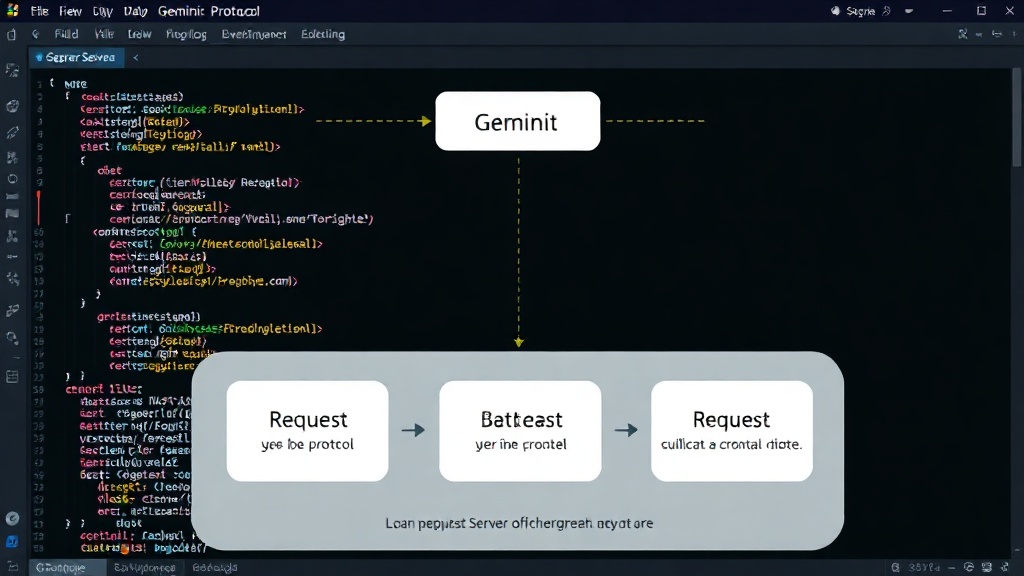
Sula implements the core features expected of a Gemini server. It handles incoming client connections, parses Gemini requests according to the protocol specification, retrieves requested resources, and sends back Gemini responses. This includes managing different MIME types, handling redirects, and providing appropriate error messages.
The design prioritizes simplicity and extensibility. While built in Prolog, Sula aims to be accessible to those familiar with the Gemini ecosystem, even if they are not Prolog experts. The project's documentation and community engagement are key to achieving this. The choice of Scryer Prolog also means Sula benefits from its underlying performance characteristics and ongoing development.
One of the inherent advantages of Prolog in this context could be its approach to concurrency. While traditional web servers often rely on multi-threading or asynchronous I/O models, Prolog's execution model can sometimes offer alternative ways to manage multiple client connections, potentially leading to a more predictable and robust system. However, the specifics of Sula's concurrency model would require deeper inspection of its codebase.
The Gemini Ecosystem and Sula's Place
The Gemini protocol has carved out a niche for itself by offering an alternative to the complexities and commercial pressures of the modern web. It appeals to users and developers who value privacy, simplicity, and a more curated online experience. Gemini clients are readily available, and a growing number of websites and services are hosted on Gemini.
Sula fits into this ecosystem as another option for hosting Gemini content. Its unique implementation in Scryer Prolog makes it a point of interest for developers and sysadmins who appreciate alternative technologies. It's not just about having another server; it's about the demonstration of what's possible with different programming paradigms. For those who already use or are interested in Prolog, Sula provides a tangible, real-world application of the language.
What remains to be seen is how Sula scales. While Prolog can be performant, its suitability for high-traffic web servers has historically been a subject of debate. Sula's success will depend on its ability to handle concurrent connections efficiently and its long-term maintenance and development. The project is still relatively new, and its adoption will likely be driven by its stability, feature set, and the community's ability to contribute and support it.
Conclusion: A Niche Server with Broad Implications
Sula represents more than just another Gemini server. It's a testament to the versatility of programming languages and the ongoing exploration of the internet's infrastructure. By choosing Scryer Prolog, the Sula project highlights how declarative programming can be applied to network services, potentially offering new avenues for building reliable and understandable software. For developers interested in Gemini, Prolog, or simply the intersection of unique technologies, Sula is a project worth watching.