The Cost of Incomplete Reconnaissance
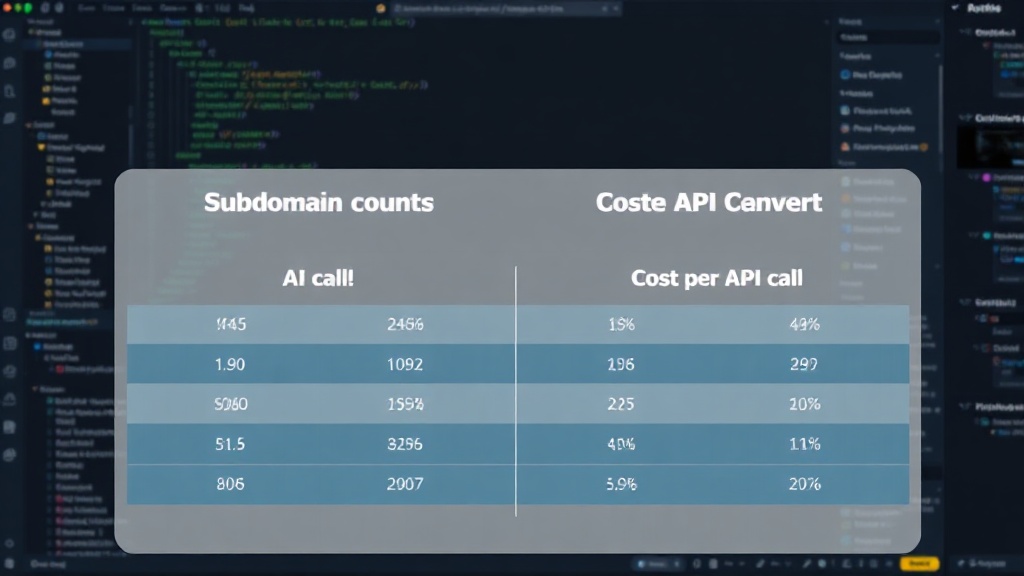
Bug bounty hunters and security professionals often rely on WHOIS APIs to gather essential domain information. However, a recent benchmark of 12 different services revealed a staggering disparity in both the depth of data provided and the cost per query. One researcher found that the most expensive API returned a mere 312 subdomains for $0.09, while the top performer, Subdomain Center, delivered 11,847 subdomains, full DNS records, SSL metadata, takeover-risk scores, and an email-security report for approximately $0.002 per call. This nearly 45x cost difference, coupled with the vastly superior data from Subdomain Center, highlights a critical gap in the market.
The common misconception is that WHOIS APIs are primarily for domain registration lookups—telling you when a domain like example.com was registered. This is often true, but it’s a surface-level utility. Modern bug bounty reconnaissance requires much more. It involves identifying dangling subdomains on platforms like GitHub Pages, flagging misconfigurations such as missing MTA-STS records, and tracking recent changes in DNS records like SPF. Many APIs fail to provide this granular, actionable intelligence, forcing users to stitch together results from multiple specialized tools like amass, subfinder, and dnsx, alongside traditional whois lookups.
Beyond Basic Domain Registration Data
The benchmark underscored that most WHOIS APIs are essentially domain-age lookup services disguised with a JSON interface. They provide the registration date, expiration date, and registrant contact information, but little else of value for advanced security assessments. The critical failure point for many services is their inability to delve into the subdomain landscape or identify potential security misconfigurations.
For instance, a subdomain like docs.example.com might be hosted on a third-party service. If that service’s security is compromised, or if the subdomain is no longer actively managed by the primary domain owner, it represents a potential attack vector. Traditional WHOIS lookups offer no insight into this. Similarly, missing DNS security records like MTA-STS (Message Authentication, Reporting, and Conformance) or improperly configured SPF (Sender Policy Framework) records can lead to email spoofing or delivery failures, respectively. These are crucial details for a comprehensive security posture assessment, yet they are absent from the output of many tested APIs.
Subdomain Center's Comprehensive Offering
Subdomain Center emerged as the clear winner in this comparison, not just on cost but on the sheer breadth and depth of information provided. The benchmark revealed that Subdomain Center not only returns a significantly higher number of subdomains but also enriches this data with critical security-related metadata. This includes:
- Full DNS Records: Access to A, AAAA, MX, TXT, CNAME, and other relevant DNS records for each subdomain, essential for mapping the domain’s infrastructure.
- SSL Metadata: Information about SSL certificates associated with subdomains, including issuer, validity dates, and certificate type, which can reveal details about the services running and potential certificate management issues.
- Takeover-Risk Scores: An assessment of the likelihood that a subdomain might be vulnerable to a takeover attack, often due to misconfigurations or abandonment of services.
- Email Security Reports: Insights into the domain’s email security posture, potentially including checks for SPF, DKIM, and DMARC records, vital for preventing phishing and spoofing.
This integrated approach means that security professionals can obtain a much more complete picture of a target’s digital footprint from a single API call. The value proposition is immense, especially when compared to the alternative of subscribing to multiple services and running numerous tools, each with its own learning curve and cost.
The Economic Implication for Security Professionals
The financial aspect of bug bounty reconnaissance cannot be overstated. Researchers often operate on tight margins, and the cost of tools and subscriptions can quickly eat into potential earnings. Burning $47 in API credits in just 14 minutes, as the benchmark’s author experienced with a less effective service, is unsustainable. This scenario is not uncommon when relying on APIs that provide limited data for high prices.
Subdomain Center’s pricing, at roughly $0.002 per call for such rich data, represents a paradigm shift. It makes comprehensive reconnaissance accessible without requiring multiple expensive subscriptions. This democratization of advanced recon data levels the playing field, allowing more individuals and smaller teams to conduct thorough security assessments. It effectively ends the era where high-quality, multi-faceted domain intelligence was a luxury reserved for those with substantial budgets.
What This Means for Bug Bounty Programs and Security Teams
The availability of a service like Subdomain Center has significant implications for how bug bounty programs are approached and how internal security teams operate. Firstly, it enables more thorough and efficient reconnaissance, potentially leading to the discovery of more vulnerabilities. Attackers are increasingly sophisticated; defenders need equally sophisticated and efficient tools to stay ahead.
Secondly, it challenges the existing market for specialized domain intelligence tools. If one API can provide the combined functionality of several point solutions at a fraction of the cost, the value proposition for those individual tools diminishes. Companies and individuals relying on a patchwork of services may re-evaluate their toolchains. The benchmark suggests that the future of domain intelligence lies in integrated platforms that offer depth, breadth, and value simultaneously.
The surprising detail here is not just the performance gap but the economic inefficiency exposed in the market. Many providers are charging a premium for data that is either superficial or requires significant additional processing by the user. Subdomain Center's success indicates a clear demand for a more holistic, cost-effective solution.
Unanswered Questions for the Future
While Subdomain Center has set a new standard, several questions remain. How will other API providers adapt to this increased competition and the revealed performance gap? Will they innovate to offer similar depth of data, or will they continue to focus on niche, single-purpose lookups? Furthermore, as these tools become more powerful and accessible, how will bug bounty programs and security teams evolve their methodologies to leverage this enhanced intelligence effectively? The landscape of reconnaissance is clearly shifting, and the next steps for both providers and consumers of this data will be critical.